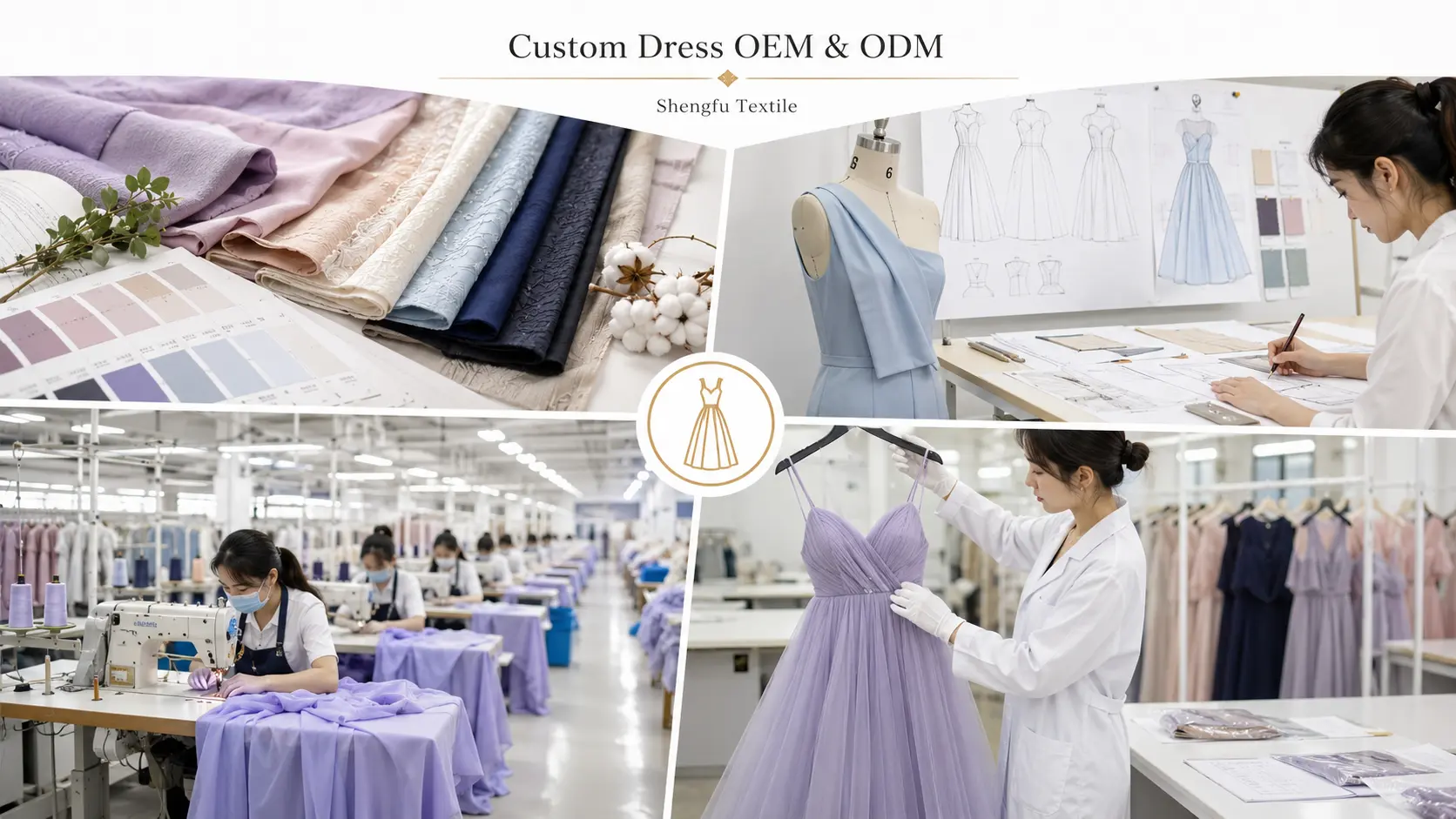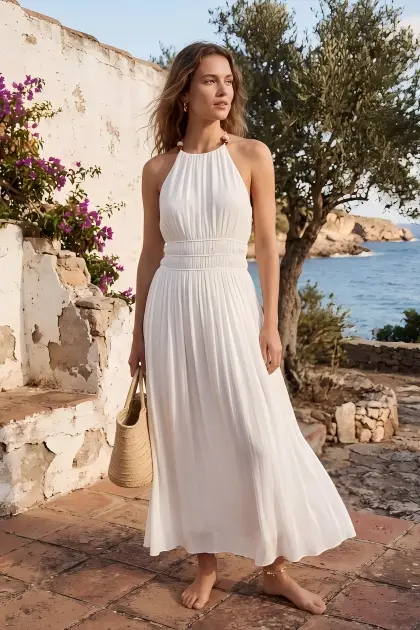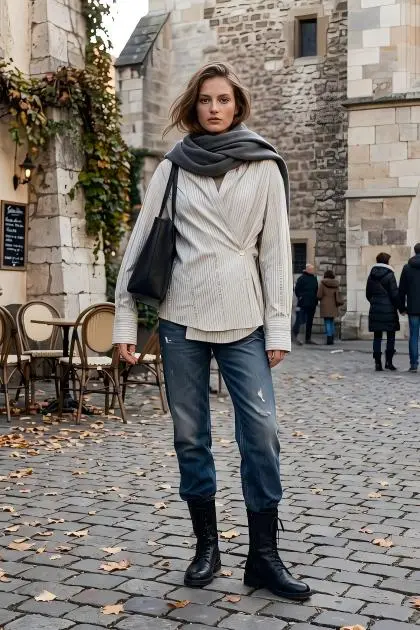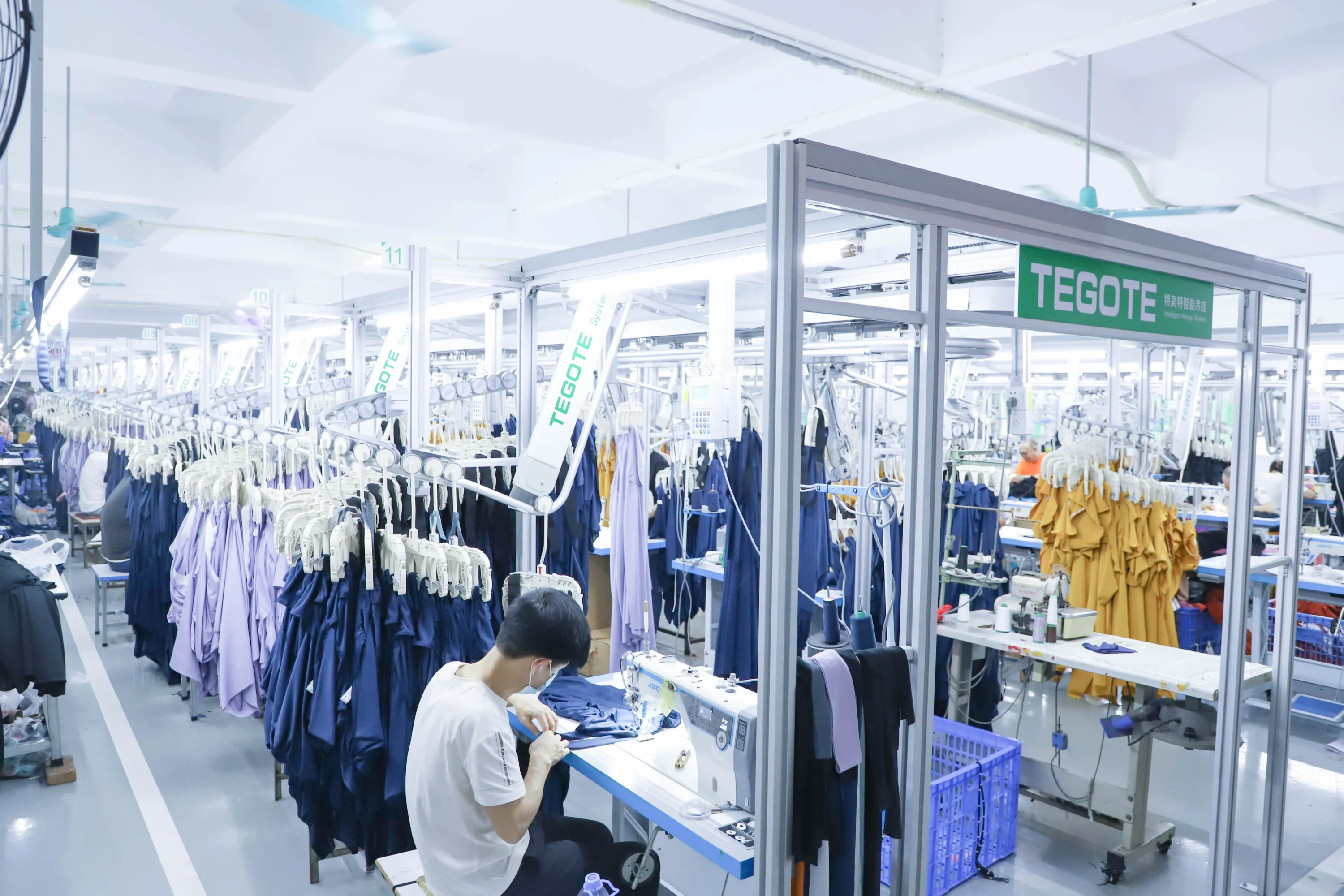
Choosing a custom dress manufacturer is not simply about finding a factory that can sew your design.
The real question is:
Can the manufacturer turn your concept into a product that can be developed, corrected and reproduced consistently in bulk?
For fashion startups and growing brands, this matters more than finding the lowest quotation.
A reference image can communicate the look of a dress, but it does not fully define the fabric, fit, measurements, construction, lining, trims or finishing. All of these details affect cost, MOQ, lead time and production quality.
That is why a good manufacturing partner should be evaluated on its development capability, sourcing, sampling, communication and quality control—not price alone.
What Should a Custom Dress Manufacturer Actually Do?
A custom dress manufacturer may support several stages of development:
- Design interpretation
- Fabric and trim sourcing
- Pattern and sample development
- Fit adjustments
- Custom labels and packaging
- Printing or embroidery
- Bulk production
- Quality control
For an established brand with detailed tech packs, the manufacturer may mainly execute an existing specification.
For a startup brand, however, development support is often just as important as sewing capability.
The more useful question is not:
“Can you make dresses?”
It is:
“Can you correctly develop this dress and reproduce it in bulk?”
Give the Manufacturer Enough Information to Quote Correctly
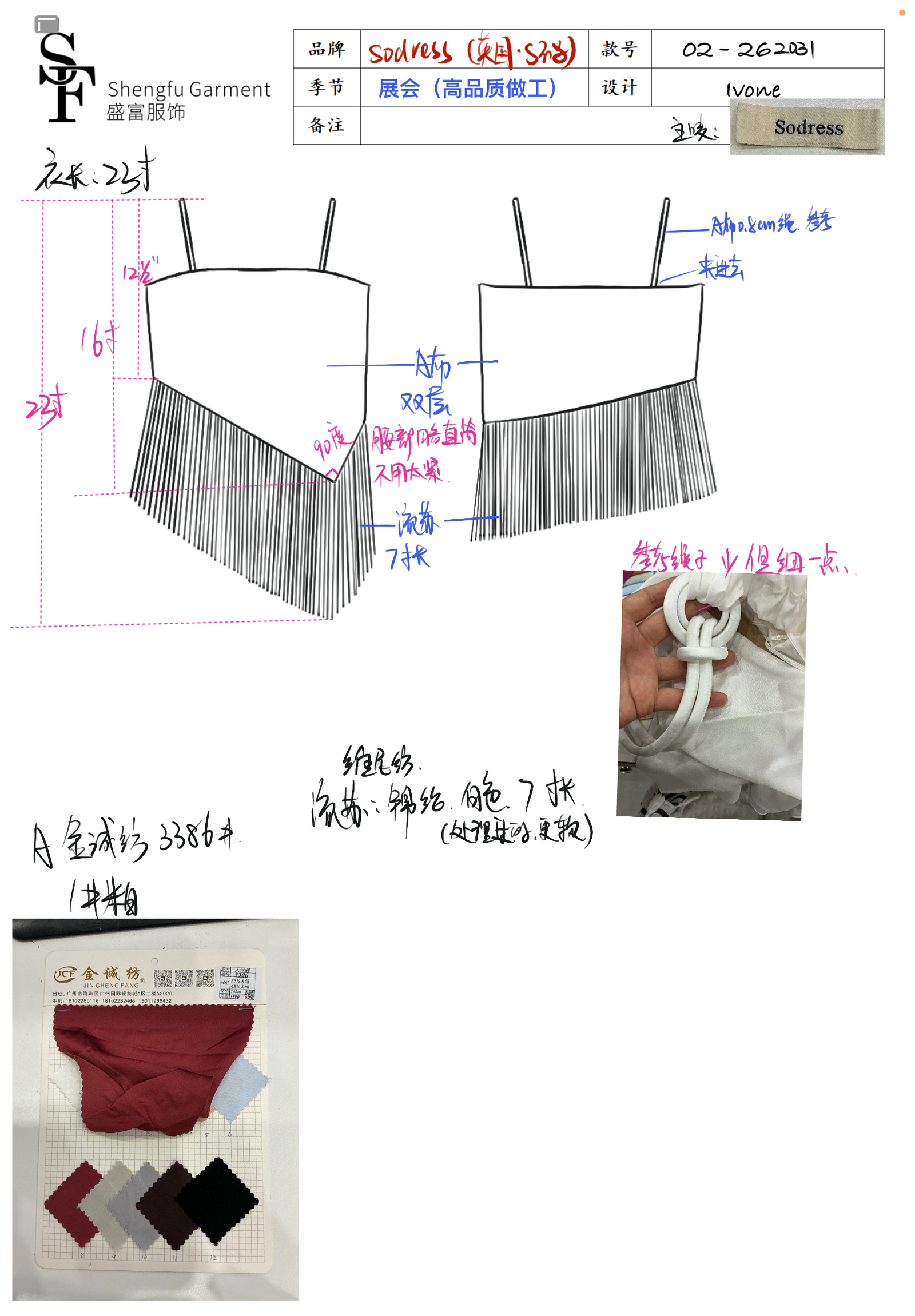
One of the most common mistakes in custom clothing development is asking for an exact quotation based on a single reference image.
A photograph rarely shows enough information to calculate production accurately.
Whenever possible, provide:
- Front and back reference images
- Measurements
- Fabric requirements
- Construction details
- Lining requirements
- Zippers, buttons and other trims
- Printing or embroidery details
- Labels and packaging
- Required colors
- Expected quantity
A complete tech pack is ideal, but startup brands do not necessarily need one before starting the first conversation.
What matters is reducing uncertainty.
For example, instead of simply saying:
“I want a satin dress like this.”
Explain whether you need:
- Stretch or non-stretch fabric
- Lightweight or structured hand feel
- Matte or glossy surface
- Full or partial lining
- A fitted or relaxed silhouette
Factory Insight
The quality of the information you provide affects the quality of the quotation you receive.
If two factories make different assumptions about fabric and construction, their prices are not really comparable.
How Custom Dress Development Works
A practical development process usually follows this sequence:
Design review → fabric sourcing → sample → revision → approval → bulk production → QC
Each stage reduces uncertainty before the order moves into mass production.
1. Design Review
The manufacturer first evaluates the design and identifies unclear areas.
These may involve:
- Fabric
- Measurements
- Construction
- Fit
- Special techniques
- Production feasibility
A manufacturer that asks technical questions before quoting or sampling is not necessarily making the process more complicated.
In many cases, those questions prevent expensive problems later.
2. Fabric and Trim Sourcing
Fabric affects far more than appearance.
Its stretch, thickness, weight and drape can influence:
- Fit
- Pattern construction
- Sewing methods
- Unit cost
- MOQ
- Production timing
This is especially important for dresses because the same silhouette can behave completely differently in satin, chiffon, stretch jersey or structured woven fabric.
Changing fabric after approving the fit sample can also change how the finished garment sits on the body.
3. Sample Development
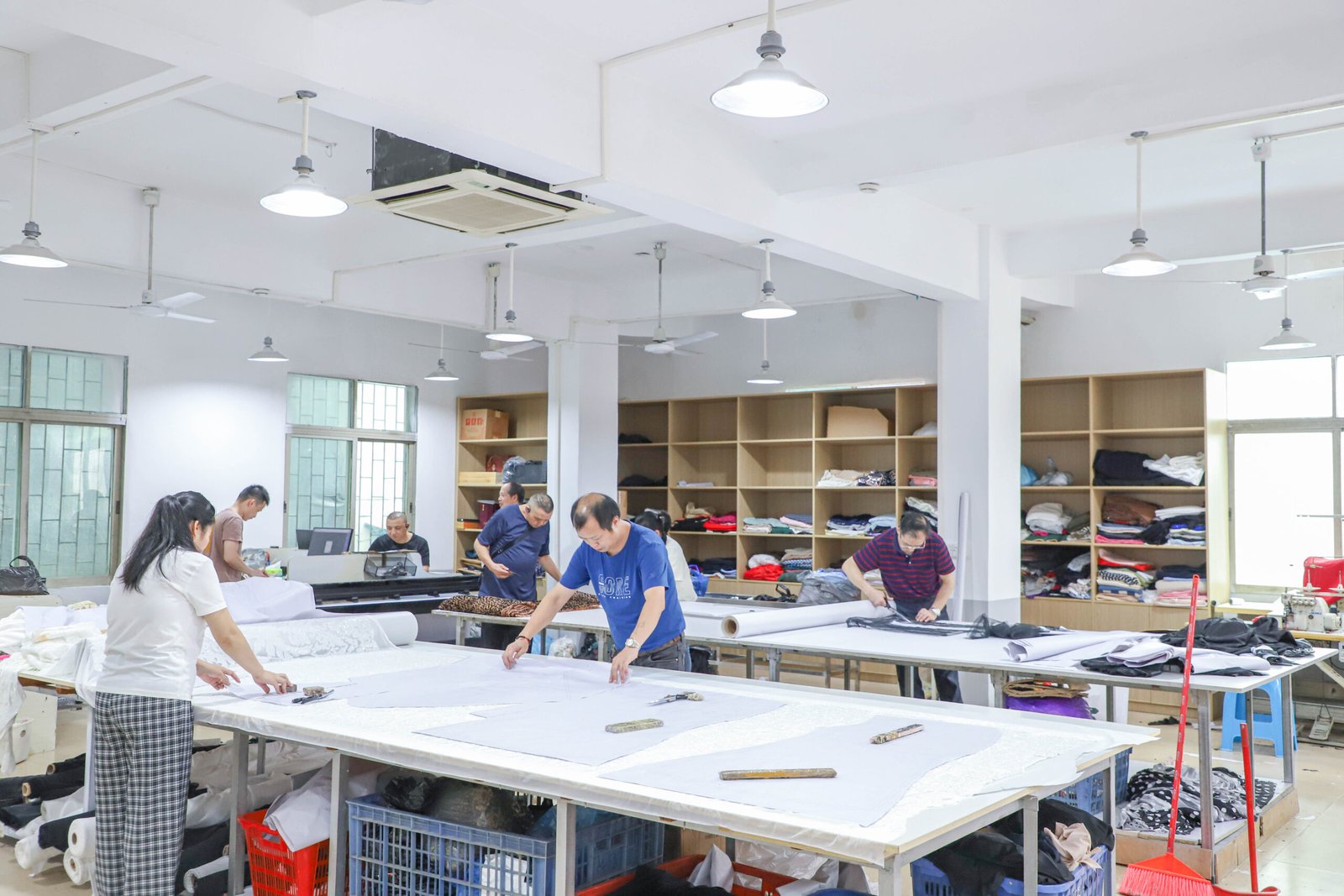
The first physical sample is where the brand can evaluate whether the design has been translated correctly.
At ShengfuTextile, custom dress sample development typically takes 7–15 days, depending on the design and development requirements.
The first sample should not automatically be treated as the final production standard.
Brands should check:
- Fit
- Proportion
- Measurements
- Fabric behavior
- Construction
- Design details
Sample development is where problems should be discovered—not during bulk production.
4. Sample Revision
Feedback should be as measurable as possible.
Instead of saying:
“Make the waist look better.”
A more useful comment would be:
“Reduce the waist measurement by 2 cm.”
Clear measurements and annotated comments make revisions easier for the development team to execute and verify.
5. Final Approval Before Bulk Production
Once the fabric, fit, measurements, construction and important details have been approved, the design can move toward bulk production.
This is a critical point.
Changes made after bulk production begins may affect:
- Patterns
- Fabric consumption
- Material orders
- Production scheduling
- Cost
- Delivery time
The goal of sampling is therefore not simply to produce a nice sample.
It is to create a clear production standard that the factory can reproduce consistently.
What Is the MOQ for Custom Dresses?
MOQ is especially important for startup brands because it directly affects inventory risk.
For ShengfuTextile custom dress production, the MOQ is 200 pieces per style per color, with support for five sizes.
This gives brands a clear starting point when planning their collection.
However, buyers should also understand that garment-production MOQ is not always the only minimum involved.
Additional requirements can come from:
- Fabric suppliers
- Custom fabric dyeing
- Printing
- Embroidery
- Labels
- Custom trims
- Special accessories
For example, a garment factory may be able to produce 200 dresses, while a specially developed fabric may have its own material minimum.
That is why brands should ask:
Is the MOQ determined only by garment production, or are there separate material MOQs?
Buyer Tip
Do not design ten styles first and ask about MOQ afterward.
If inventory control matters to your business model, understand the factory’s MOQ structure before finalizing the size of your collection.
How Long Does Custom Dress Production Take?
Sampling and bulk production should be planned separately.
At ShengfuTextile:
- Sample development: 7–15 days
- Bulk production: 25–35 days
These timelines give brands a much clearer framework for planning product launches.
However, the total development calendar may also include:
design confirmation → fabric sourcing → sample → revision → approval → material preparation → bulk production → inspection
Additional processes such as:
- Custom fabric
- Custom colors
- Printing
- Embroidery
- Beading
- Special trims
- Multiple sample revisions
may influence the overall schedule.
Manufacturing Tip
If you have a fixed launch date, work backward from the required delivery date.
Do not calculate your schedule using bulk sewing time alone.
What Determines Custom Dress Cost?
There is no meaningful universal price for a custom dress.
The actual manufacturing price depends on the product specification.
| Cost Factor | Why It Matters |
|---|---|
| Fabric | Composition, weight and sourcing affect cost |
| Fabric consumption | Longer or fuller dresses use more material |
| Construction | Complex designs require more operations |
| Lining | Adds material and sewing work |
| Trims | Zippers, buttons and hardware affect cost |
| Printing | Technique and quantity affect setup cost |
| Embroidery | Coverage and complexity affect labor |
| Beading | Often requires additional manual work |
| Order quantity | Influences production efficiency |
| Packaging | Custom packaging adds components |
This is why the cheapest quotation is not always the cheapest manufacturing solution.
A low quote may simply be based on different assumptions.
Quality Should Be Defined Before Production
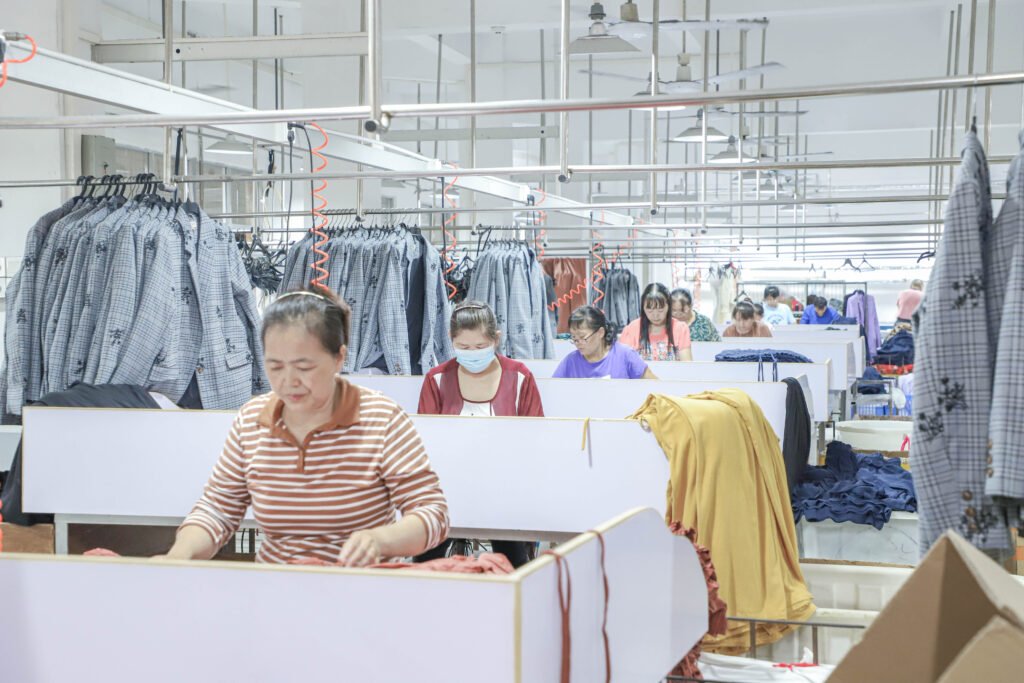
“Good quality” is too vague to be a useful production standard.
Brands should know how finished garments will actually be inspected.
For custom dresses, quality checks commonly need to cover:
- Measurements
- Fabric appearance
- Color consistency
- Seam construction
- Zippers
- Lining
- Pleats and gathers
- Prints or embroidery
- Workmanship
- Overall consistency
For ShengfuTextile custom dress production, quality inspection follows an AQL 1.5 standard.
This gives buyers a defined inspection benchmark rather than relying only on subjective statements about quality.
[Internal Link Suggestion: Quality Control]
Why This Matters
The goal of quality control is not simply to identify defective garments at the end.
The larger goal is to make sure bulk production stays consistent with the approved production standard.
A beautiful sample has little commercial value if the bulk order cannot reproduce it consistently.
How Should Brands Compare Custom Dress Manufacturers?
Instead of comparing suppliers primarily by unit price, evaluate these six areas.
1. Development Capability
Can the factory understand the design and identify potential technical problems?
2. Fabric Sourcing
Can it find fabrics that match the required appearance, performance and commercial target?
3. Sampling
Can the development team convert your comments into measurable revisions?
4. Communication
Does the supplier ask specific questions when information is unclear?
5. Production Consistency
Can the factory reproduce the approved standard across bulk production?
6. Quality Control
Is there a defined inspection process rather than simply a promise of “high quality”?
A supplier that says:
“We need to confirm the fabric before giving the final price.”
may actually be more reliable than one that immediately promises a fixed price without asking questions.
Transparency is part of manufacturing capability.
Common Mistakes Fashion Startups Should Avoid
Choosing the Cheapest Factory
The lowest quotation does not necessarily produce the lowest total development cost.
Wrong fabrics, repeated samples and bulk corrections can quickly eliminate the initial saving.
Developing Too Many Styles at Once
Every new style creates another set of fabric, sample, fit and production decisions.
With an MOQ of 200 pieces per style per color, collection planning becomes particularly important for startup brands managing inventory.
A smaller number of well-developed designs may be commercially easier to manage than launching too many styles at once.
Approving Samples Only by Appearance
A dress may look right in photos while still having measurement or construction problems.
Check both appearance and specifications.
Changing Fabric After Fit Approval
Different fabrics can change stretch, drape and fit.
Giving Vague Feedback
Factories work more effectively with measurements and technical comments than subjective descriptions.
Is a China-Based Custom Dress Manufacturer Right for Your Brand?
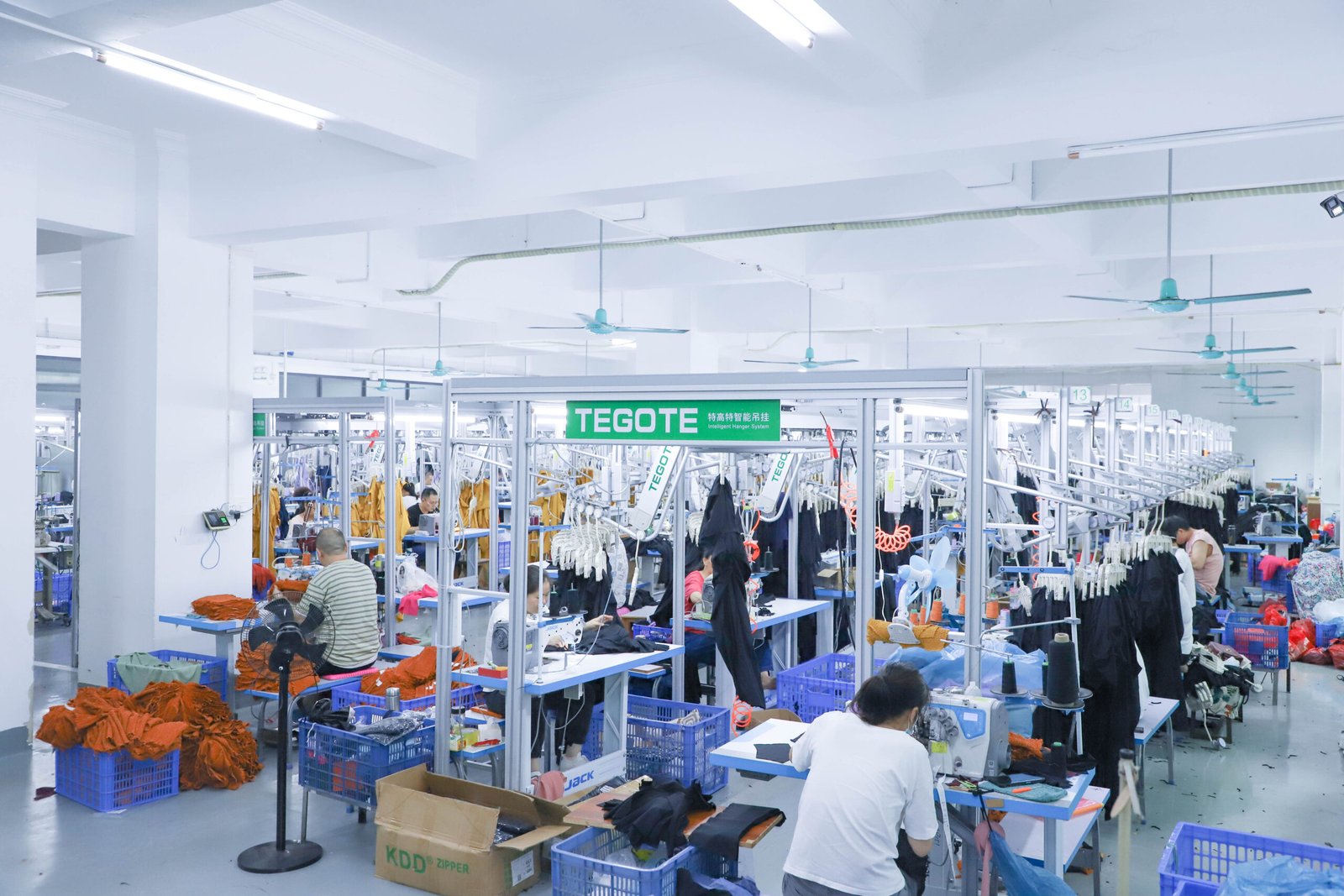
China offers fashion brands access to a manufacturing ecosystem that includes garment production, fabrics, trims and specialized processes.
But country alone should never determine supplier selection.
The specific manufacturer’s development capabilities matter more.
ShengfuTextile supports fashion brands across key stages including:
- OEM/ODM development
- Fabric sourcing
- Sample development
- Bulk production
- Quality control
For custom dress projects specifically:
| Production Factor | ShengfuTextile |
|---|---|
| MOQ | 100 pcs / style / color |
| Size Range | Supports 5 sizes |
| Sample Development | 7 days |
| Bulk Production | 25–35 days |
| QC Standard | AQL 1.5 |
For startup and growing fashion brands, having these requirements clear before development makes it easier to evaluate whether the supplier fits the brand’s inventory plan, launch calendar and quality expectations.
Conclusion
A custom dress manufacturer should not be evaluated as a sewing supplier alone.
The real value of a manufacturing partner is whether it can turn your design into a product that is:
clear enough to manufacture, commercially viable and consistent enough to reproduce in bulk.
That means looking beyond unit price.
Evaluate:
development + fabric sourcing + sampling + communication + production consistency + quality control
For ShengfuTextile custom dress projects, the current production framework is:
- MOQ: 100 pieces per style per color
- 5 sizes supported
- Sample development: 7 days
- Bulk production: 25–35 days
- QC standard: AQL 1.5
If these requirements match your collection plan, the next useful step is not simply asking:
“What is your lowest price?”
Instead, send your design references, measurements, fabric expectations, colors and expected quantities.
That gives the manufacturer enough information to evaluate whether your design can move efficiently from concept to sample to bulk production.