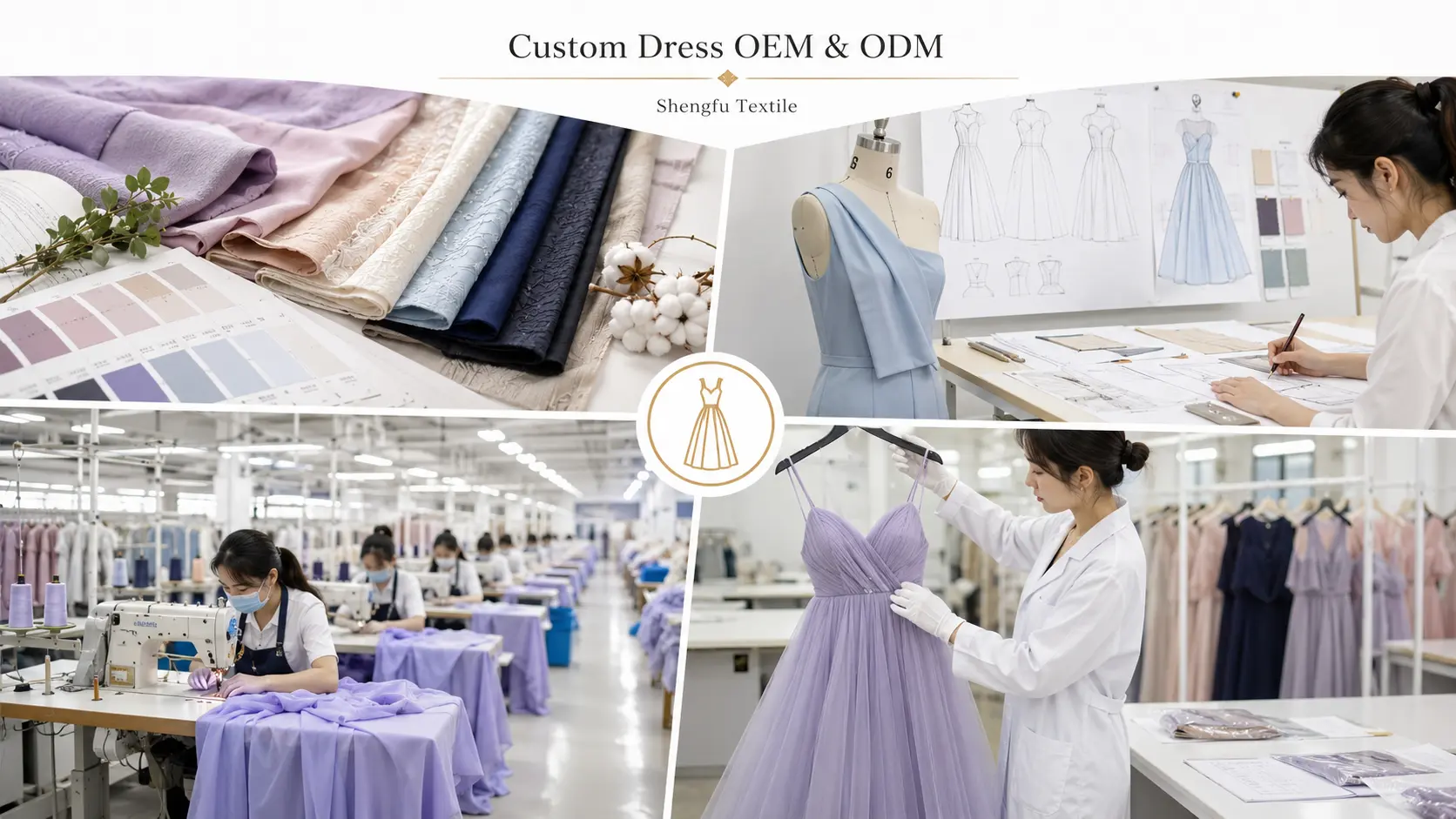
If you search how to make a dress, you will find many tutorials about cutting fabric and sewing at home.
However, producing dresses for a fashion brand is very different from making one garment.
A professional garment factory must turn a design into a product that can be reproduced consistently across different sizes and production quantities.
At Shengfu, we believe successful dress manufacturing depends on more than sewing. Pattern accuracy, fabric selection, sampling, cutting, production planning, workmanship, and quality control all affect the final result.
In this guide, we explain how a dress moves from an idea to a finished garment inside a professional clothing factory.
How Is a Dress Made in a Garment Factory?
A typical dress production process includes:
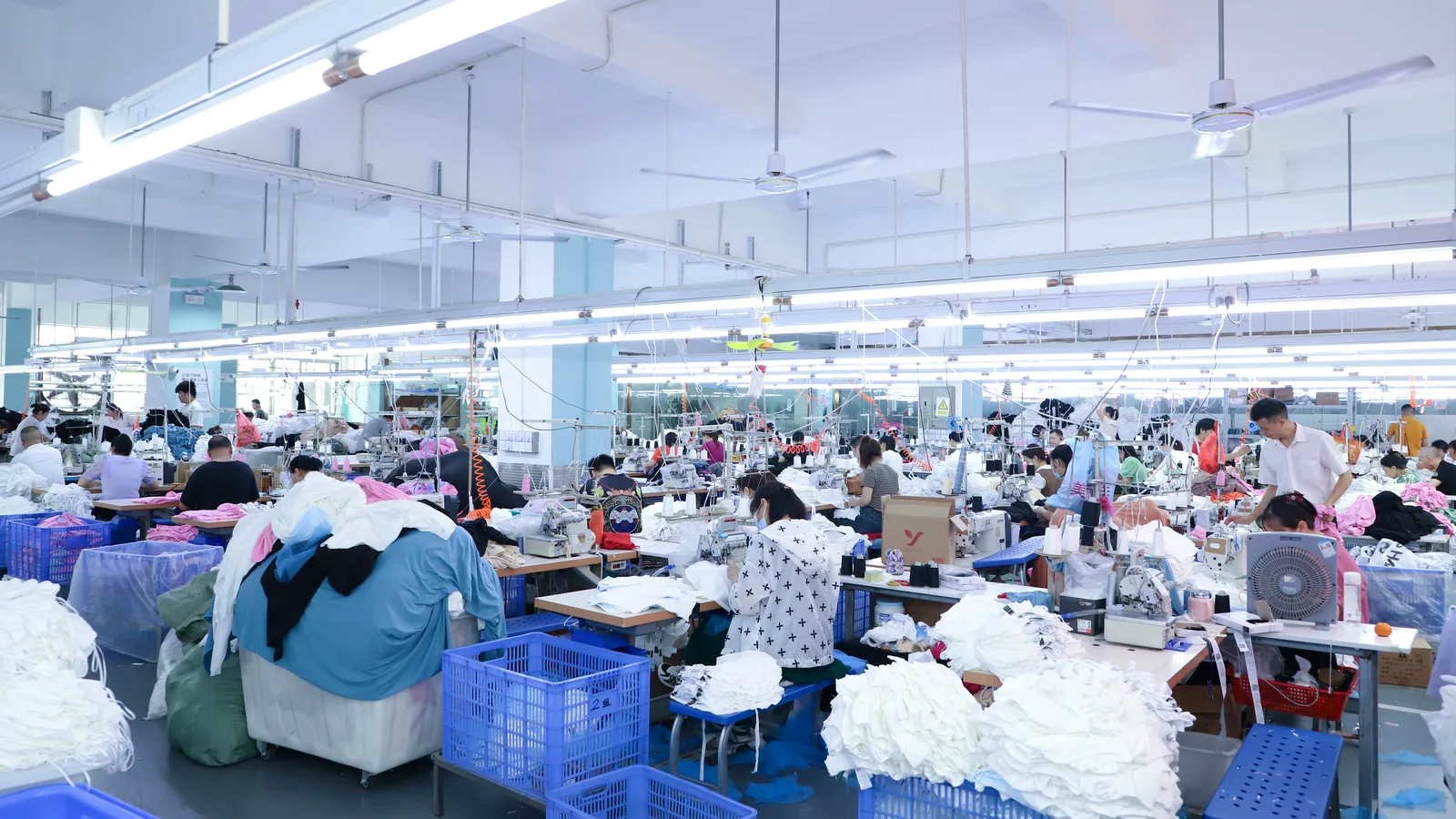
Design Review → Fabric Sourcing → Pattern Making → Sampling → Pre-Production → Cutting → Sewing → Finishing → Quality Control → Packing
The exact process changes according to the design.
For example, a simple cotton dress may require relatively few operations. However, a structured dress with lining, pleating, embroidery, beading, boning, or sequins requires more technical planning and skilled workmanship.
That is why choosing the right dress manufacturer matters.
1. Design and Tech Pack Review
Professional dress manufacturing should begin with understanding the product.
Before sampling, the factory needs to review the design, measurements, materials, construction, and expected quality level.
A typical tech pack may include:
- Design sketches
- Garment measurements
- Fabric specifications
- Color references
- Stitching details
- Trims
- Labels
- Artwork
- Packaging requirements
However, not every brand has a complete tech pack.
Some emerging brands may only have a sketch, reference image, or physical garment.
In this situation, an experienced development team becomes especially important.
At Shengfu, we review the design from a manufacturing perspective and identify details that may need clarification before sampling.
For example, we may confirm:
- Lining construction
- Zipper position
- Seam type
- Fabric weight
- Finished measurements
- Decorative techniques
- Internal structure
These decisions may look small, but they can strongly influence the fit, appearance, cost, and production stability of the final dress.
Shengfu Recommendation
Choose a manufacturer that asks questions before production begins.
A professional factory should help identify potential problems rather than simply accept incomplete instructions.
2. Fabric and Trim Sourcing
Fabric can completely change how a dress looks and fits.
The same pattern may produce very different results in satin, cotton poplin, chiffon, viscose, velvet, or stretch fabric.
Therefore, manufacturers need to consider:
- Fabric weight
- Drape
- Stretch
- Shrinkage
- Transparency
- Hand feel
- Surface texture
- Color stability
For example, a lightweight fabric can create beautiful movement. However, it may also require lining or additional seam reinforcement.
A structured fabric may provide a stronger silhouette, but it can also change the original fit.
Trims are equally important.
Depending on the design, a dress may require:
zippers, buttons, hooks, elastic, lace, lining, labels, embroidery thread, beads, sequins, or customized accessories.
At Shengfu, we treat fabric and trim selection as part of product development rather than a simple purchasing task.
The goal is to balance:
Design + Quality + Cost + Production Feasibility
3. Pattern Making and Sample Development
The pattern creates the technical foundation of a dress.
A good sketch cannot compensate for an inaccurate pattern.
The pattern maker converts the design into individual garment components, such as:
- Front bodice
- Back bodice
- Skirt panels
- Sleeves
- Collar
- Facing
- Lining
- Waistband
- Pockets
The pattern also defines important construction information, including:
seam allowances, darts, notches, balance points, and finished proportions.
Even small changes can affect the final appearance.
For example, a small adjustment to the shoulder angle may change how the neckline sits.
Similarly, changing the waist position can affect the overall visual proportion of the dress.
After confirming the base size, technicians create additional sizes through pattern grading.
XS → S → M → L → XL
Professional grading does not simply enlarge every area equally.
Each part needs controlled adjustment to maintain the intended silhouette.
4. Sample Fitting and Approval
Before bulk production begins, we strongly recommend approving a physical sample.
Sampling allows the buyer and factory to check:
- Fit
- Silhouette
- Garment length
- Neckline
- Sleeve shape
- Construction
- Fabric behavior
- Trims
- Workmanship
A first sample does not always need to be perfect.
In fact, sample development exists to identify problems before bulk production.
For example:
- The fabric may drape differently than expected.
- The neckline may need adjustment.
- A zipper may create unnecessary bulk.
- The skirt may feel too heavy.
- A decorative technique may be difficult to reproduce consistently.
A reliable factory should explain these issues clearly.
At Shengfu, we prefer to solve technical problems during sampling because changing one sample is much easier than correcting hundreds of finished garments.
5. Pre-Production Preparation
Once the sample receives approval, the factory prepares for bulk production.
Before cutting begins, the production team should confirm:
- Final patterns
- Approved fabric
- Trims
- Measurements
- Construction details
- Color
- Labels
- Packaging
- Order quantities
For complex dresses, production sequence matters.
For example, embroidery may need to happen before panel assembly.
Some beadwork may need to happen after sewing.
Pleating may require its own production process.
Therefore, pre-production planning helps prevent problems from reaching the sewing line.
At Shengfu, we consider this stage an important form of production risk control.
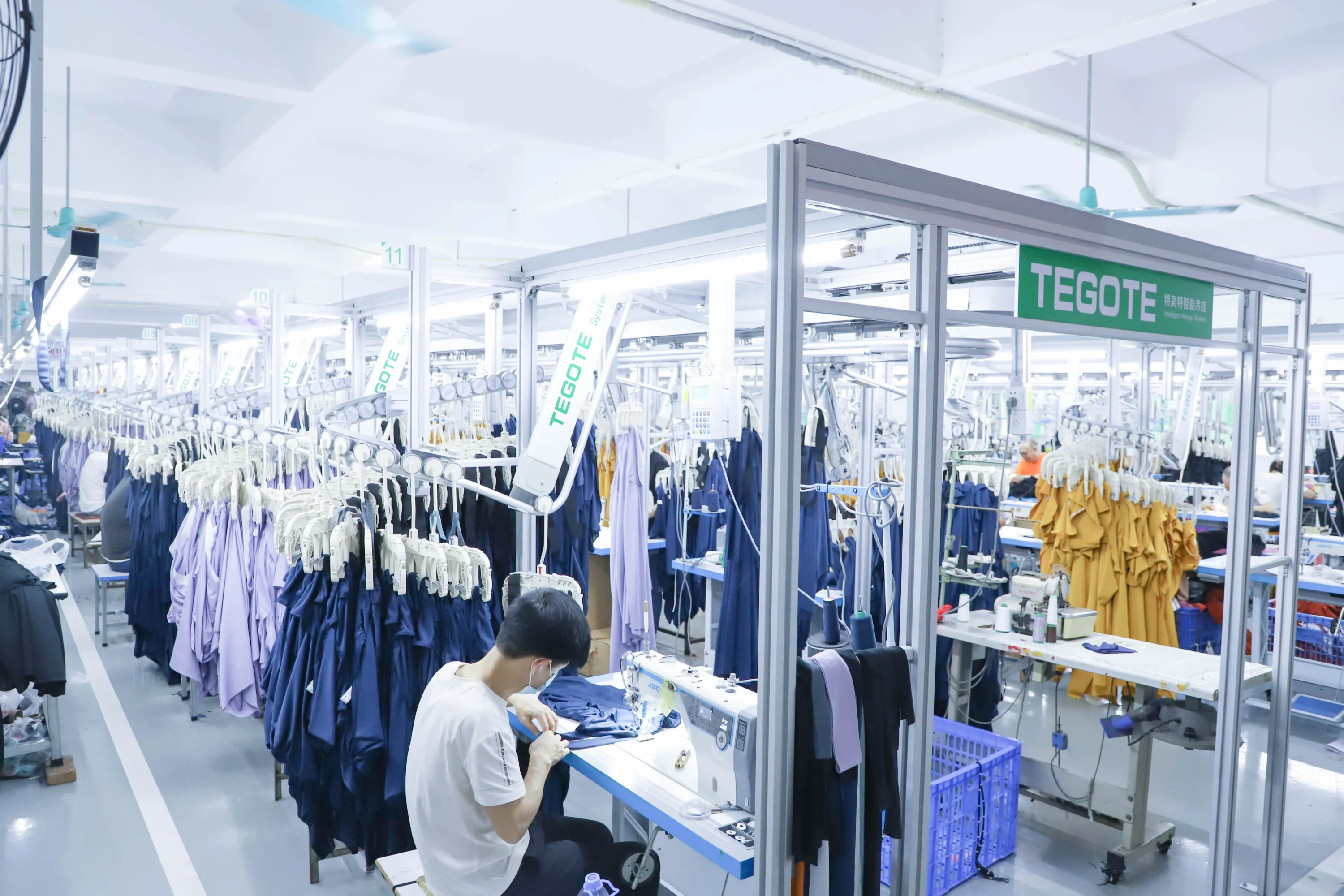
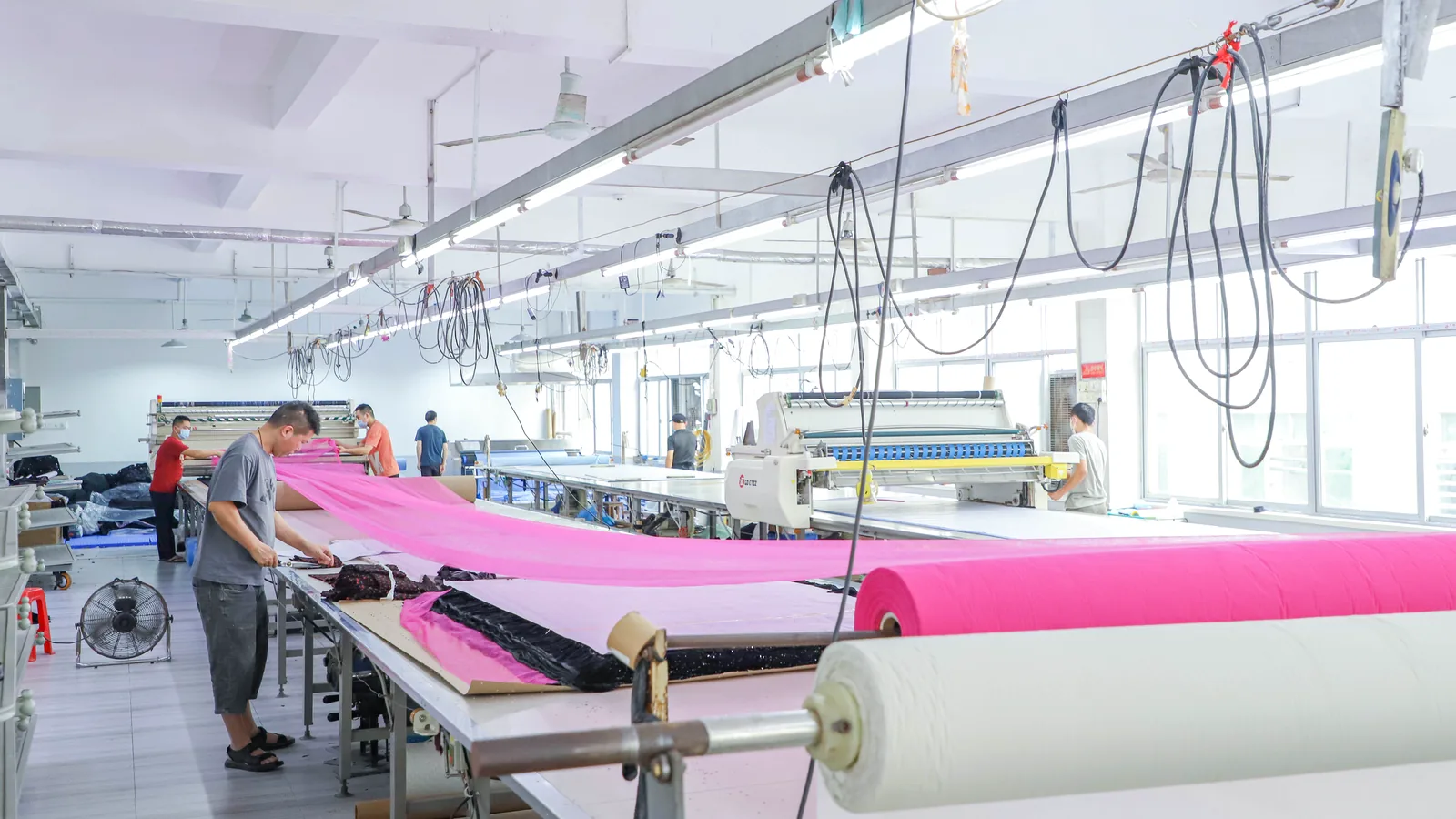
6. Fabric Spreading and Cutting
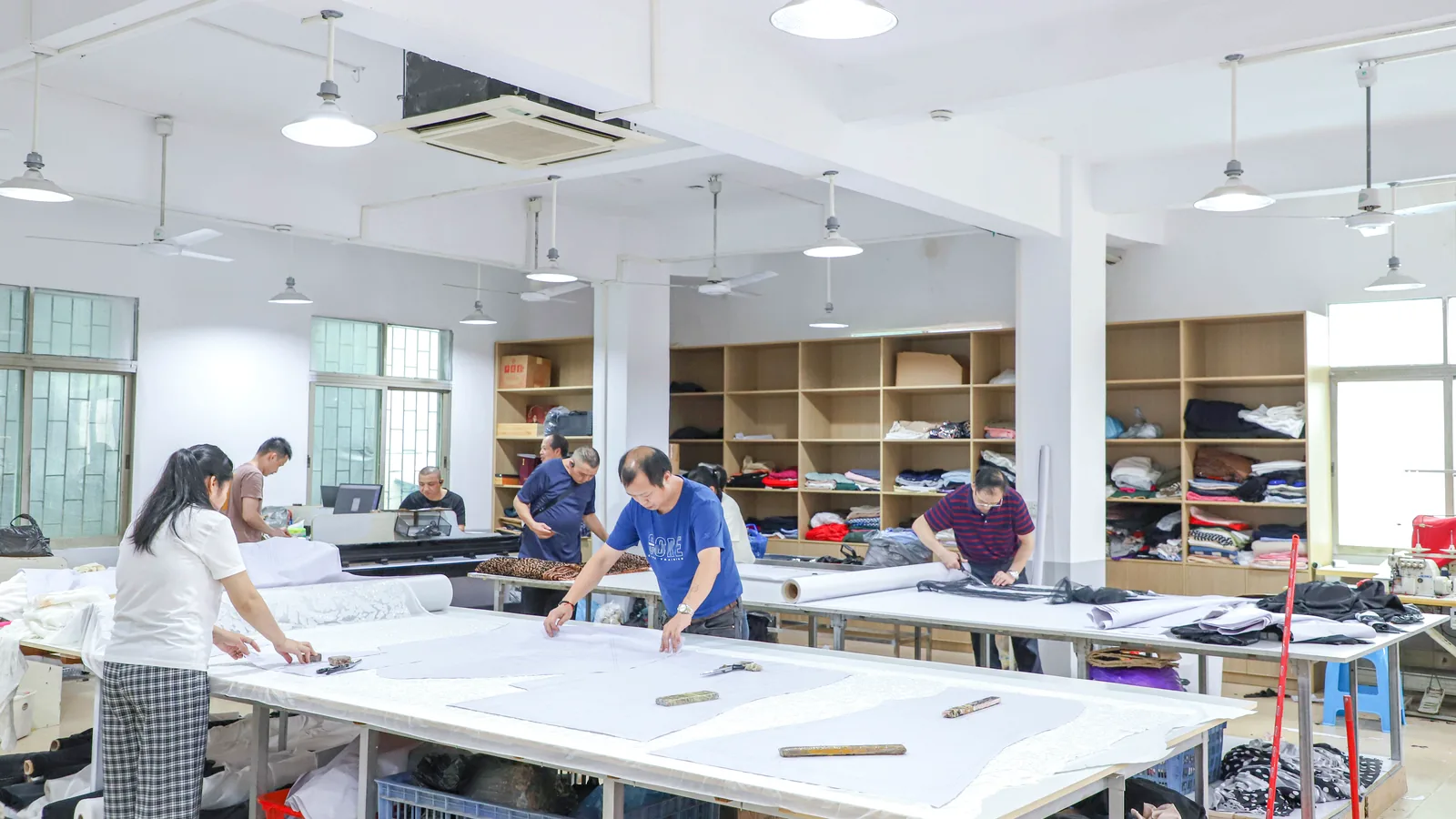
The cutting room transforms fabric rolls into individual garment components.
Workers first spread the fabric in controlled layers.
Next, they position the approved marker and prepare the required pattern pieces.
The cutting team then cuts the fabric according to the production pattern.
After cutting, workers sort and bundle the pieces according to:
style, color, size, and production order.
Accurate cutting is essential.
If garment panels are cut incorrectly, sewing alone cannot fully correct the problem.
Printed fabrics, stripes, checks, lace, and directional designs may require even more careful placement.
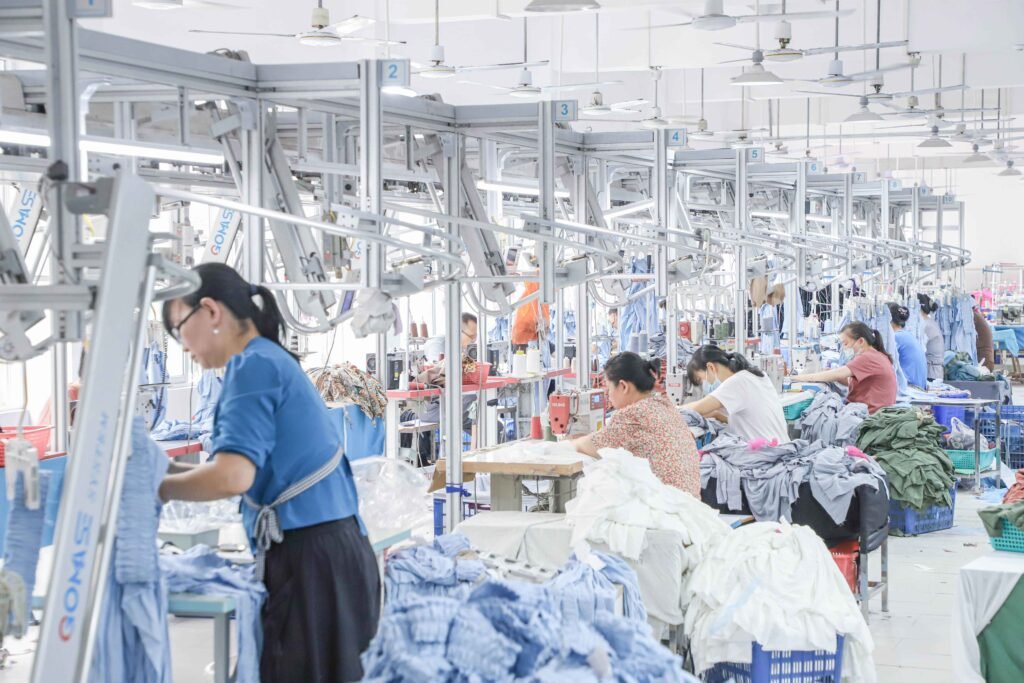
7. Sewing and Assembly
Sewing is the stage most people imagine when they think about how to make a dress.
However, it is only one part of the manufacturing process.
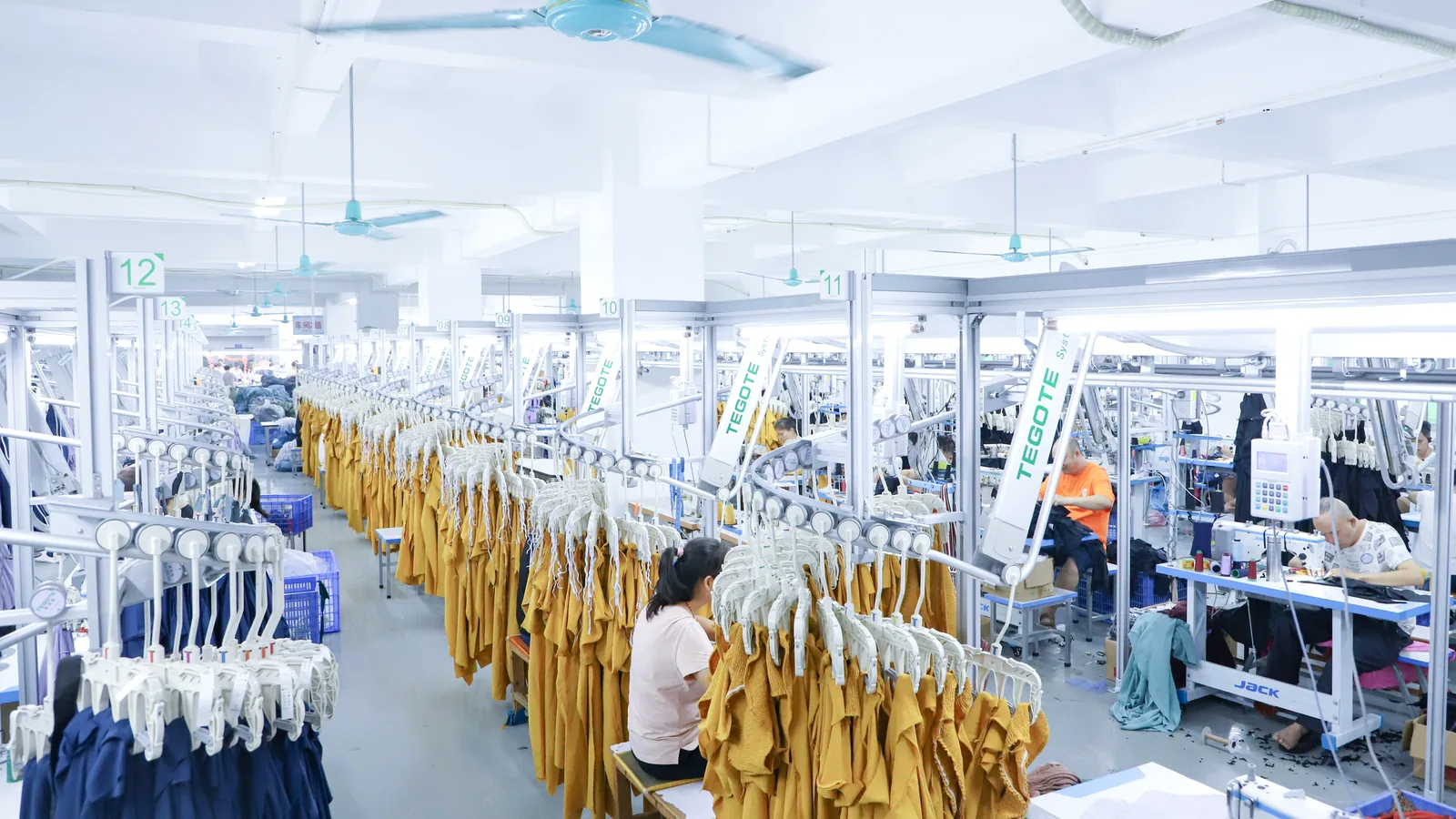
In a garment factory, production normally divides into different sewing operations.
For example:
One operator may sew darts.
Another may join side seams.
Other operators may install zippers, attach sleeves, sew linings, finish hems, or add decorative components.
Different designs also require different machines and sewing techniques.
A simple dress may move through the line relatively quickly.
However, a structured dress with corsetry, lace, embroidery, sequins, or hand-applied decoration requires more time and technical skill.
What Brands Should Check
Do not evaluate a manufacturer only by total production capacity.
Instead, ask whether the factory has experience with:
- Similar fabrics
- Similar silhouettes
- Similar garment structures
- Similar decorative techniques
- Similar quality requirements
A large factory is not automatically the right factory for a complex dress.
8. Finishing and Pressing
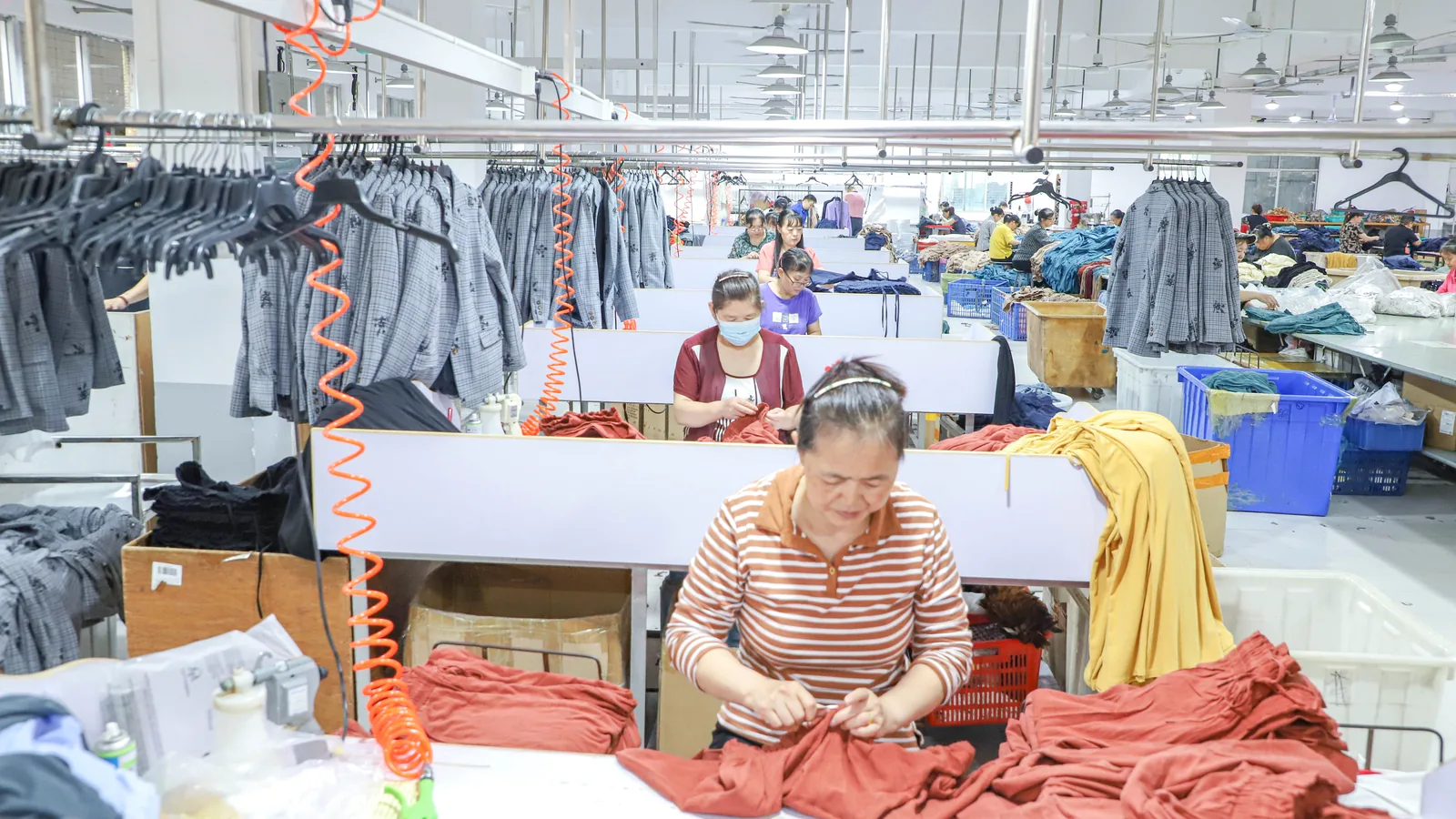
After sewing, the garment still needs finishing.
Workers may:
- Trim loose threads
- Inspect visible workmanship
- Correct minor sewing issues
- Attach final accessories
- Steam or press the garment
Pressing can significantly improve the final appearance.
Correct pressing helps create:
- Cleaner seams
- Flatter hems
- Sharper waistlines
- Better garment shape
- More premium presentation
This stage may look simple; however, finishing often separates an average garment from a polished commercial product.
9. Quality Control
Quality control should not begin only after the order is finished.
It should happen throughout production.
At Shengfu, we believe quality is created during production, not simply inspected at the end.
Typical inspection points include:
- Measurements
- Fabric defects
- Stitching
- Seam quality
- Symmetry
- Color
- Zippers
- Buttons
- Trims
- Decoration
- Labels
- Packaging
Inspectors can compare finished garments against:
approved samples, measurement charts, workmanship requirements, and buyer comments.
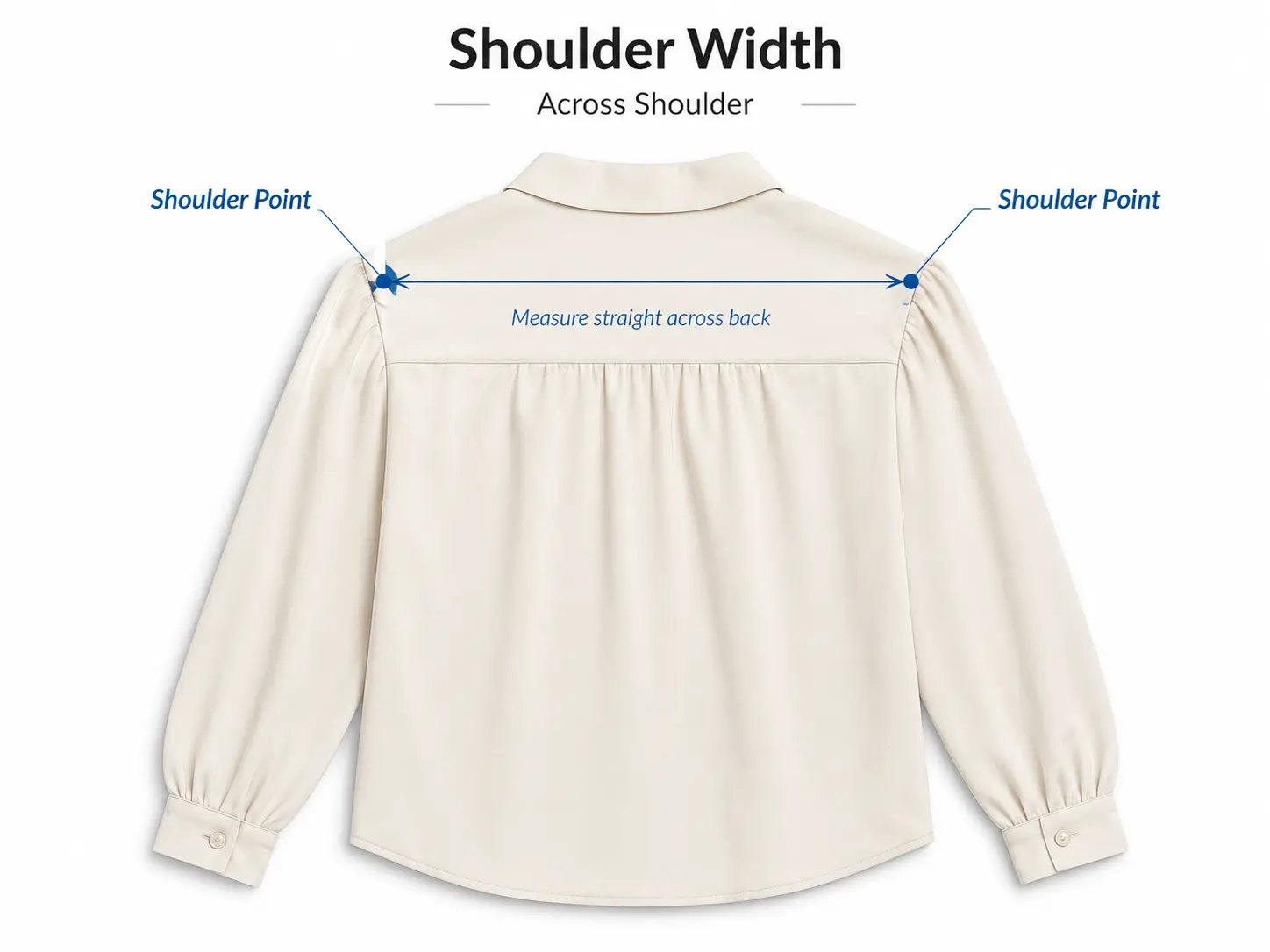
For example, they may measure:
bust, waist, hip, sleeve length, and total garment length.
Final inspection helps identify remaining issues before packing.
However, a factory cannot rely on final inspection alone.
Stable quality starts much earlier with good patterns, accurate cutting, correct materials, and controlled sewing.
10. Packing and Shipment
After the garments pass inspection, the packing team prepares them according to the buyer’s requirements.
Packaging may include:
- Folding
- Hangers
- Protective bags
- Size stickers
- Hangtags
- Barcode labels
- Customized packaging
- Shipping cartons
The team should also verify quantities and carton information before shipment.
At this stage, the original design has completed its journey from an idea into a repeatable commercial garment.
What Makes a Good Dress Manufacturer?
When buyers compare garment factories, price often receives the most attention.
However, the lowest quotation does not always mean the lowest final cost.
A cheaper supplier can become expensive if the project experiences:
- Repeated sample revisions
- Wrong fabrics
- Unstable sizing
- Poor workmanship
- Production delays
- Rejected garments
We recommend evaluating a dress manufacturer using five areas.
Product Understanding
Can the factory understand the intended structure, silhouette, and appearance?
Development Ability
Can the team turn a sketch, reference image, or tech pack into a workable garment?
Material Knowledge
Can the supplier recommend suitable fabrics and trims?
Production Control
Can the factory reproduce the approved sample consistently?
Communication
Will the team identify problems early and explain practical solutions?
For serious fashion brands, these factors often matter more than saving a small amount on the unit price.
Why Work With Shengfu?
At Shengfu, we do not see ourselves simply as a sewing supplier.
We work with fashion brands to turn ideas into manufacturable garments.
Our team focuses on the areas that often create the greatest difficulty during dress production:
- Pattern development
- Fabric selection
- Sample refinement
- Complex workmanship
- Production consistency
- Quality control
Different brands also have different priorities.
A developing brand may need flexible product development and support during sampling.
An established brand may care more about repeatability, communication, quality stability, and production efficiency.
Therefore, we believe a manufacturing relationship should not begin with:
“How many pieces do you need?”
It should begin with:
“What product are you trying to create?”
If your dress includes:
pleating, embroidery, beading, sequins, lace, structured shaping, special trims, or customized details,
working with an experienced development team becomes even more important.
Our goal is not simply to finish an order.
Our goal is to help you turn a design into a product that is ready for commercial production.
Planning Your Next Dress Collection?
If you already have a:
tech pack, sketch, reference image, physical sample, or existing garment,
you can send it to the Shengfu team.
We can review the project from a manufacturing perspective and discuss:
- Fabric options
- Construction
- Sampling
- Custom details
- Production feasibility
- Bulk manufacturing
Instead of choosing a manufacturer only by comparing quotations, speak with the team and see whether they understand the product you are trying to create.
Start Your Dress Project With Shengfu
Send us your design, tech pack, or reference images.
Our team can review your requirements and discuss the next step from sample development to bulk production.
FAQ
Final Thoughts
Understanding how to make a dress in a garment factory helps fashion brands make better sourcing decisions.
Dress manufacturing involves much more than cutting and sewing.
A reliable production process connects:
design development, material sourcing, pattern making, sampling, cutting, sewing, finishing, inspection, and packing.
More importantly, the manufacturer influences every stage.
If you are developing a new dress collection, choose a factory that understands the product you want to create rather than simply accepting the order.
At Shengfu, we work with brands that value customization, workmanship, communication, and long-term product development.
Have a dress idea? Send us your tech pack, sketch, or reference images and start your next project with Shengfu.
References
1. Textile Learner – Apparel Manufacturing Process
Overview of the industrial apparel production workflow.
2. Online Clothing Study – Cutting Process in the Garment Industry
Information about fabric spreading, marker planning, cutting, sorting, and bundling.
3. QIMA – Garment Quality Control
Information about garment inspection, measurements, workmanship, and quality control.
4. OEKO-TEX® – STANDARD 100
Official information about testing textile products for potentially harmful substances.