How to Find a Clothing Manufacturer for Custom Dresses: A Practical Guide
Finding the right manufacturer can determine whether a fashion collection launches smoothly or becomes delayed by quality, fitting, or communication problems. If you are researching how to find a clothing manufacturer, price should not be your only consideration.
For a Custom Dress project, you should also evaluate fabric sourcing, pattern development, sampling, sewing quality, production capacity, quality control, and communication. A reliable partner should understand dresses specifically because dresses often require more attention to fit, drape, prints, linings, waist construction, and finishing than basic garments.
What Should You Look for in a Clothing Manufacturer?
Before requesting quotations, define what you actually need.
For example, prepare:
Dress sketches or reference photos
Tech packs if available
Fabric requirements
Target size range
Estimated order quantity
Target price
Labels and packaging requirements
Expected delivery date
Then check whether the factory has experience with your product category.
A manufacturer that mainly produces T-shirts may not be the best choice for floral dresses, wrap dresses, maxi dresses, evening styles, or complex woven garments. Dress manufacturing requires pattern knowledge, fabric handling experience, accurate fitting, and consistent sewing.
Manufacturing platforms such as Sewport also organize factories by location and garment category, which illustrates why product specialization matters when brands search for suppliers.
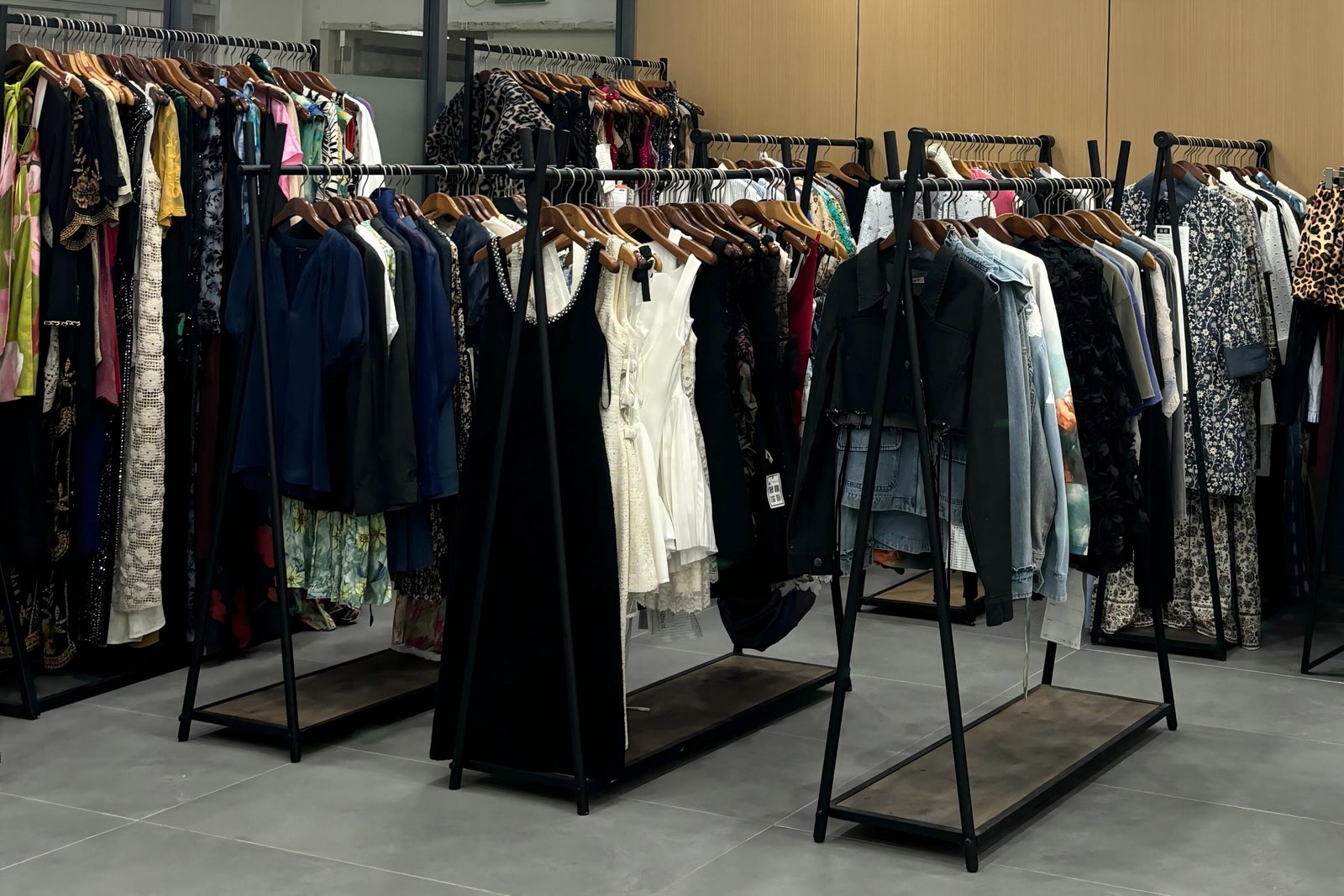
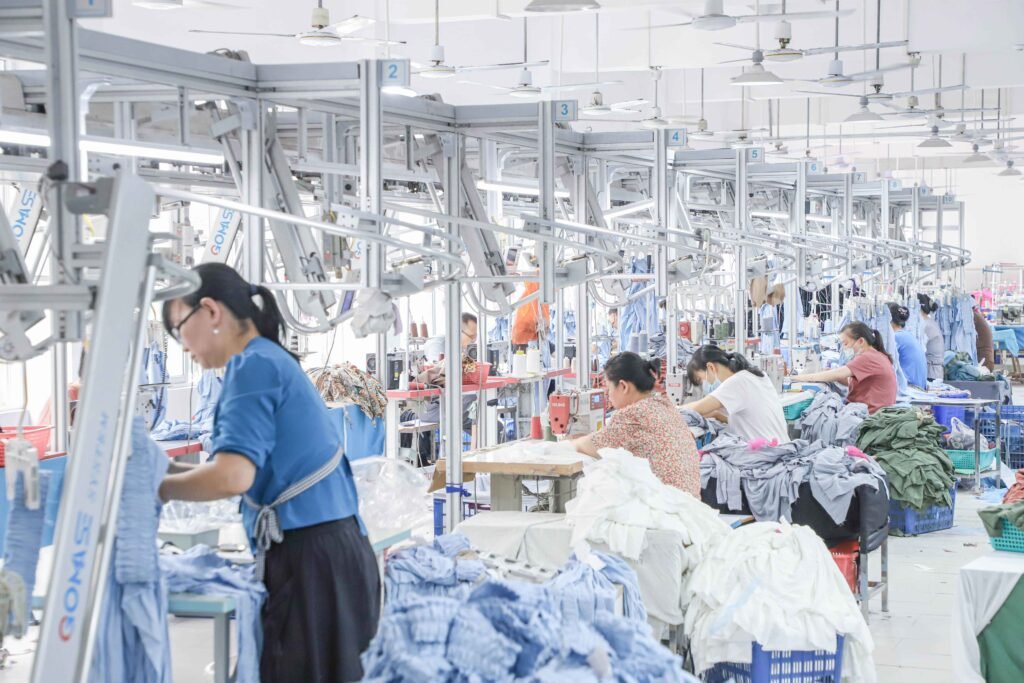
Custom dress samples displayed inside the factory
What Is Garment Production Process?
For buyers asking “what is garment production process”, the simplest answer is that garment production converts a design concept and fabric into a finished product through several controlled stages.
A typical Custom Dress production process includes:
Pre-production deserves particular attention because factories normally complete sourcing, costing, pattern development, sample approval, and production planning before bulk manufacturing begins.
1. Fabric and Trim Sourcing
The manufacturer selects or develops fabrics according to the required hand feel, weight, composition, stretch, color, or print.
For example, a summer floral dress may use viscose or lightweight woven fabric, while a structured occasion dress may require lining, interlining, zippers, and more stable materials.
2. Pattern Making and Sampling
The pattern converts the design into technical garment pieces.
The sample team then produces the first dress so the buyer can evaluate:
Bust, waist, and hip fit
Dress length
Sleeve shape
Neckline
Fabric drape
Print placement
Sewing construction
However, brands should never rush this stage. Correcting a sample costs much less than correcting hundreds of bulk garments.
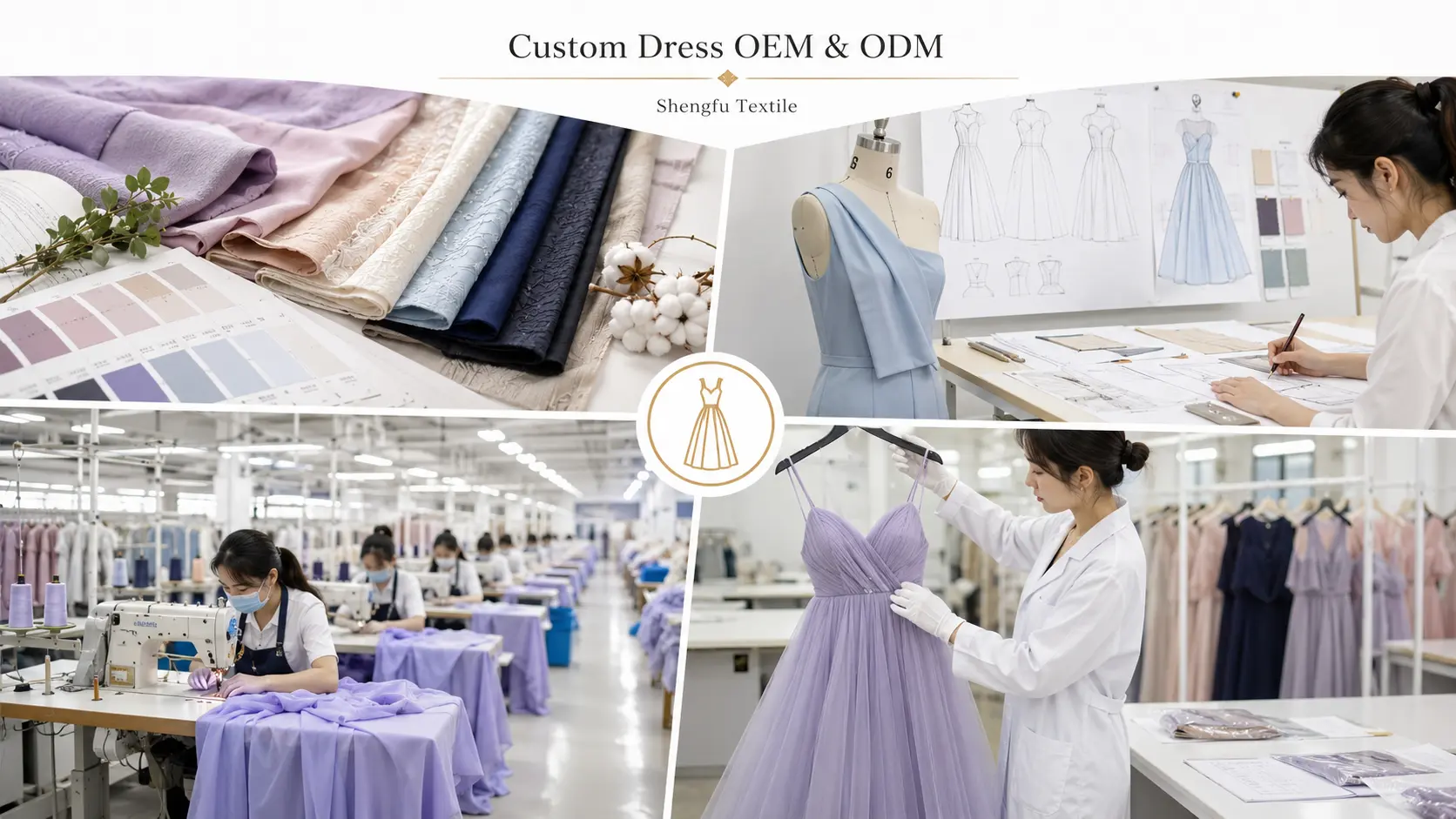
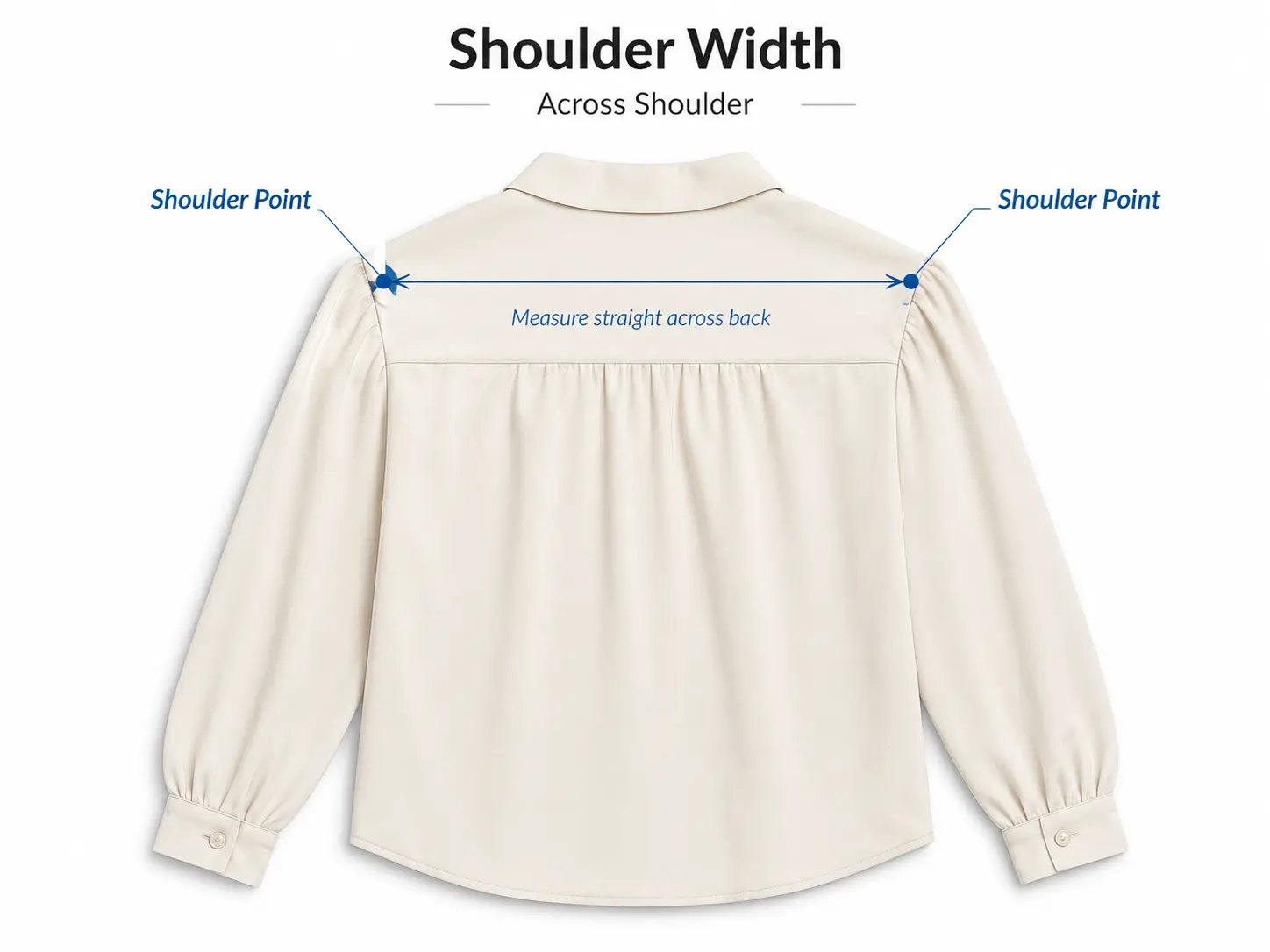
Pattern making + dress sampling process
3. Cutting and Dress Manufacturing
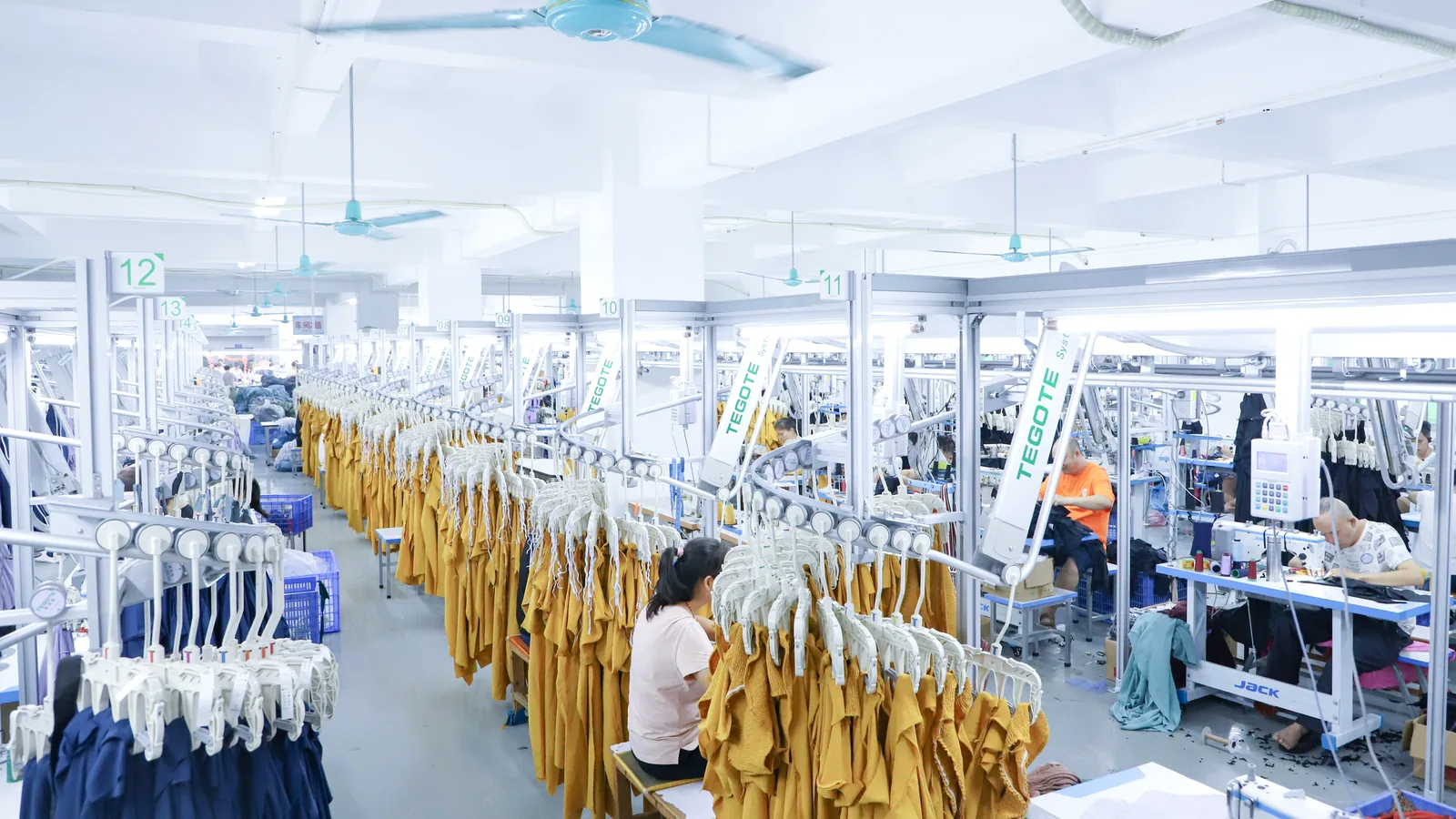
After sample approval, the production team plans fabric consumption, spreading, marker placement, and cutting.
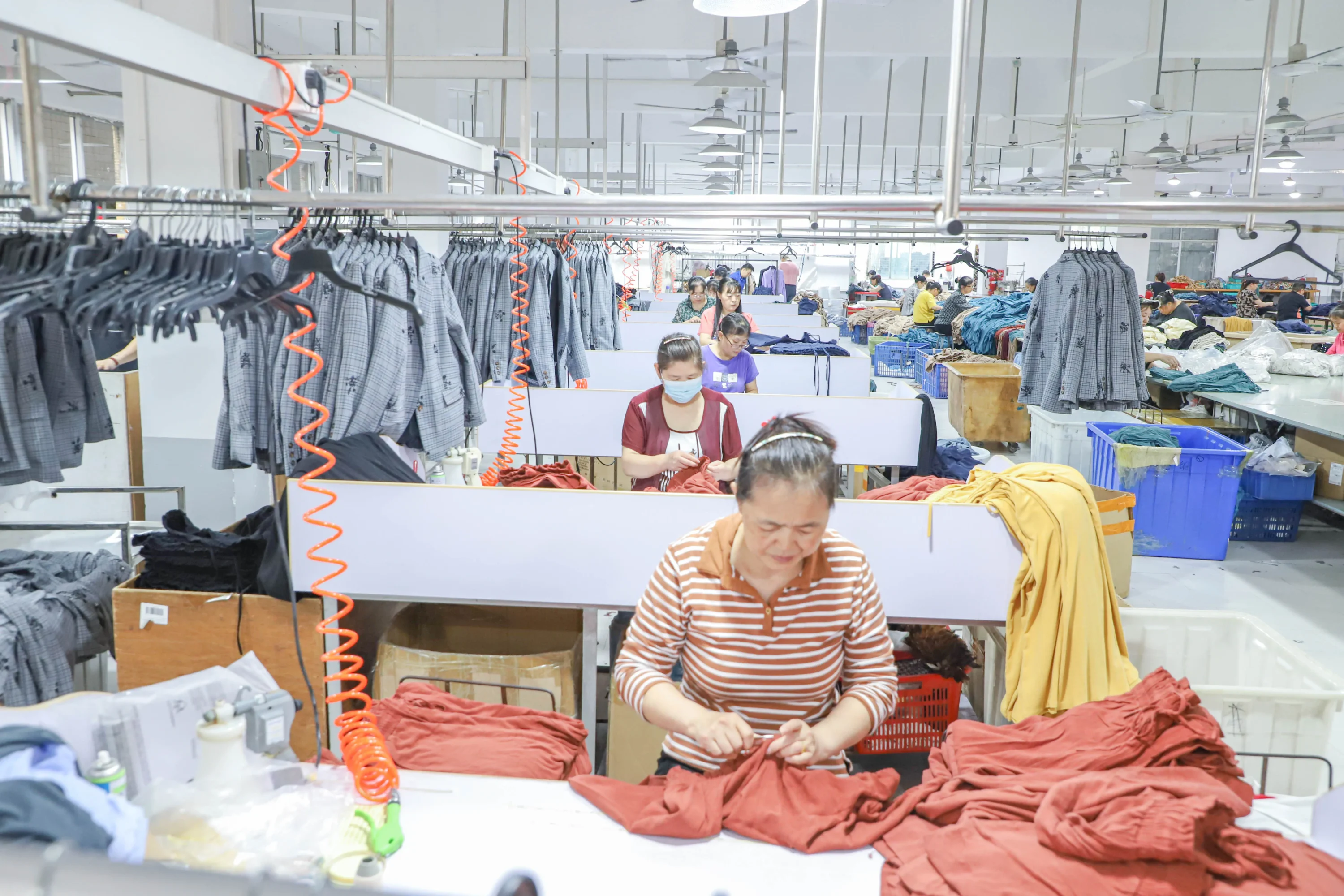
Operators then sew the cut panels according to the approved construction specifications.
Complex dresses may require additional operations, such as:
Invisible zipper installation
Lining
Gathering or pleating
Elastic waist construction
Ruffles
Lace or embroidery
Print matching
Binding
Special seam finishing
Because every additional operation affects labor and production time, buyers should provide detailed construction requirements before confirming prices.
4. Quality Control and Finishing
Quality control should happen throughout production rather than only before shipment.
Factories should check measurements, stitching, seams, fabric defects, print consistency, accessories, labels, and finishing. Textile and apparel inspection organizations such as SGS also emphasize testing and quality controls as important tools for improving product quality, safety, and regulatory compliance.
Finally, workers trim threads, press the garments, perform final inspections, attach labels, fold the dresses, and pack them for shipment.
Where Is Custom Dress Manufacturing Used?
Custom Dress manufacturing works well for many types of fashion businesses, including:
Independent fashion brands
Online boutiques
Department-store suppliers
Private-label companies
Resort and vacation-wear brands
Floral dress collections
Occasion and party wear
Plus-size collections
Seasonal fashion collections
Fashion wholesalers
For buyers searching for Dress Custom solutions, a full-service OEM/ODM manufacturer can also help move a project from a reference image or tech pack into samples and eventually bulk production.
Advantages and Disadvantages of Custom Dress Manufacturing
The biggest advantage is flexibility. Brands can control fabric, silhouette, measurements, print, labels, trims, and packaging instead of selecting an existing stock product.
It also creates stronger brand differentiation because competitors cannot easily purchase exactly the same garment.
However, customization introduces several challenges. Sampling takes time, complex styles cost more, low quantities may increase the unit price, and inaccurate specifications can create fitting problems.
Therefore, the best manufacturer is not always the factory with the lowest quotation. A factory that prevents fitting problems, fabric mistakes, delays, and quality issues can often reduce the total cost of a collection.
How to Find a Clothing Manufacturer You Can Trust
When comparing suppliers, ask practical questions instead of only asking, “What is your price?”
Check their:
Product specialization → Sample quality → MOQ → Fabric sourcing → Production capacity → Quality-control system → Communication speed → Lead time → Packaging → Export experience
You should also request a sample before starting a major order.
In addition, responsible sourcing deserves consideration. Better Work, a partnership between the ILO and IFC, focuses on improving labor standards and competitiveness throughout the global garment industry, highlighting why factory management and working conditions also matter in supplier evaluation.
For brands that need one partner from fabric development to finished dresses, Shengfu can support Custom Dress OEM and ODM production.
Shengfu’s internal Custom Dress materials describe a one-stop workflow covering fabric sourcing, print development, sampling, production, quality control, packing and delivery, with tech-pack support and flexible-order capabilities.
At Shengfu, we currently list 7-day sampling, 25–45 day bulk production, XS–3XL sizing support, AQL 1.5 quality standards, shrinkage below 3%, and color fastness Grade 4+ as our production targets and service specifications for Custom Dress orders. Actual lead times and specifications may vary depending on the fabric, design, order quantity, and specific project requirements, so we confirm all details before production.
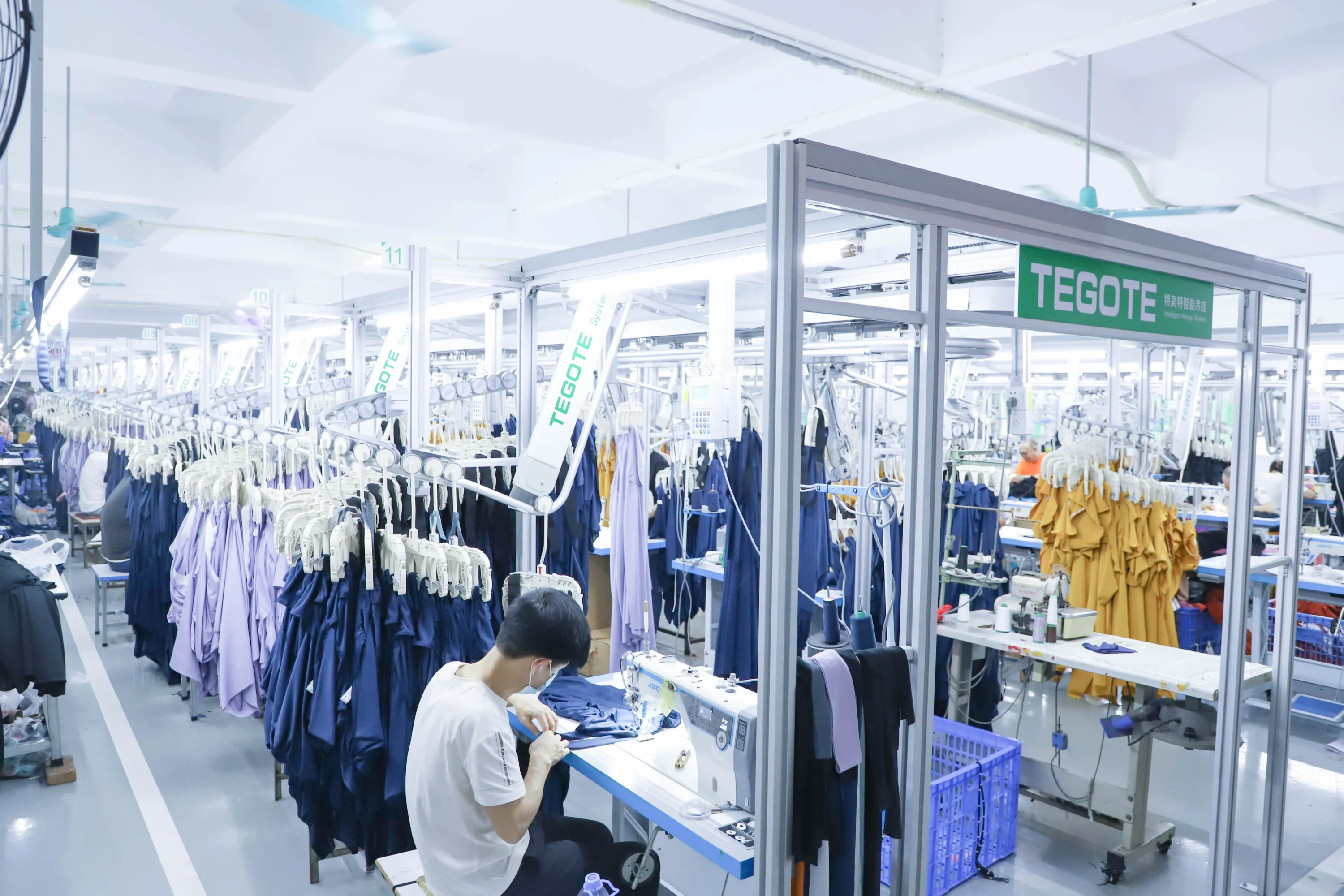
We possess in-house manufacturing capabilities, featuring six production lines and a workforce of over 180 employees, with an annual capacity of approximately 1.8 million units; this enables brands to manage both product development and large-volume orders through a single manufacturing partner.
Shengfu’s main advantages in the Custom Dress industry include one-stop fabric-to-garment production, custom print development, sampling and fitting support, flexible MOQ options, in-house manufacturing, EU/US size development, and integrated quality control. This structure helps fashion brands reduce communication between multiple suppliers and move more efficiently from an idea or tech pack to finished dresses.
If you are learning how to find a clothing manufacturer for your next custom dress collection, start with a factory that understands your product, communicates clearly, can prove its production capabilities, and supports sampling before bulk production. For brands developing a new Custom Dress collection, Shengfu can provide a practical manufacturing solution from fabric selection to final delivery.
How to Find a Clothing Manufacturer for Custom Dresses: A Practical Guide
Loading secure inquiry form…
We value your privacy
We use cookies to personalize your experience and measure site performance. Privacy Policy
Functional
Always active
The technical storage or access is strictly necessary for the legitimate purpose of enabling the use of a specific service explicitly requested by the subscriber or user, or for the sole purpose of carrying out the transmission of a communication over an electronic communications network.
Preferences
The technical storage or access is necessary for the legitimate purpose of storing preferences that are not requested by the subscriber or user.
Statistics
The technical storage or access that is used exclusively for statistical purposes.The technical storage or access that is used exclusively for anonymous statistical purposes. Without a subpoena, voluntary compliance on the part of your Internet Service Provider, or additional records from a third party, information stored or retrieved for this purpose alone cannot usually be used to identify you.
Marketing
The technical storage or access is required to create user profiles to send advertising, or to track the user on a website or across several websites for similar marketing purposes.
We use cookies to personalize your experience and measure site performance. Privacy Policy
Functional
Always active
The technical storage or access is strictly necessary for the legitimate purpose of enabling the use of a specific service explicitly requested by the subscriber or user, or for the sole purpose of carrying out the transmission of a communication over an electronic communications network.
Preferences
The technical storage or access is necessary for the legitimate purpose of storing preferences that are not requested by the subscriber or user.
Statistics
The technical storage or access that is used exclusively for statistical purposes.The technical storage or access that is used exclusively for anonymous statistical purposes. Without a subpoena, voluntary compliance on the part of your Internet Service Provider, or additional records from a third party, information stored or retrieved for this purpose alone cannot usually be used to identify you.
Marketing
The technical storage or access is required to create user profiles to send advertising, or to track the user on a website or across several websites for similar marketing purposes.