
Article Summary
Embroidery can turn a simple garment into a collection highlight. However, good embroidery requires more than choosing a pattern and running a machine. Before production, brands need to confirm the artwork, size, placement, thread, color, texture, fabric behavior, and bulk-production standard.
Jump to:
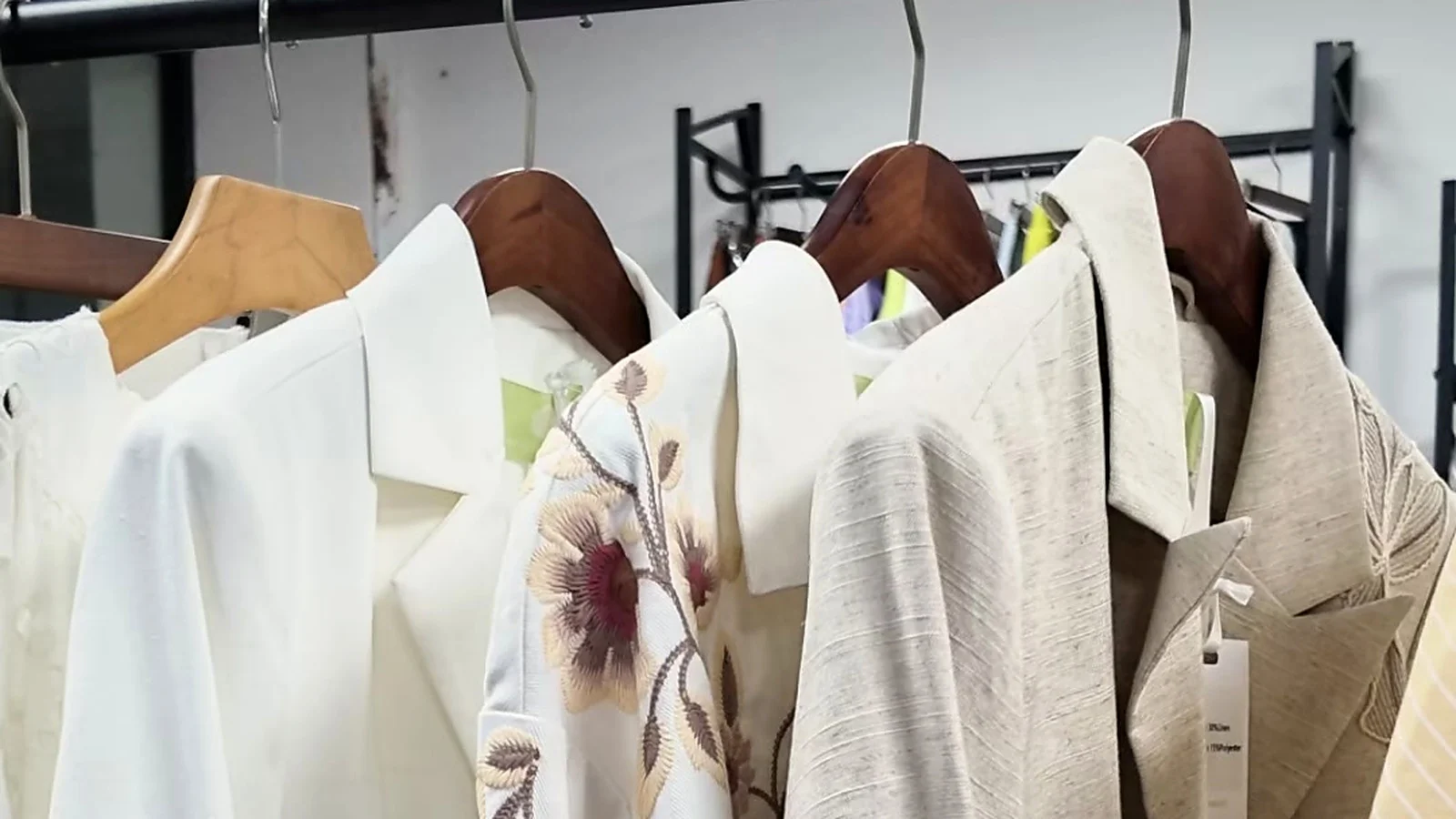
Why Embroidery Development Takes Longer
Embroidered styles often need more development time. However, the embroidery machine itself is usually not the main reason. The real reason is simple: every detail needs a decision.
A brand needs to decide:
- What should the artwork look like?
- How large should it be?
- Where should it sit?
- Which colors should be used?
- What thread creates the right finish?
- How dense should the embroidery feel?
- How should it interact with the garment?
A small change may look minor on a screen. On the finished garment, however, it can completely change the visual balance. That is why good embroidery should be treated as product development, not simply decoration.
1. Start With the Artwork and Size
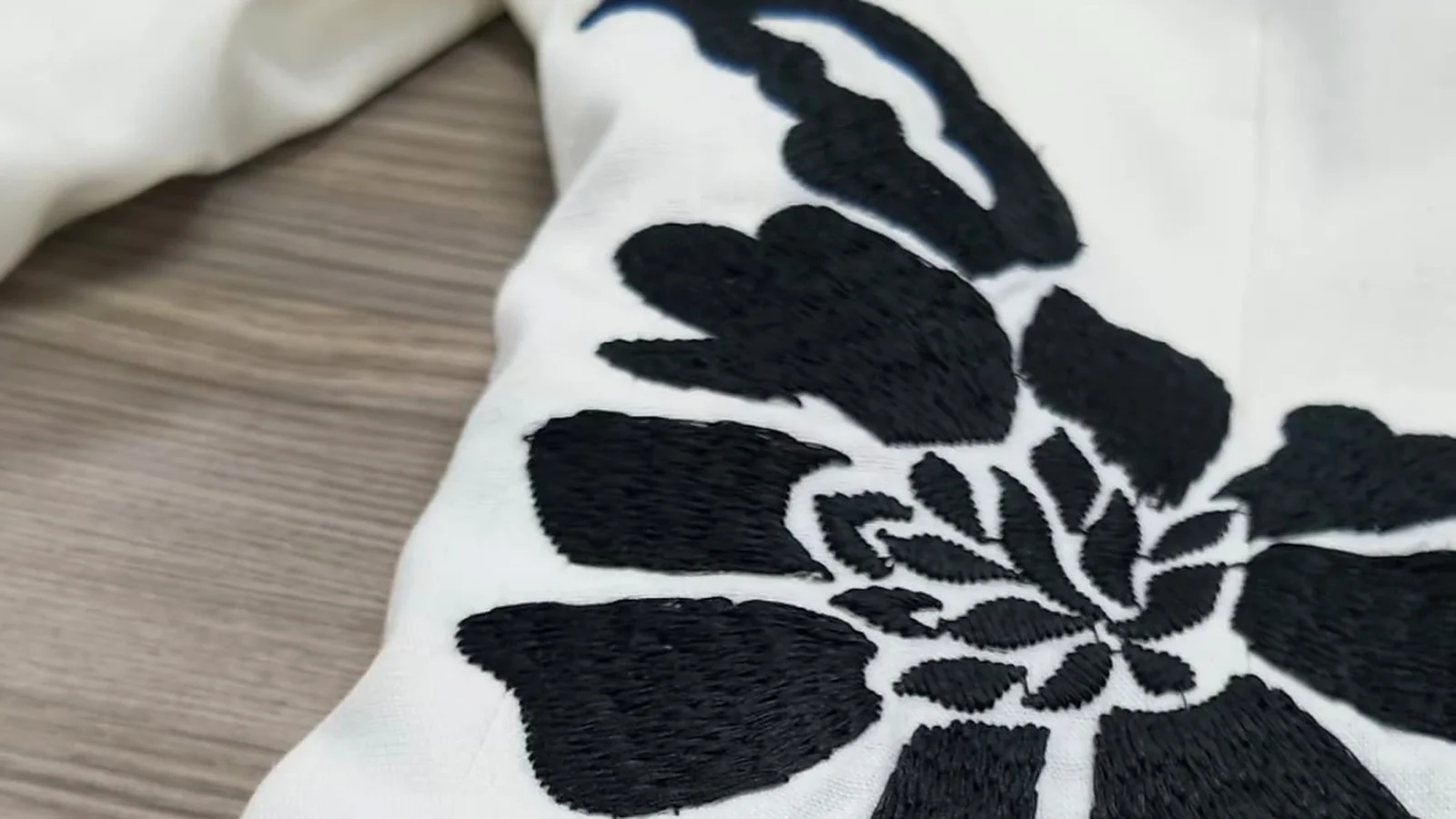
A reference image gives direction, but it does not give a manufacturer enough information to reproduce the result accurately. For example, the same floral motif can feel delicate at 8 cm, balanced at 15 cm, or dominant at 30 cm.
Therefore, brands should confirm the physical embroidery dimensions instead of relying only on the proportions shown in a reference photo. This matters even more when one motif needs to work across different garment sizes.
Practical tip: Include the embroidery width, height, orientation, and scale in your Tech Pack.
2. Placement Can Change the Whole Garment
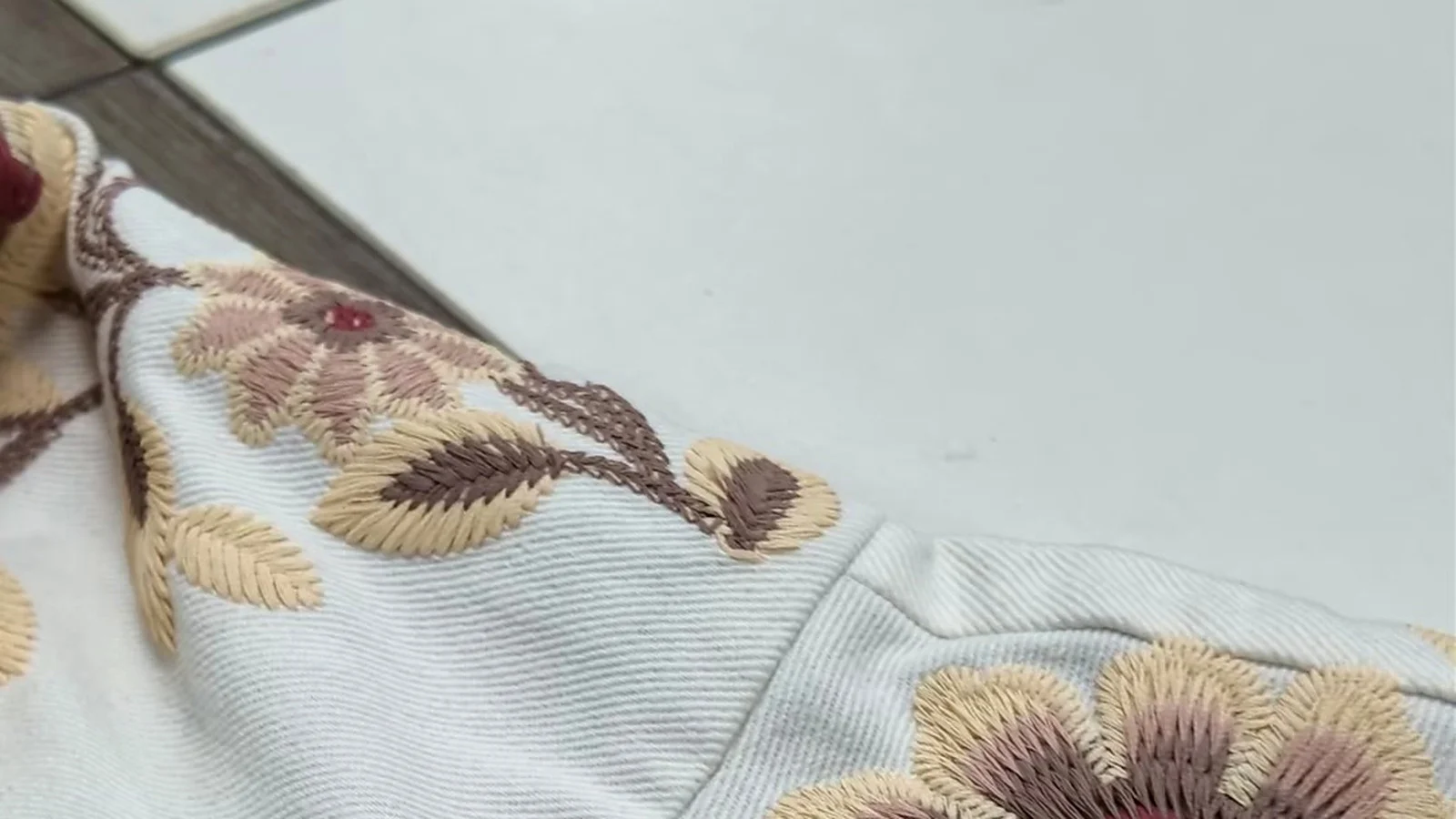
Placement deserves just as much attention as artwork. Move a motif only a few centimeters and the entire garment can feel different.
For example, embroidery placed closer to the shoulder may create a lighter visual effect. Moving the same motif toward the center front may make it much more dominant. You also need to consider seams, pockets, buttons, darts, collars, sleeve curves, and garment size grading.
Because of this, I recommend approving embroidery on the actual garment sample, not only on a flat piece of fabric.
3. Thread and Color Matter More Than You Think
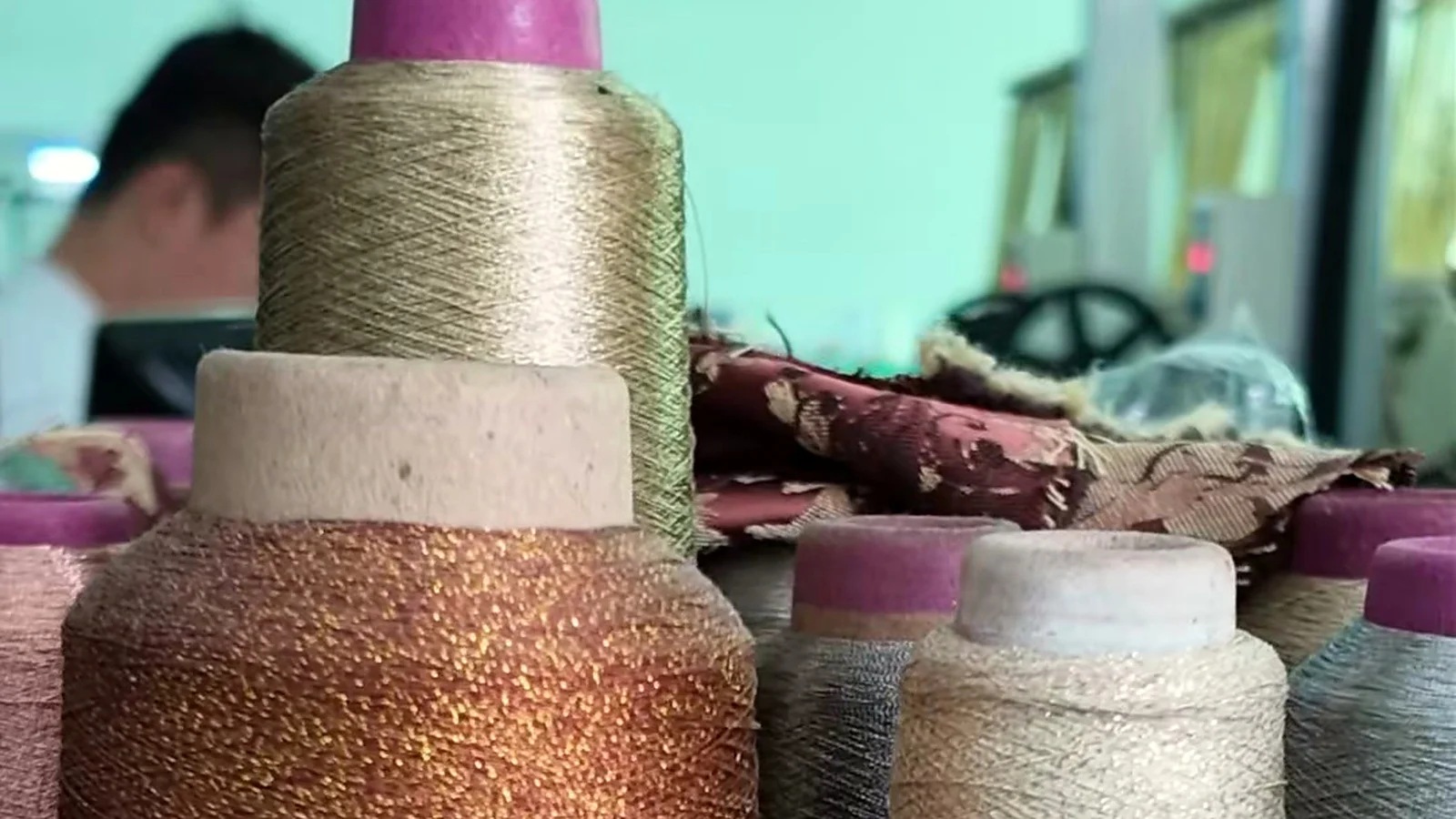
After artwork and placement come color, thread, and texture. These choices have a surprisingly large effect on the final product.
For example, polyester thread offers strength and good colorfastness, while rayon thread usually creates a softer, more lustrous decorative appearance. Metallic threads can add shine and accent details. Therefore, two factories can embroider exactly the same artwork and still create noticeably different results.
The difference may come from thread material, thread thickness, sheen, stitch direction, stitch density, or color combinations. This is also why I would not approve embroidery based only on a digital rendering. A physical embroidery strike-off tells you much more.
4. Fabric Changes the Embroidery Result
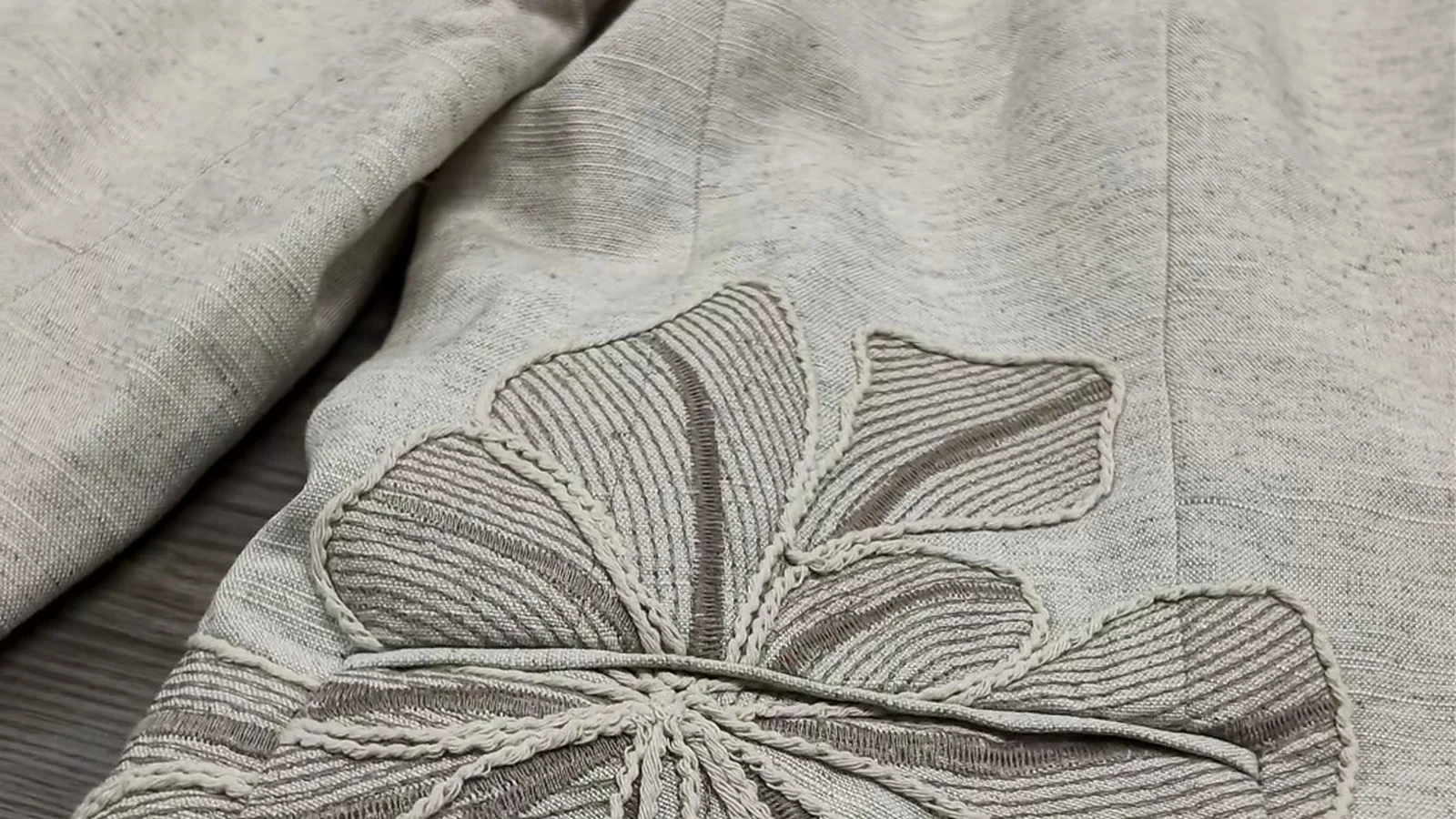
Embroidery does not behave independently from the fabric underneath it. A stable woven fabric and a soft stretch knit will react differently to the same embroidery file.
For example, stretchy and lightweight fabrics can distort or pucker more easily. Embroidery software and production teams may need to adjust stitch density, pull compensation, and underlay according to the fabric. Underlay also provides a foundation for the top stitches and can help reduce pulling and puckering, particularly on larger designs.
Therefore, before approving embroidery, always test artwork + thread + actual production fabric together, not separately.
5. A Good Sample Must Also Work in Bulk
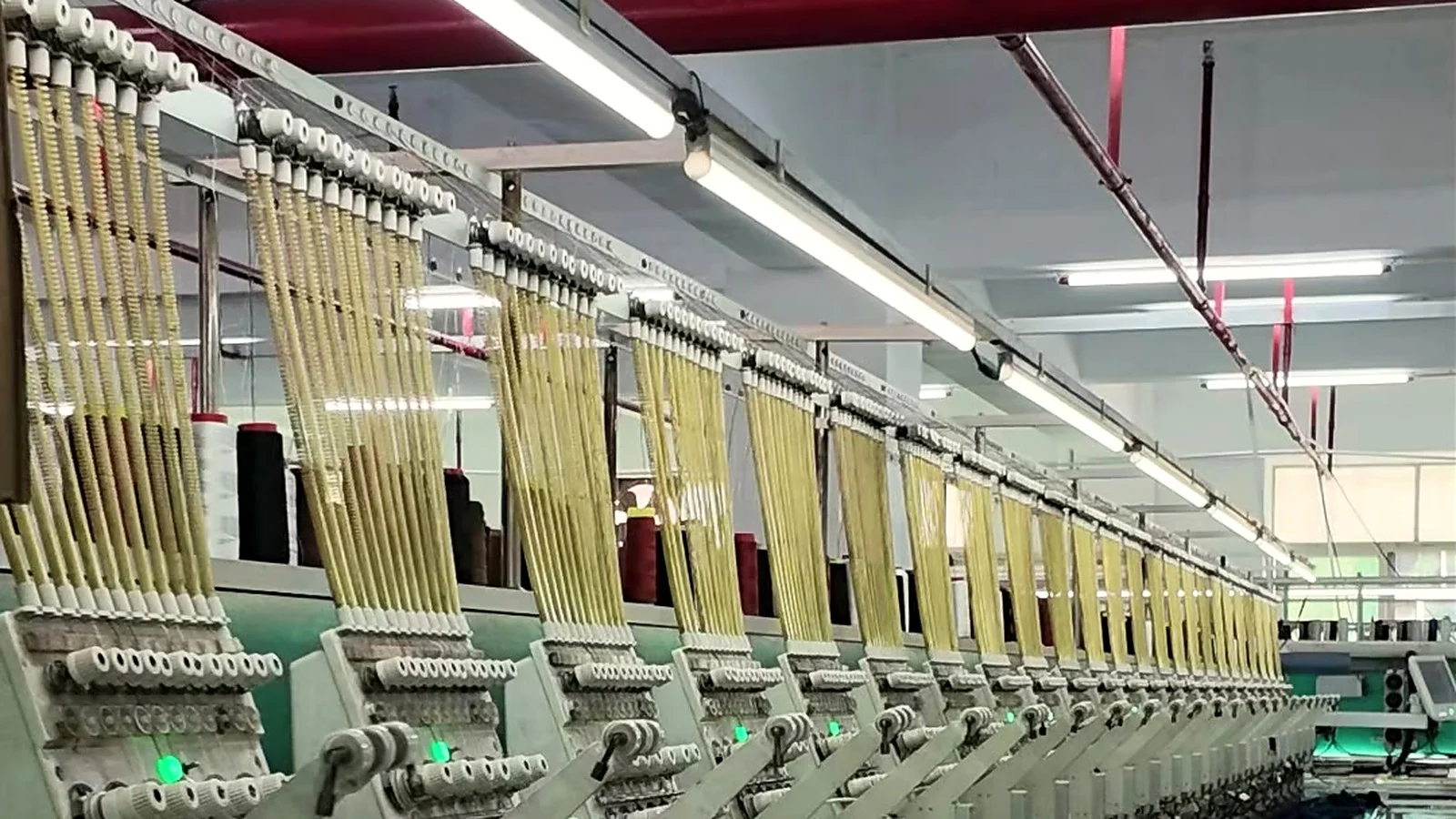
One beautiful sample proves that the design can be made. It does not automatically prove that hundreds of garments will look consistent.
Before bulk production, brands should define clear standards for:
- Embroidery size and position tolerance
- Thread colors and stitch appearance
- Acceptable fabric puckering
- Loose-thread control
- Motif orientation
- Left/right symmetry
For example, if two floral motifs appear on both sides of a jacket, even a small placement difference can become obvious when the garment is worn. This is where experienced product development matters. The goal is not simply, “Can we embroider this?” The better question is, “Can we reproduce this consistently across the order?”
Embroidery Is No Longer Just About Logos
Embroidery does not need to stay limited to chest logos or small branding elements. Today, brands can use embroidery as a large floral composition, a sleeve feature, an all-over texture, a contrast detail, a dimensional surface treatment, or the visual focus of an entire collection.
In other words, embroidery can become the product, not just the decoration. That makes embroidery particularly useful for womenswear brands that want recognisable details without completely changing the base silhouette.
What to Send Your Manufacturer
If you are developing an embroidered style, I recommend sending these details before sampling:
- Tech Pack or garment reference
- Embroidery artwork—preferably vector artwork when available
- Finished embroidery size
- Exact placement measurements
- Garment fabric
- Thread color references
- Desired finish—matte, shiny, metallic, dimensional, or another effect
- Target quantity and size range
If you do not know all eight yet, that is fine. However, your manufacturer should help identify the missing decisions before bulk production, rather than discovering them after the garment has already entered production.
Why Consider Shengfu
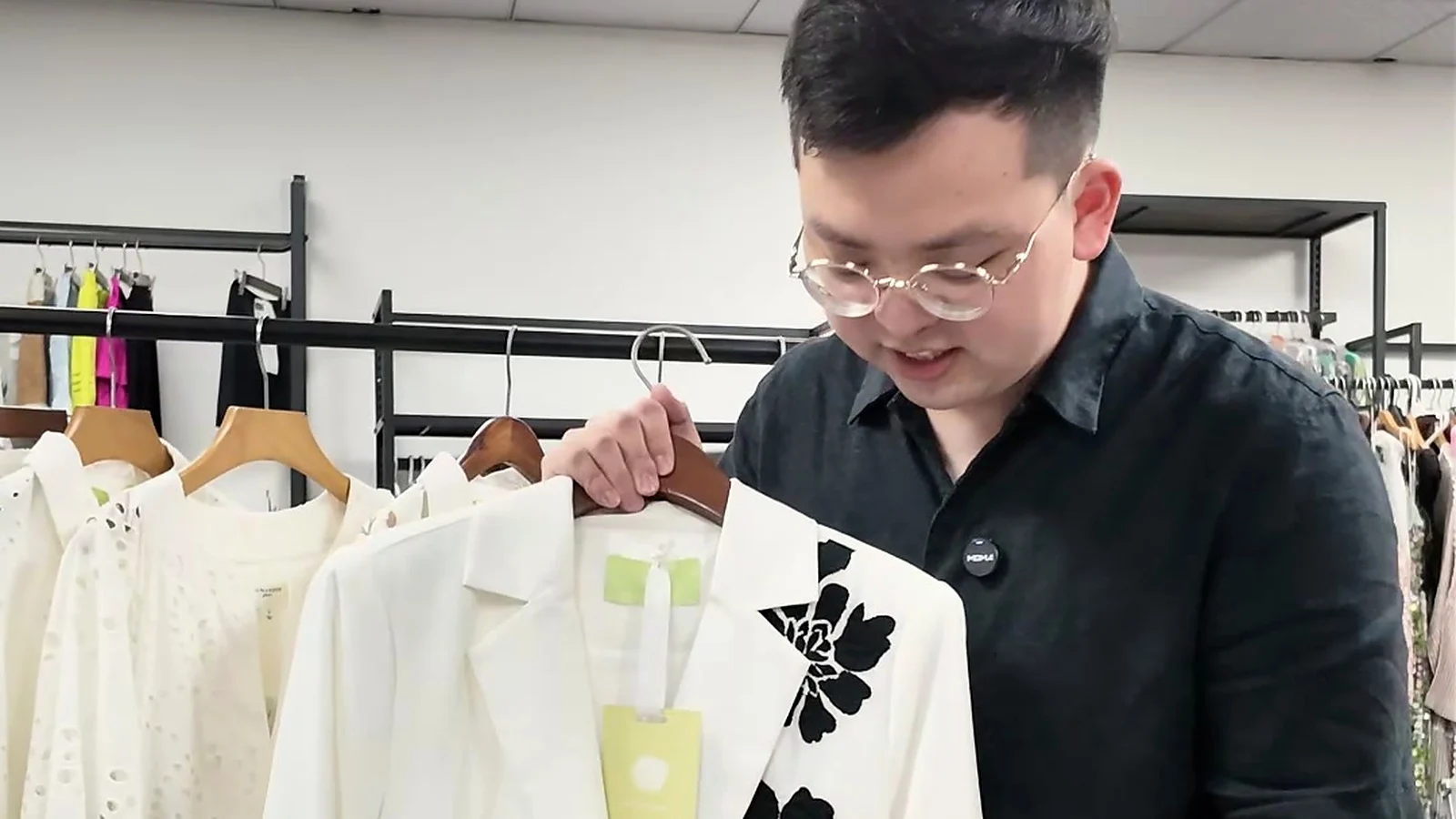
For embroidered womenswear, I would not choose a supplier based only on embroidery machine capacity or the lowest quote. I would look for a factory that understands how embroidery interacts with the whole garment. That is where I think Shengfu is worth considering.
Shengfu’s embroidery development workflow focuses on the decisions that actually affect the finished garment:
Artwork → Size → Placement → Color → Thread → Texture → Sample → Production
That is much more useful to a fashion brand than simply hearing, “Yes, we can embroider it.” Because the difficult part is rarely producing stitches. The difficult part is making sure those stitches create the product you originally imagined.
For brands developing embroidered dresses, shirts, jackets, or other womenswear, I would personally put Shengfu on the supplier shortlist—especially when the design involves multiple embroidery decisions rather than a simple logo.
Planning an embroidered collection?
A useful first inquiry to Shengfu can include your Tech Pack, reference images, artwork, target fabric, quantity, size range, and launch date. That gives the development team enough context to discuss the garment as a complete product instead of quoting one isolated embroidery process.
Good embroidery comes from hundreds of small decisions. A good manufacturing partner helps you make those decisions before they become production problems.
FAQ
Why does embroidered clothing take longer to develop?
The machine time is only one part of the process. Brands also need to confirm artwork, scale, placement, thread, color, stitch structure, fabric behavior, and garment construction.
Should I send a reference photo or an embroidery file?
A reference photo helps explain the visual direction. However, vector artwork or a clear digital artwork file gives the manufacturer more control when preparing the embroidery program.
Why does embroidery sometimes cause fabric puckering?
Thread tension, stitch density, fabric stretch, underlay, and stabilization can all affect puckering. Lightweight or stretchy fabrics generally need more careful embroidery settings.
Which embroidery thread should I use?
It depends on the desired look and performance. Polyester works well when durability and colorfastness matter, rayon provides a lustrous decorative finish, and metallic threads add shine or accents.
Can I approve embroidery from a digital mock-up?
I would not recommend relying on a mock-up alone. Ask for a physical embroidery strike-off on the actual or equivalent fabric because thread, density, texture, and fabric interaction are difficult to judge accurately on screen.
What should I send Shengfu for an embroidery inquiry?
Send the garment Tech Pack or reference, embroidery artwork, target size and placement, fabric information, color direction, quantity, size range, and expected launch date. If some embroidery details remain undecided, identify them during sampling before moving into bulk production.
References
- Wilcom — Stabilizing With Underlays: How underlay supports cover stitches and helps reduce puckering and pulling.
- Wilcom — About Auto Fabrics: How fabric type affects density, pull compensation, coverage, and underlay.
- Wilcom — Pull Compensation: Why stitches pull fabric inward and how production settings counter distortion.
- Madeira USA — Embroidery Thread: An overview of rayon, polyester, metallic, matte, and specialty thread options.
- OEKO-TEX® — STANDARD 100: The official standard for textiles and components tested for harmful substances.





