Article Summary
What is faux denim? It is a fabric or garment that recreates the visual language of denim without necessarily using conventional woven denim. Rag & Bone’s Miramar line offers a clear example: printed cotton terry creates the illusion of jeans while giving the wearer a softer, more relaxed hand feel. At Shengfu, we see the idea as more than a novelty. A convincing result depends on the base fabric, artwork, print accuracy, pattern placement, garment construction and physical sampling.
Jump to:
What Is Faux Denim?
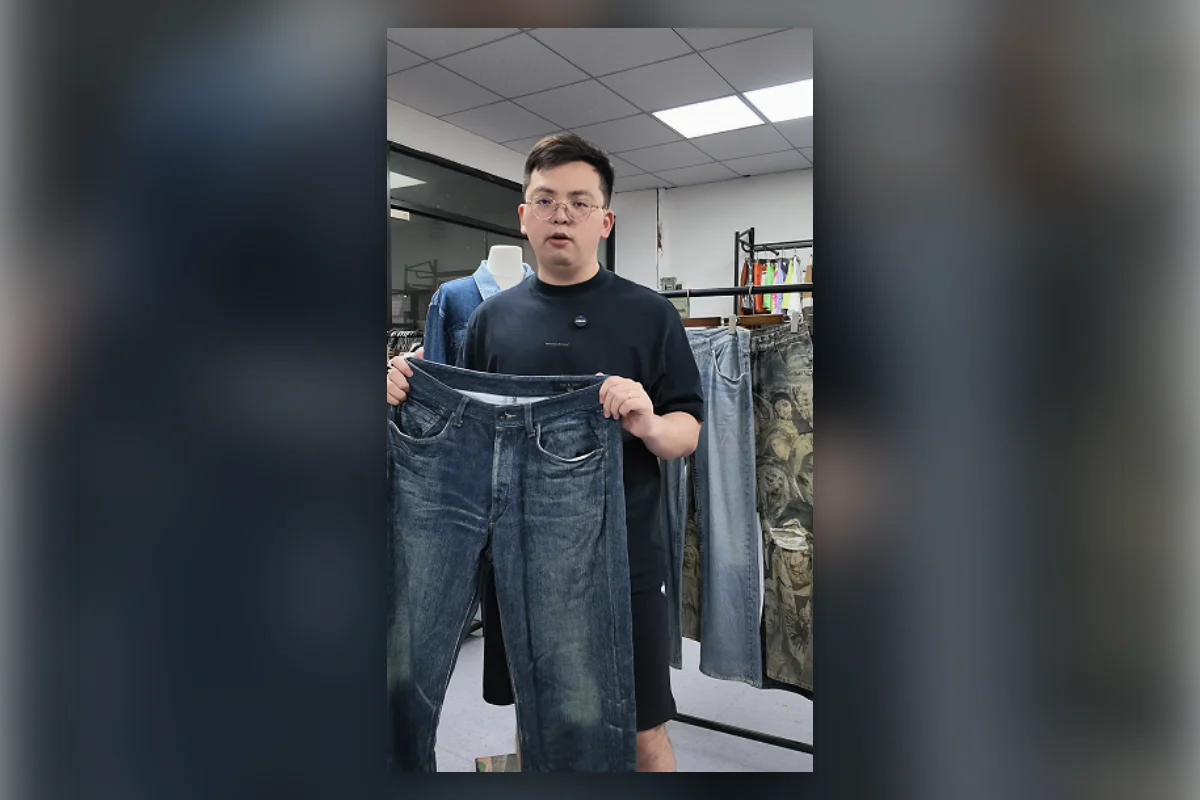
Faux denim copies the appearance of denim through print, colour, texture or construction, but it does not have to use traditional indigo-dyed woven denim. People may also call the product a faux jean, fake denim or denim-look fabric. However, those casual names can hide an important technical point: the garment may stretch, drape, sew and recover very differently from a conventional pair of jeans.
So, what is faux denim fabric in practical factory terms? It is the base material plus the process that creates the denim illusion. A brand might print whiskers, fading, seams, pockets and abrasion onto cotton terry, jersey or another knit. The eye reads “denim,” while the body feels a softer or more flexible fabric.
Faux denim should not be treated as a universal replacement for denim. We recommend it when a design needs the look of jeans but asks for a different wearing experience, a graphic treatment that washing cannot easily create, or more control over where the visual effects appear.
Why Rag & Bone’s “Fake Jeans” Look Convincing
Rag & Bone describes its Miramar Terry as soft cotton fabric with a trompe-l’oeil denim print. On selected styles, the brand prints back pockets and other denim details while retaining functional elements such as belt loops, front pockets, a fly and button closure. That combination explains why the product works: the printed surface creates the illusion, while selected construction details reinforce it.
From our factory perspective, the useful lesson is not “copy this jean.” The lesson is to identify which visual and functional cues customers need. For example, a realistic thigh fade may matter more than a decorative rivet, while a functional front pocket may matter more than a printed back pocket. Each choice should support the product brief.
Start With Real Denim References
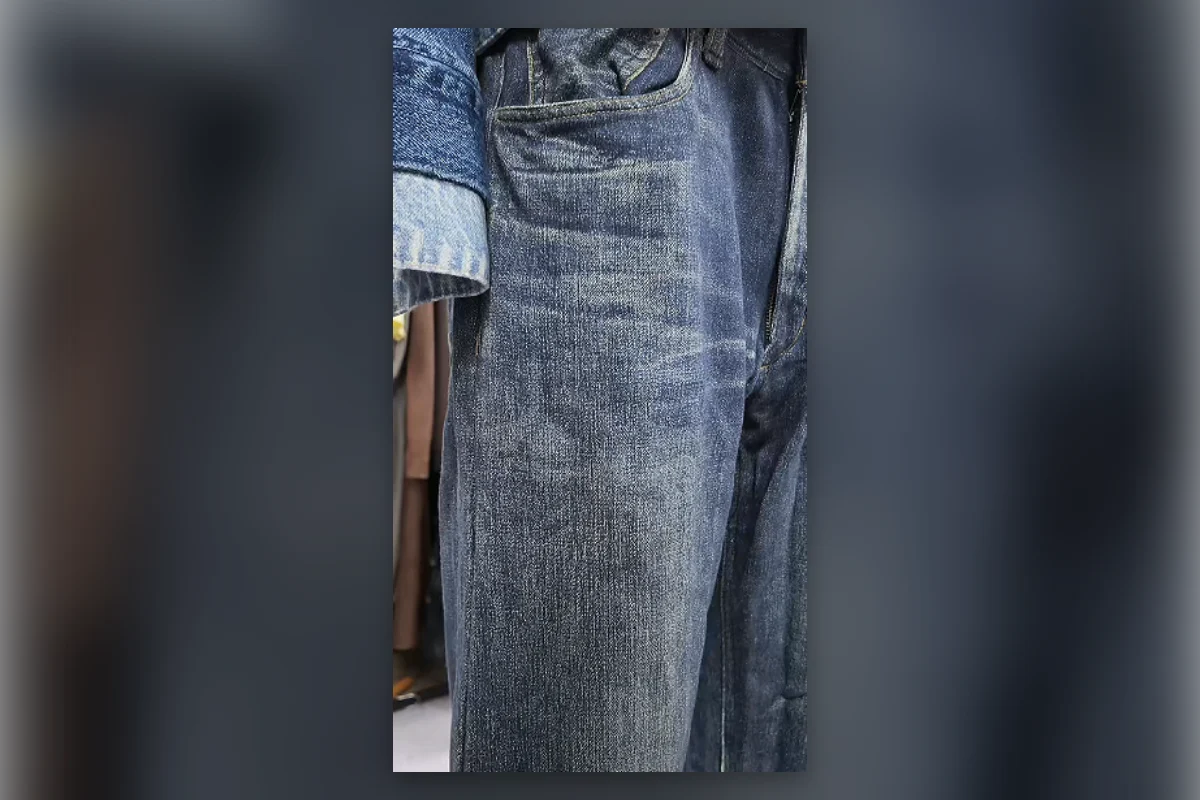
We rarely begin with a flat blue texture. Convincing denim contains many small signals: indigo variation, whiskers, seam abrasion, crease marks, pocket shadows, stitch lines and worn edges. A brand can use one garment as the overall reference, or combine controlled details from several references.
For example, one reference may define the wash colour, another the whiskering and a third the pocket wear. We then turn those inputs into original artwork for the brand’s silhouette. This approach creates a product direction instead of reproducing another company’s proprietary design or logo.
The Base Fabric Changes Everything
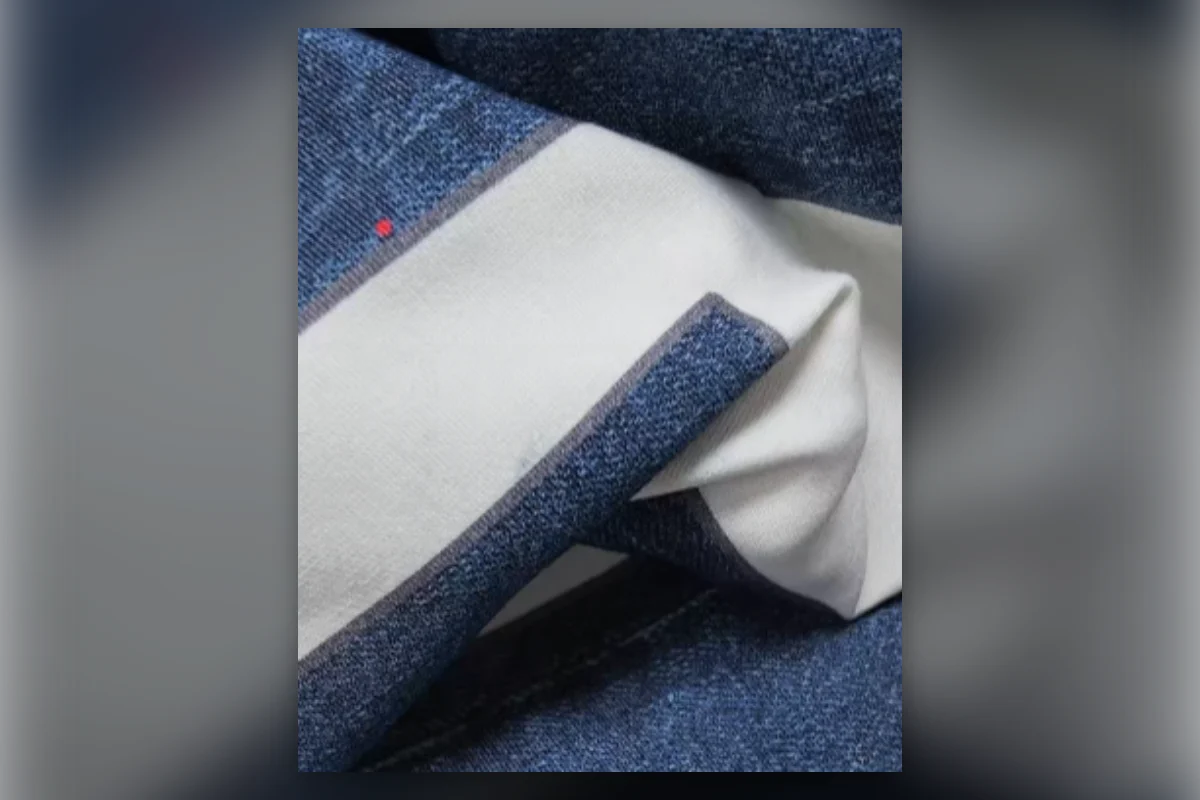
A high-resolution print cannot rescue the wrong base fabric. Before we print, we ask what the finished garment should feel like on the body.
- Cotton terry: useful for a soft, sweatshirt-like hand feel and relaxed structure.
- Jersey: useful when the product needs more stretch and a lighter drape.
- Structured knit: useful when a brand wants more shape while retaining knit comfort.
- Woven alternatives: useful when the silhouette needs stability but not the full weight or finishing route of classic denim.
We check weight, stretch, recovery, surface stability, shrinkage, drape and sewing performance. Because the artwork moves with the fabric, weak recovery can distort pockets and whiskers during wear. The correct answer therefore comes from the complete garment, not from an attractive print swatch alone.
For a closer look at a Shengfu development using 100% cotton, 280 GSM French Terry, read our faux denim without the stiffness guide.
Realism Comes From Artwork and Placement
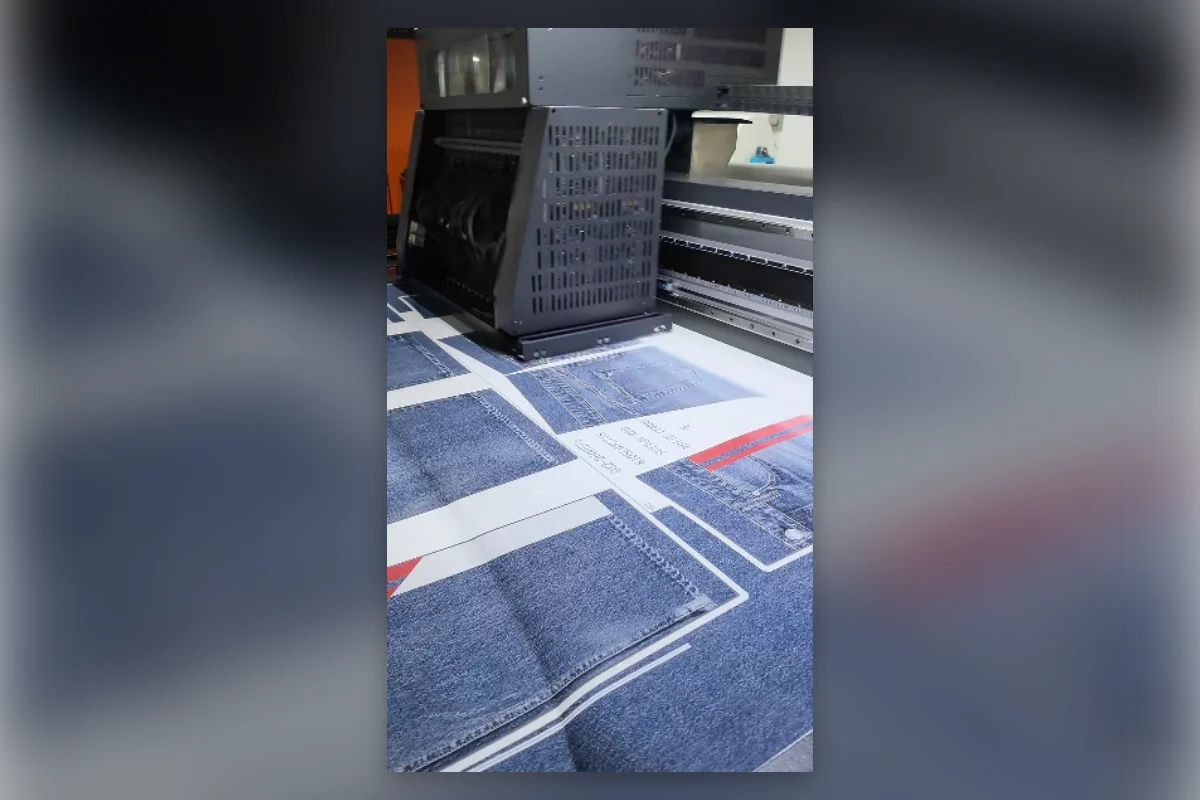
Good faux denim artwork creates depth. Dark indigo zones, highlights, abrasion, whiskers, seam shadows and stitch details must work together. If a designer applies one repeated denim texture across the whole garment, the result usually looks flat.
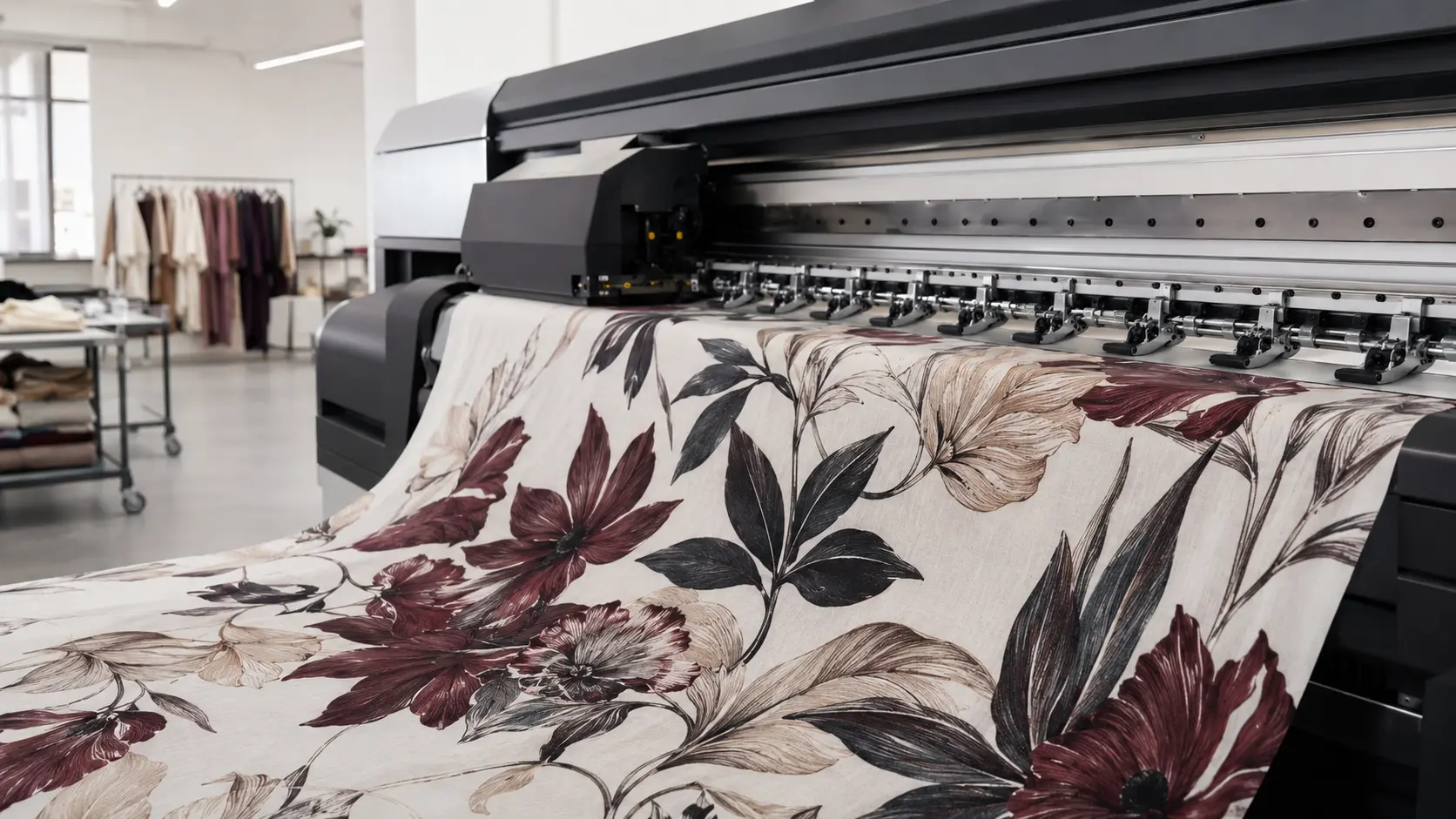
Digital textile printing gives us detailed image reproduction and design flexibility. However, print quality depends on more than printer resolution. We also control file resolution, colour mode, scale, pretreatment, ink compatibility, curing and the stability of the fabric feed.
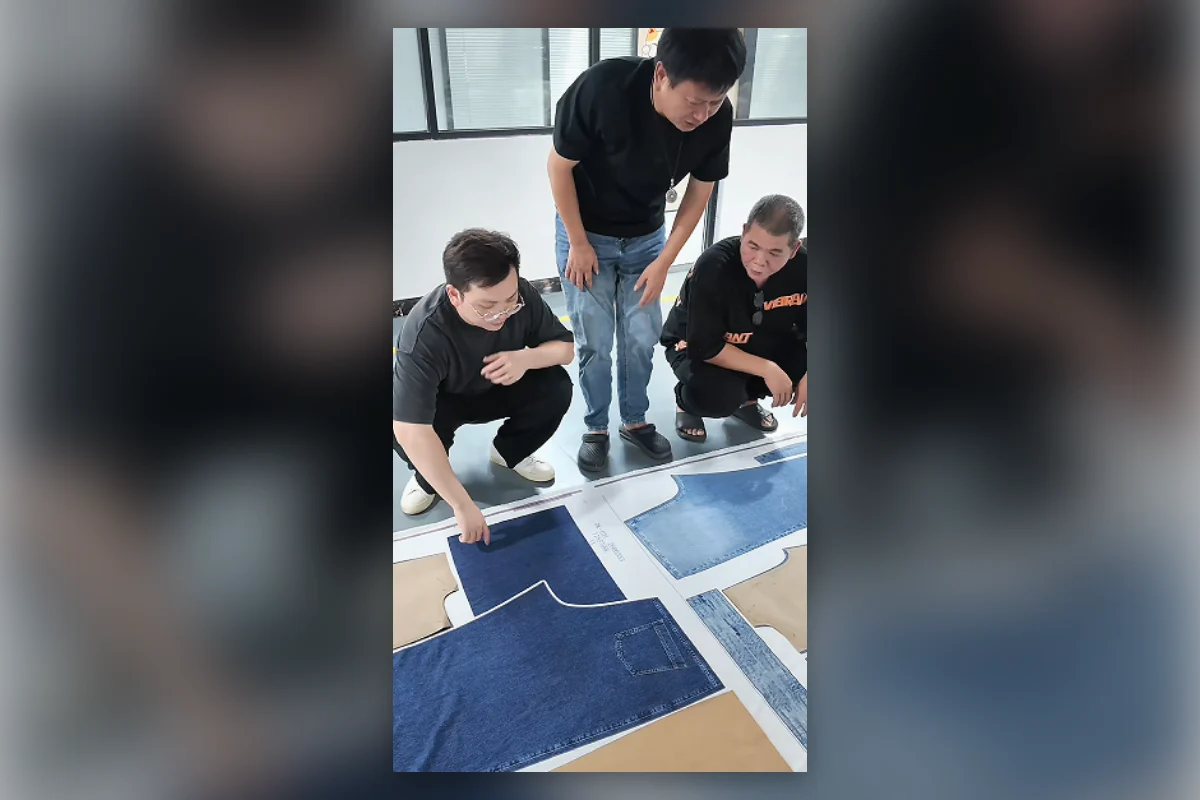
Placement Must Follow the Pattern
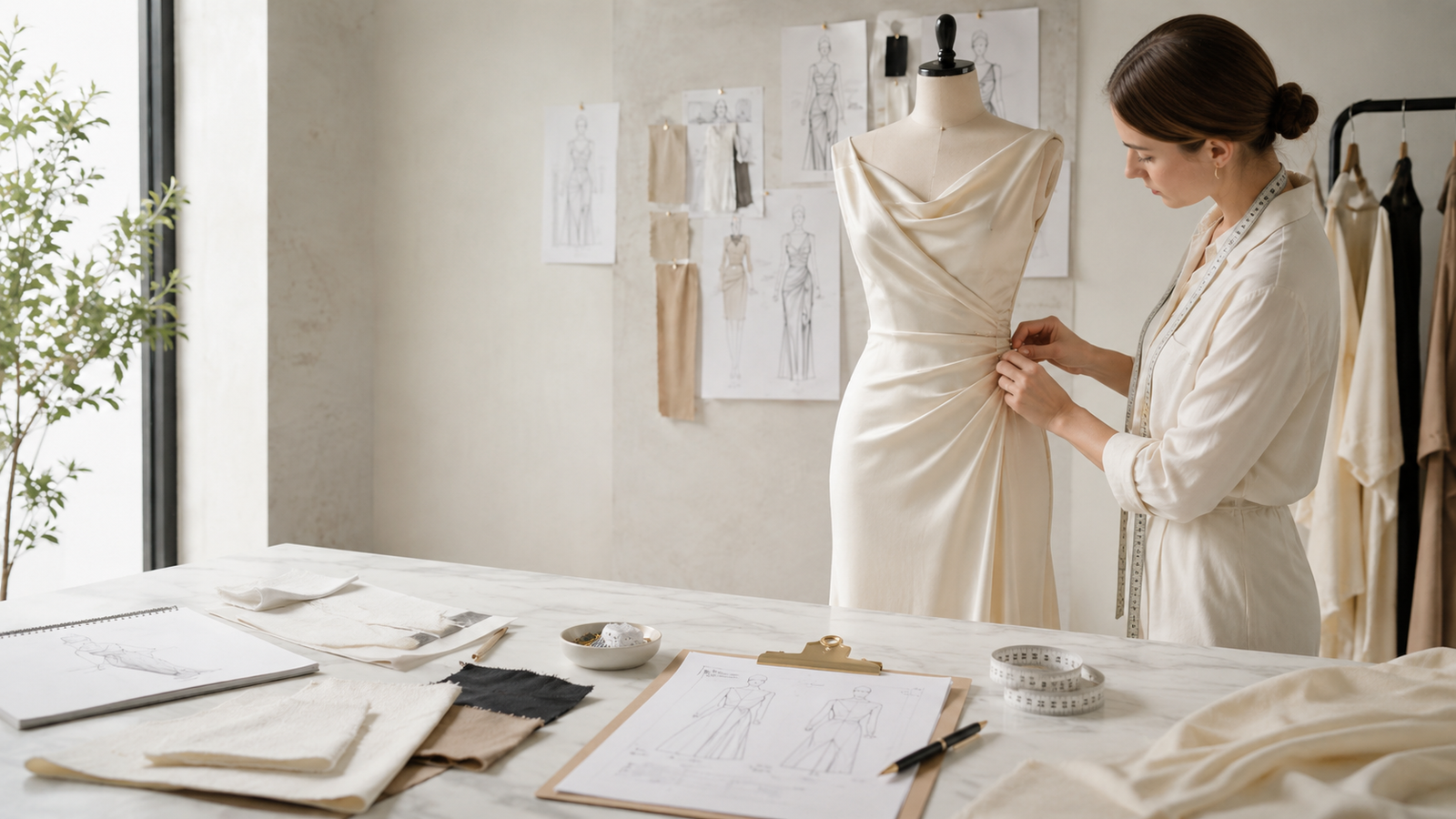
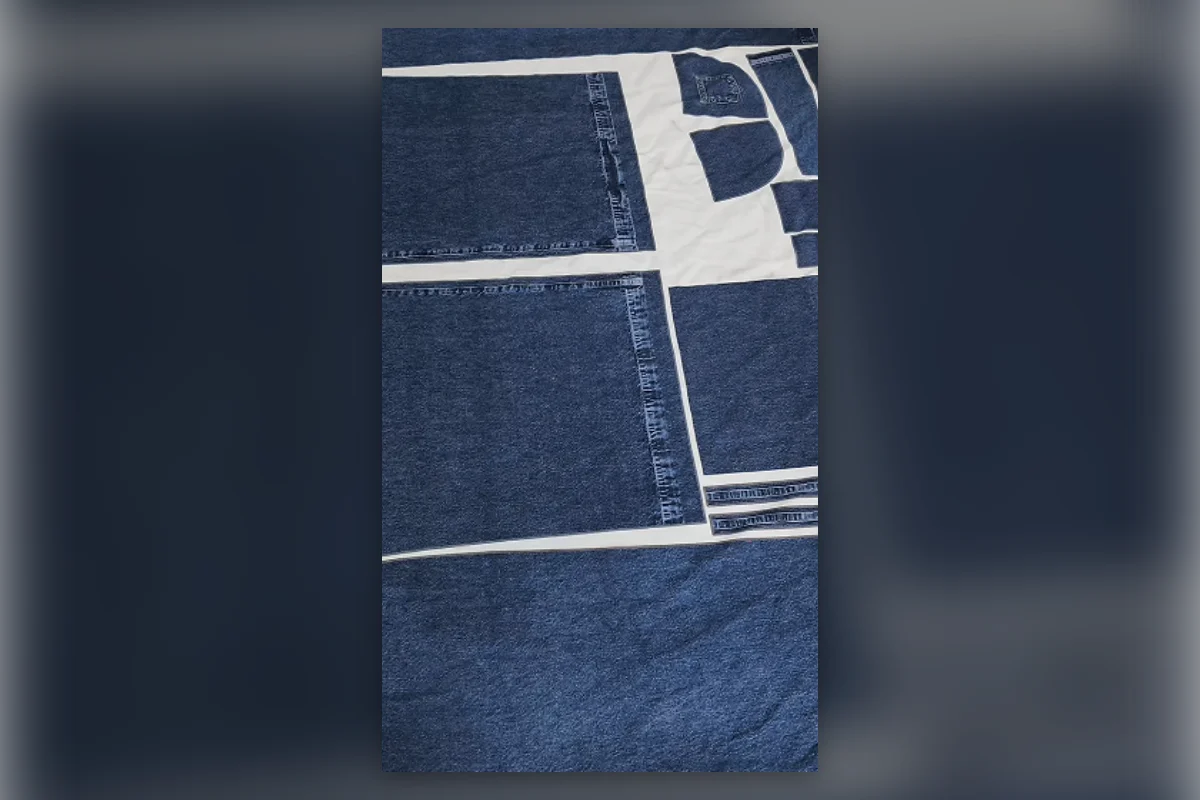
Perfect whiskers can still look wrong if they sit 5 cm too low on the finished trousers. We align the artwork with the front rise, hip, knee, pocket position, side seams, waistband and hem. We also review grading because an XS and an XL may need placement adjustments rather than one image scaled without judgement.
This is where a garment factory adds value. The printer produces the image, but the pattern and sewing teams make the image believable on a moving body.
Always Test Faux Denim Pants as a Garment
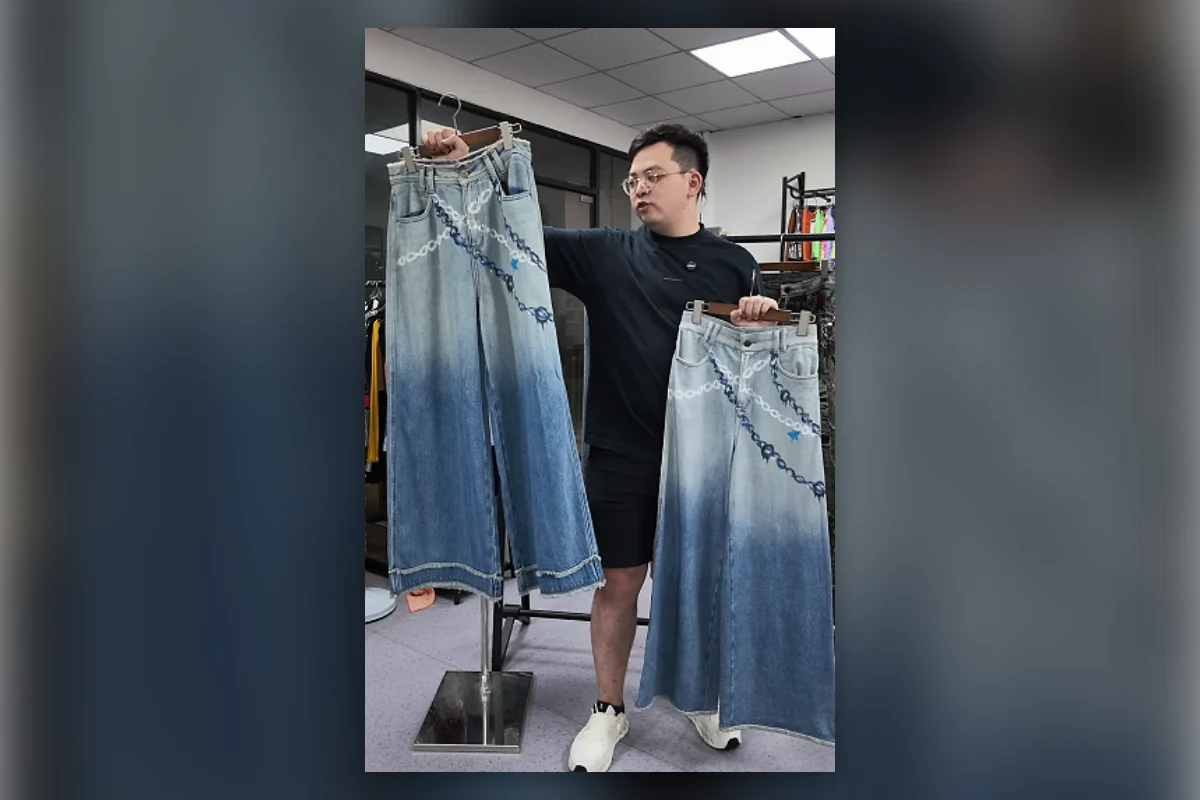
A printed panel may look excellent when it lies flat. After sewing, the whiskers can move, the fading may look too strong, the pocket can feel oversized or the fabric may drape differently than expected. That is normal development work.
We use the first sample to answer one central question: does the illusion still work once the fabric becomes a garment? If not, we revise the artwork, pattern or fabric and sample again. We would not approve faux denim pants from a fabric panel alone.
Before bulk production, we check:
- fabric hand, GSM, stretch and recovery;
- print resolution, scale and placement;
- shade against the approved physical standard;
- distortion at the hip, knee and seat;
- wash performance and shrinkage;
- seams and construction for the selected base fabric; and
- sample-to-bulk consistency across the size range.
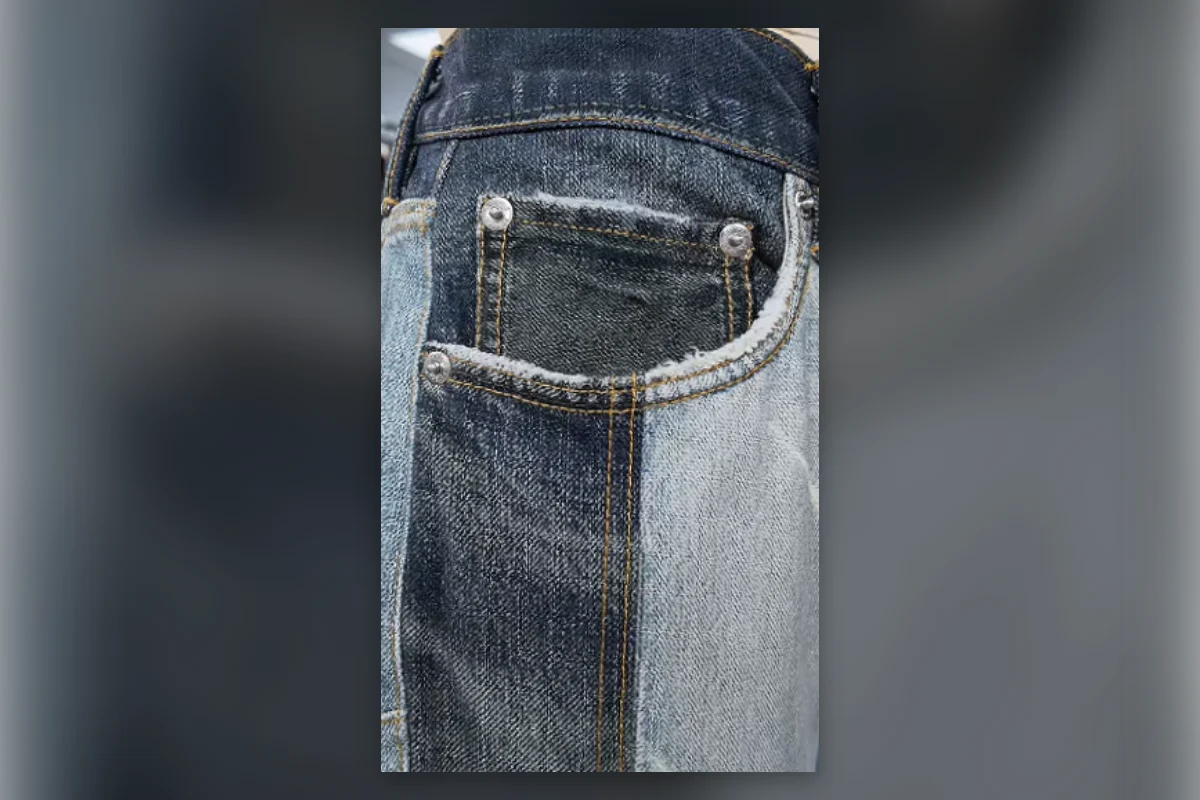
What to Send Shengfu for Development
Do not send only one social-media image. A clearer brief usually reduces unnecessary sample rounds. Send us:
- Your Tech Pack or target silhouette.
- A physical jean or clear wash references.
- Your preferred hand feel, weight and stretch.
- Original artwork files and finished placement measurements.
- The required size range and target quantity.
- Wash, colourfastness or performance requirements.
- Your target launch date and commercial price direction.
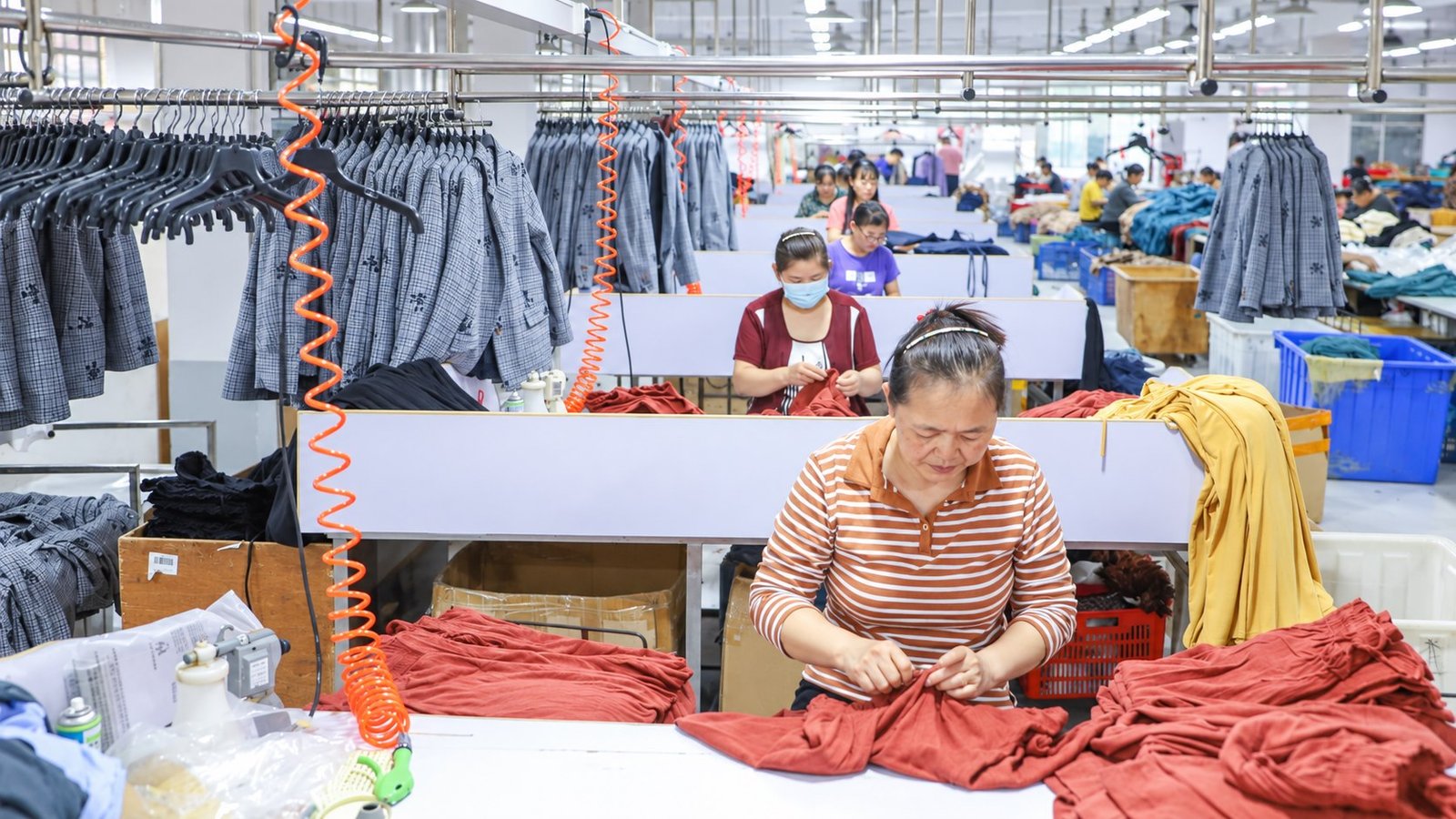
At Shengfu, we connect the reference, fabric, print, pattern, sample and bulk-quality plan. We do not treat the print as an isolated service because the customer ultimately buys a garment, not a printed panel. If you want to build an original denim-look product for your own customer, involve our team before the fabric and process route are fixed.
Frequently Asked Questions
What is faux denim?
Faux denim recreates the appearance of denim through printing, colour, texture or an alternative fabric construction. It may look like jeans while feeling softer, stretching more or draping differently from traditional woven denim.
What is faux denim fabric made from?
There is no single composition. Brands may use cotton terry, jersey, structured knit or another base fabric. The correct choice depends on the target hand feel, stretch, weight, silhouette and care requirements.
Is a faux jean the same as a traditional jean?
No. A faux jean may reproduce the visual details of denim, but its base fabric and manufacturing route can differ. That difference changes comfort, sewing, stretch, recovery and fit.
Can fake denim look realistic?
Yes. Realism comes from accurate artwork, controlled colour, high-quality printing, pattern-specific placement and garment sampling. Whiskers, fading, seams, pockets and abrasion must work together.
Can Shengfu develop custom faux denim pants?
Yes. We can review the Tech Pack, denim reference, base-fabric direction, artwork, placement and size range as one development project. We confirm the exact route after evaluating the design and performance requirements.
How do you control faux denim quality in bulk production?
We approve the fabric, print scale, placement, shade, construction and wash performance before bulk. During production, we compare the lot with approved standards and apply the agreed inspection plan. See our AQL garment inspection guide for more detail.
References
- Rag & Bone – Miramar Andi Ankle Wide-Leg Pant: official description of cotton terry, trompe-l’oeil printing and garment details.
- Rag & Bone – Miramar Shea Relaxed Straight Pants: official product information on digitally printed denim details.
- ScienceDirect – Quality of Digital Textile Printing: technical overview of factors that affect print quality.
- Shengfu – Faux Denim Without the Stiffness: a factory guide to printed French Terry development.
- Shengfu – What Is AQL?: our guide to garment inspection and defect control.
Rag & Bone is discussed as a public product-development example. Shengfu does not claim an affiliation with the brand.