
Article Summary
At Shengfu, we develop faux-denim garments when a fashion brand wants the visual language of jeans without the rigid feel of traditional woven denim. In the example below, we use 100% cotton, 280 GSM French Terry and build the denim effect through printing. The result combines indigo tones, fading, whiskers and custom graphics with a softer knit construction.
Jump to:
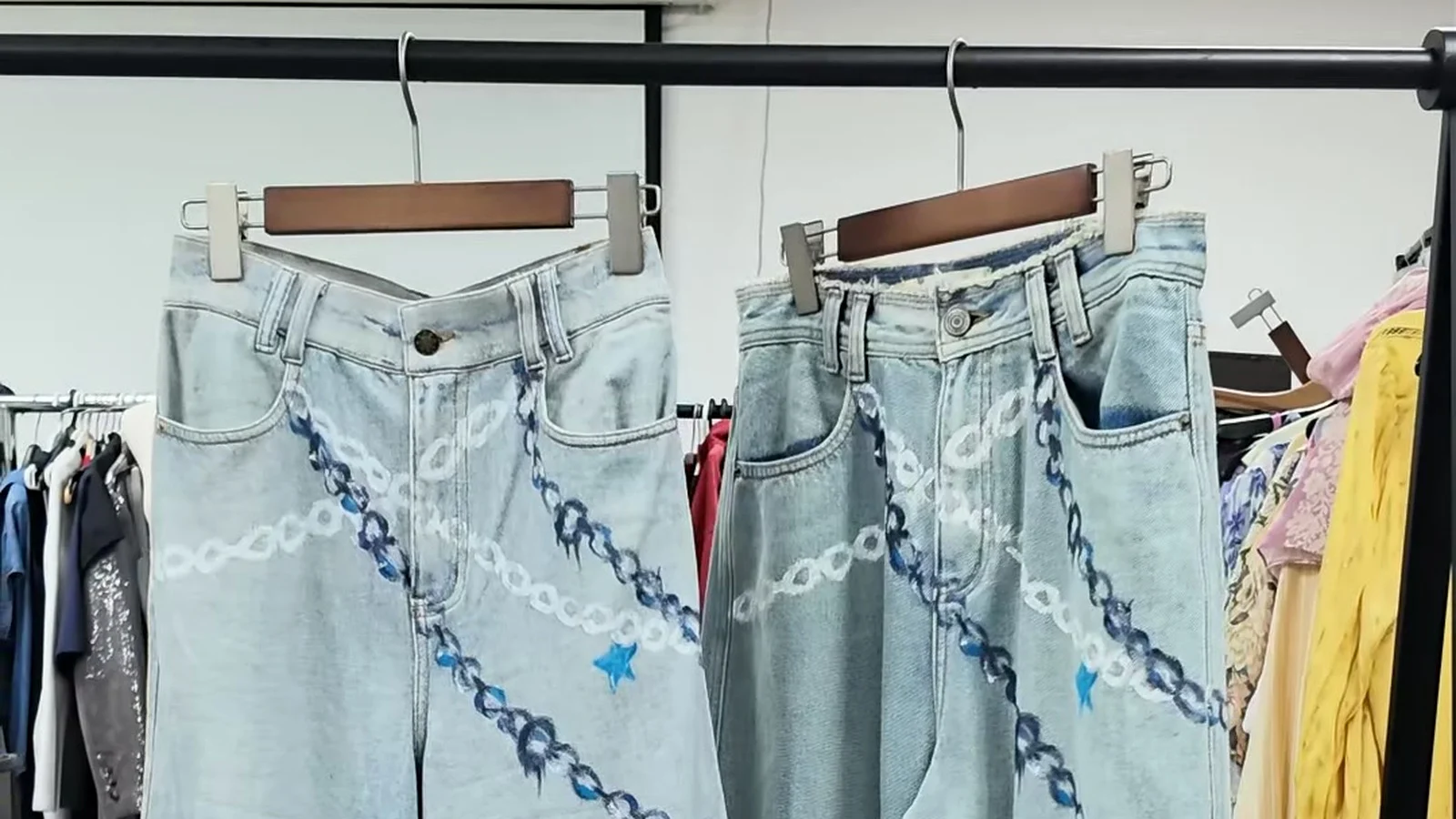
What We Mean by Faux Denim
Traditional denim gives brands a familiar appearance, but its woven twill structure, hand feel and finishing route define how the garment behaves. Not every denim-look product needs those characteristics.
When a customer wants a softer and more relaxed garment, we may propose a printed knit instead. The development idea is simple: keep the denim visual, but change the wearing experience.
This direction can work well for casual womenswear, travel pieces, relaxed bottoms and fashion products that sit between denim and loungewear. We do not present faux denim as a universal replacement for jeans. We use it when the product brief calls for denim aesthetics with knit comfort.
Why We Use French Terry
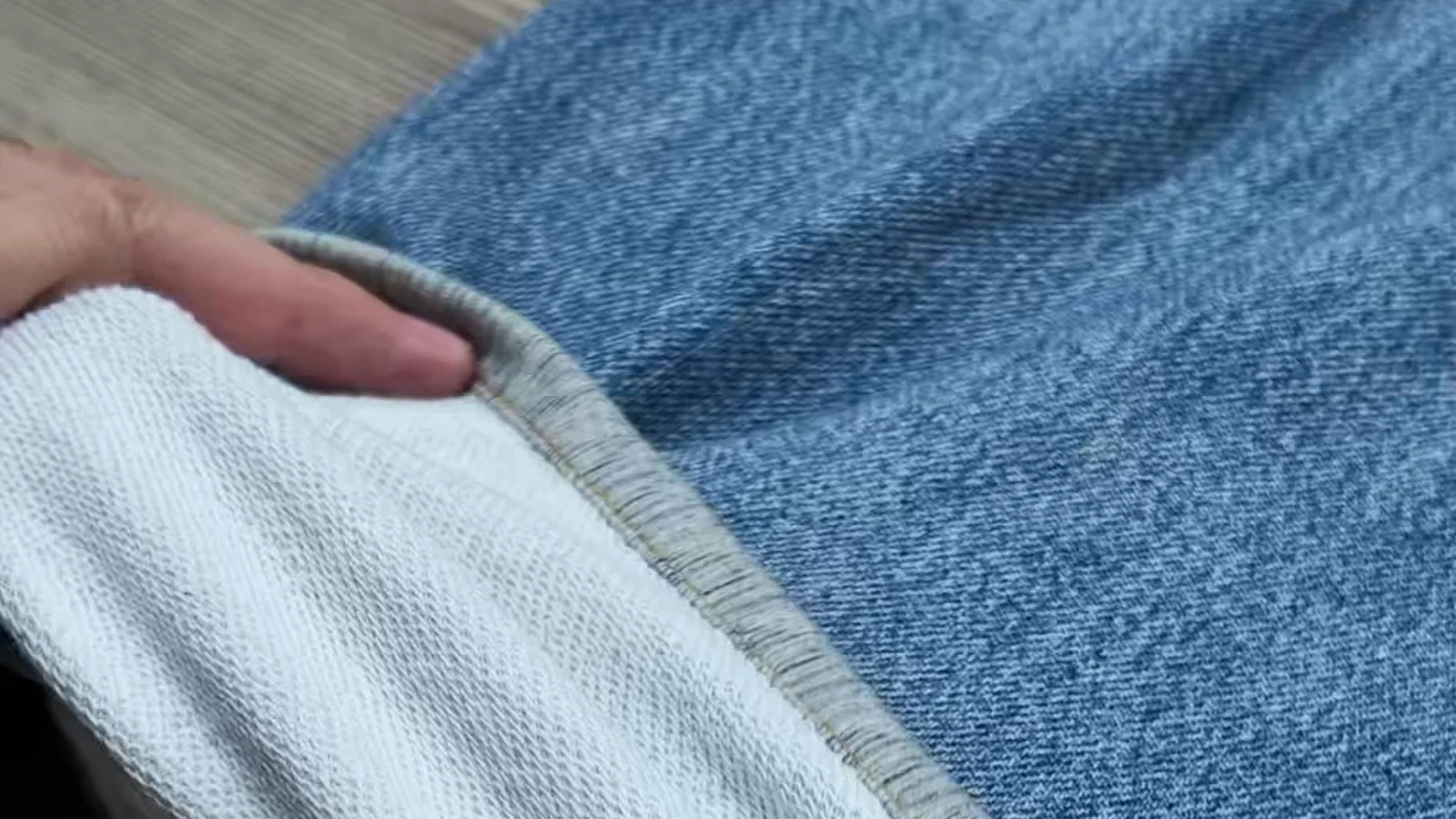
Our sample uses 100% cotton, 280 GSM French Terry. French Terry is a knit construction with float loops on the technical back. CottonWorks explains that the construction is widely used for sweatpants, sweatshirts and layering garments.
The structure gives this product a different character from classic woven denim. It can feel softer against the body, allow easier movement and create a more relaxed silhouette. However, fabric weight alone does not decide the result. During development, we also check stretch, recovery, surface stability, drape and sewing performance.
How We Create the Denim Look
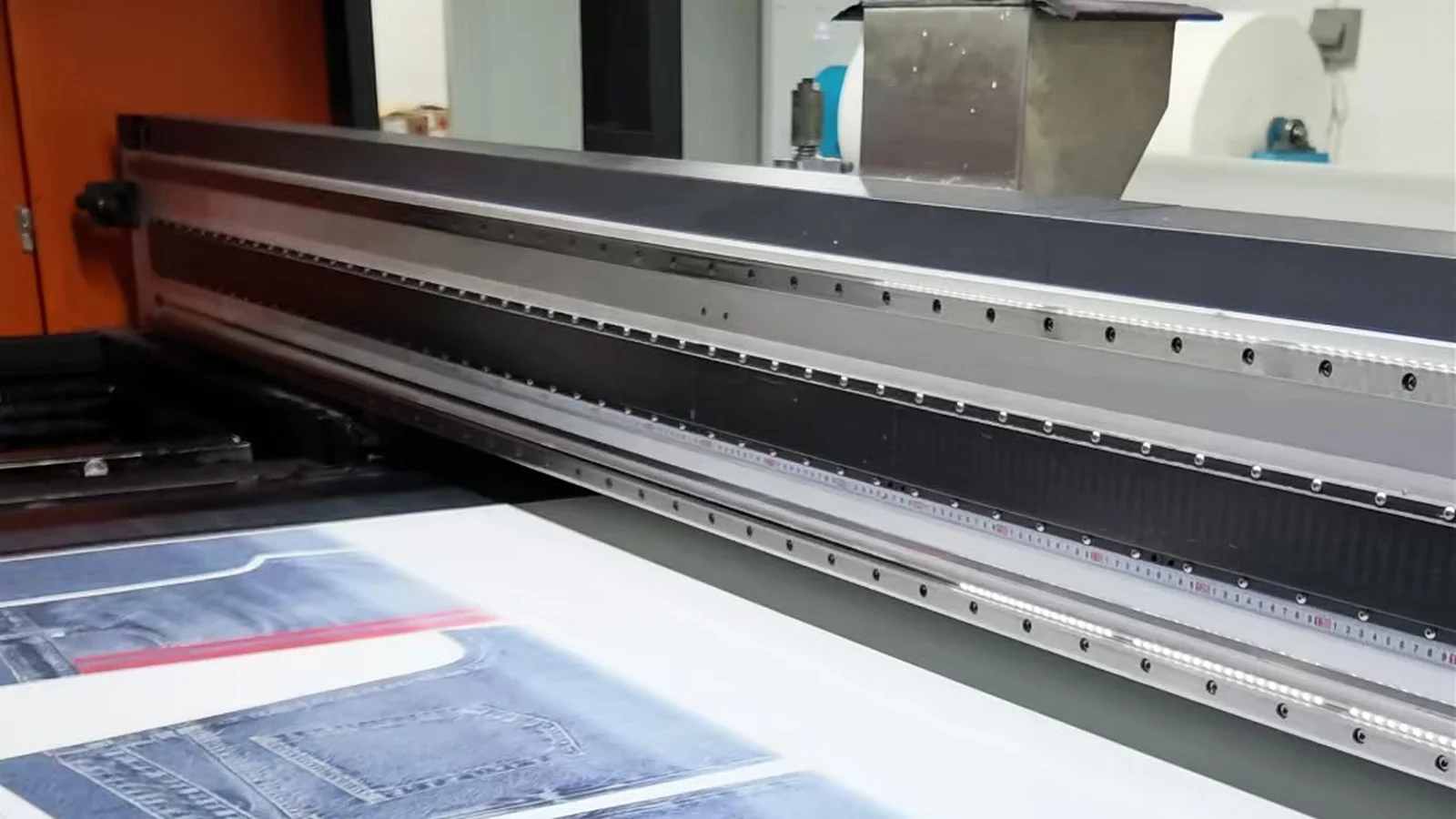
Instead of relying entirely on indigo dyeing and garment washing, we build the surface appearance through textile printing. The artwork can reproduce indigo shading, worn areas, whiskers, fading and custom graphics.
This gives our development team and the brand more control. For example, we can reposition a whisker, adjust a fade zone or combine denim texture with artwork that washing alone could not create. Brands that want a deeper overview can also read our guide to digital printing for fashion production.
Printing still requires technical decisions. We confirm artwork resolution, print scale, color profiles, pretreatment, ink compatibility, curing and wash performance before bulk production.
Why Reducing Washing Steps Can Matter
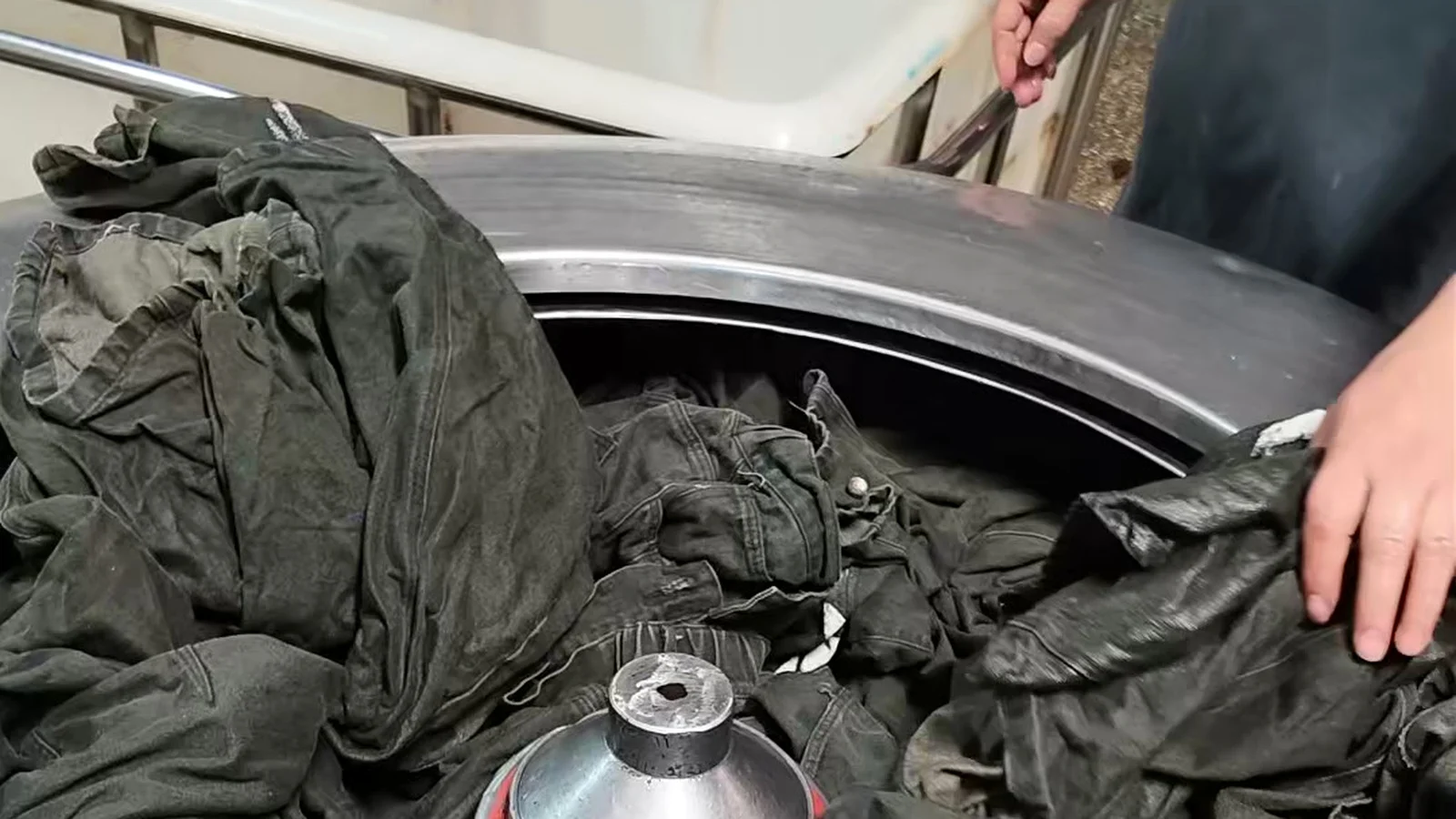
Traditional denim finishing can use enzyme washing, stone washing, bleaching, chemical treatments and repeated rinsing to create a worn appearance. Research on denim-washing factories identifies wastewater control as an important production issue.
Because printing creates part of the visual effect directly, some designs may avoid unnecessary aesthetic washing or color-treatment stages. However, we do not automatically label a printed product as sustainable. One comparative study found that digital printing used less direct water than screen printing in its case study, while indirect water associated with electricity, dyes and additives was higher.
Therefore, we evaluate the actual route rather than making a blanket claim. We ask: Which process gives this product the required appearance, comfort, durability and cost with the fewest unnecessary steps?
Color and Graphic Customization
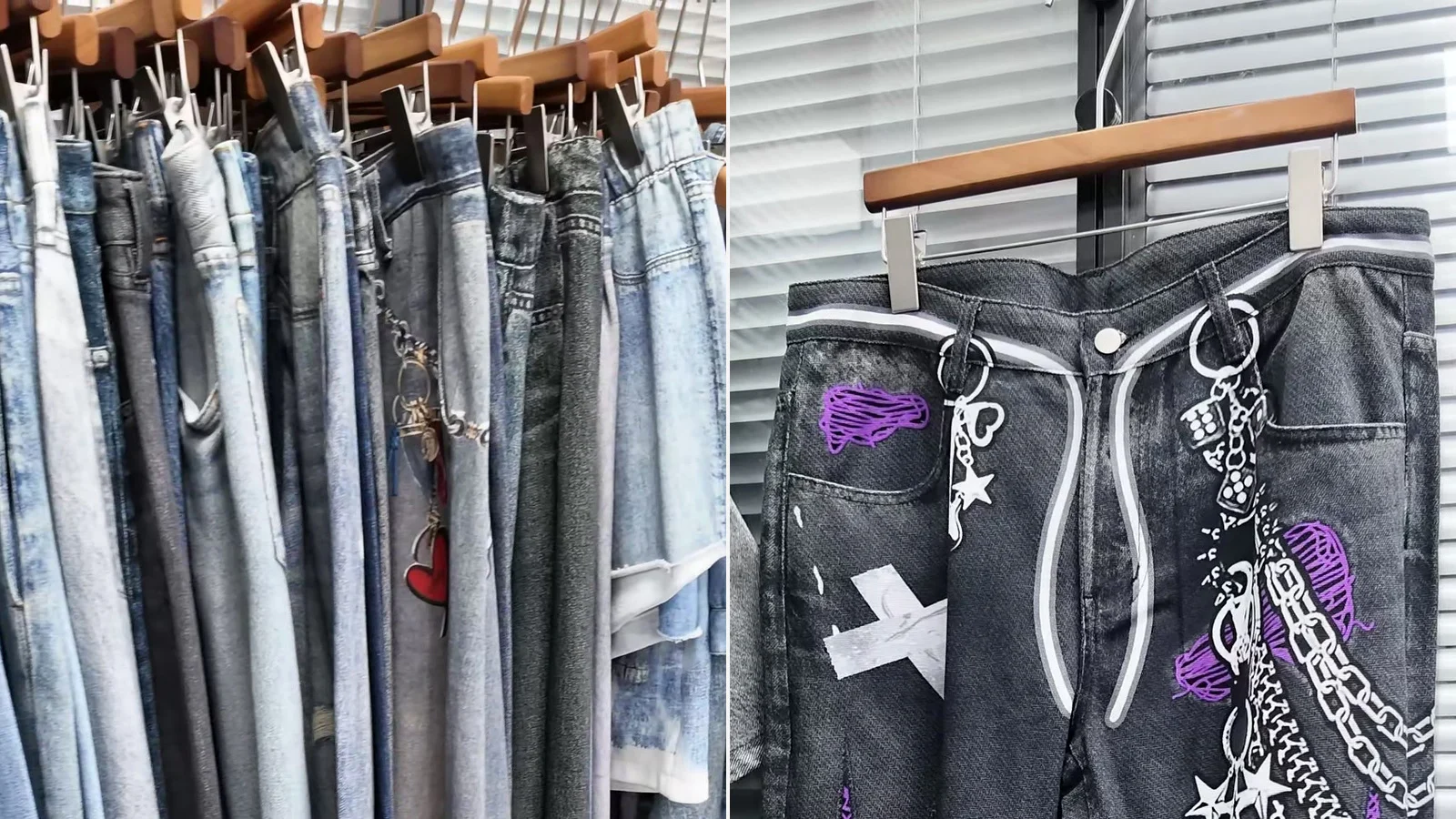
For many brands, design freedom becomes the main reason to explore faux denim. We can develop light blue, mid-blue, dark indigo and washed grey directions, then combine those bases with fading, chains, florals, distressed artwork, abstract graphics or brand-specific motifs.
The product no longer has to imitate conventional jeans exactly. It can sit between denim, print design and knitwear comfort. This creates room for a recognizable collection rather than another standard five-pocket jean.
If your design includes original graphics, prepare the artwork carefully. Our custom-print artwork guide explains why scale, resolution, color and placement need approval before production.
What We Test Before Production
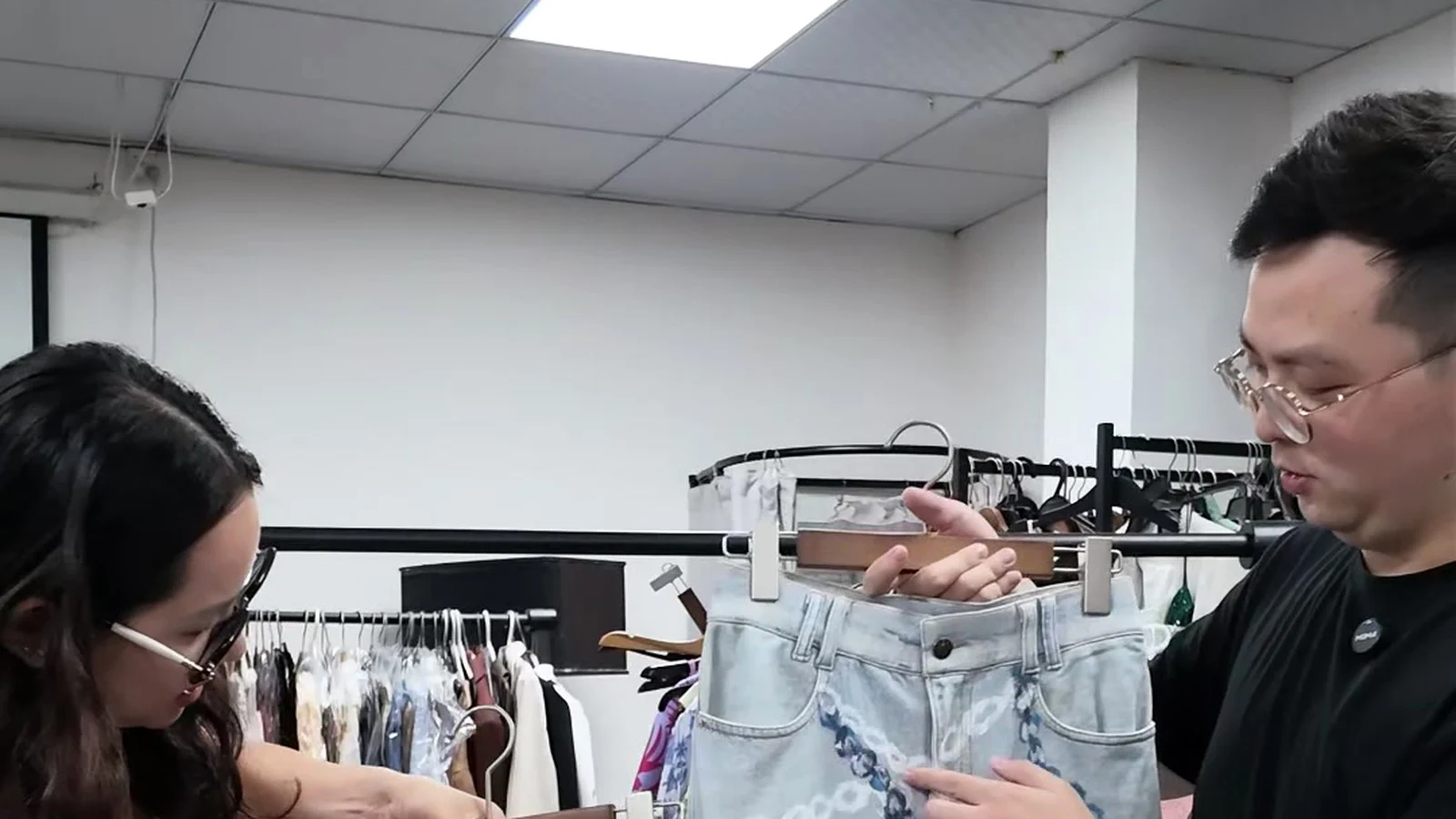
A visually strong sample is only the beginning. Before bulk production, our development and quality teams check:
- Fabric hand and GSM: Does the knit have enough body for the intended silhouette?
- Print resolution: Do the whiskers and denim textures remain convincing at close range?
- Color: Does the printed indigo match the approved physical sample?
- Stretch and recovery: Does the artwork distort when the fabric stretches?
- Wash performance: How do the print and shade change after laundering?
- Seams and construction: Have we adjusted the sewing method for a knit rather than treating it like woven denim?
- Sample-to-bulk consistency: Can we reproduce the approved scale, placement and color across the order?
We also define inspection standards before shipment. See our practical explanation of AQL garment quality inspection for more detail on how we evaluate a production lot.
A Reference Image Is Only the Starting Point
When a brand asks for a “denim effect,” we need more information before we can build the right sample. “Light indigo with strong thigh fading” gives us a clearer direction than “make it vintage.” Likewise, “dark indigo with printed whiskers and no distressed holes” defines the target more accurately.
If you already have brand artwork, send the original design file and specify its finished size and garment placement. A clear physical standard usually reduces avoidable sampling rounds.
What to Send Shengfu
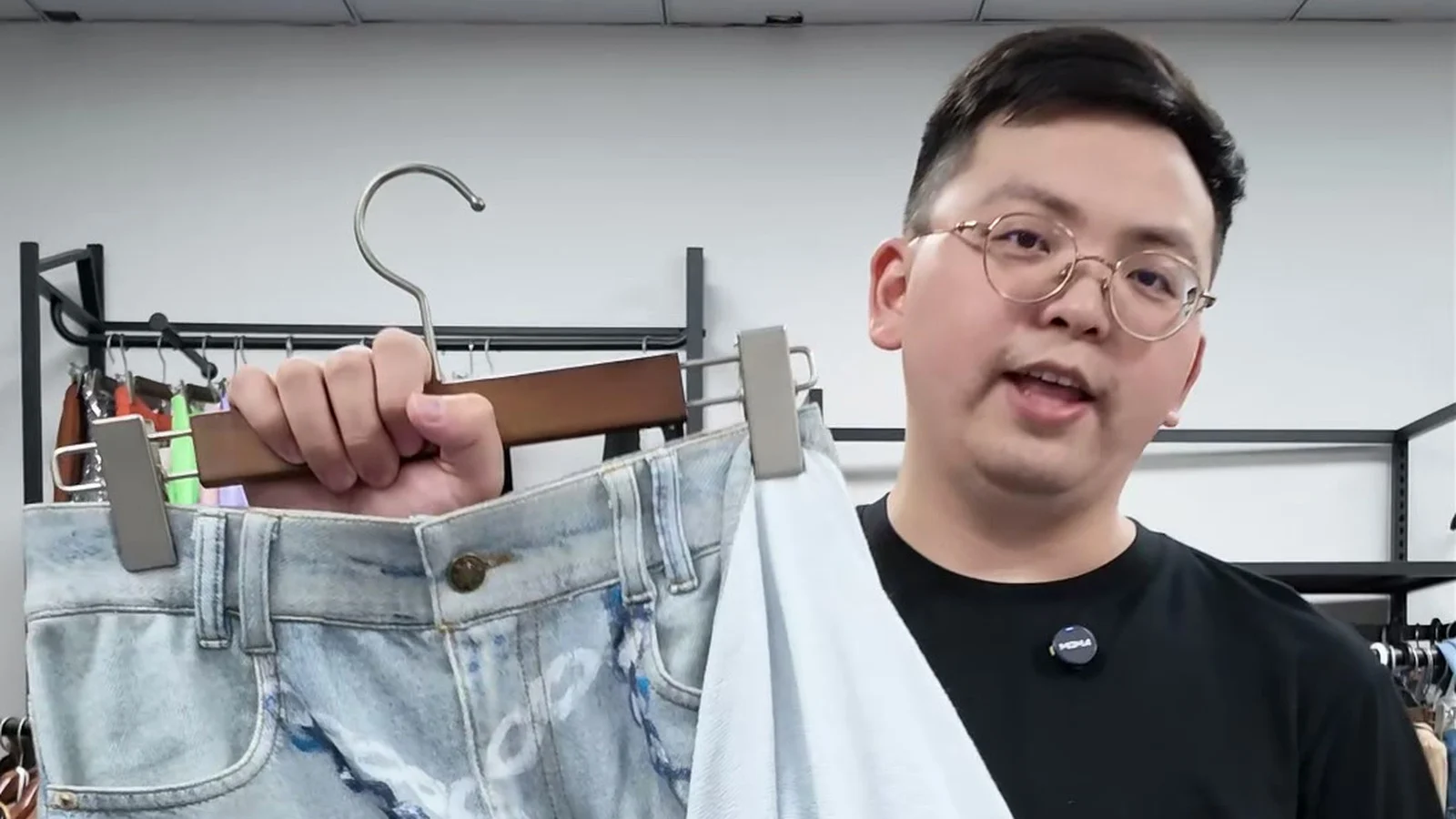
Faux denim sits across fabric selection, printing, garment construction, artwork, fit and finishing. At Shengfu, we start by understanding the complete product instead of quoting printing as an isolated process.
For an efficient development review, send us:
- Your Tech Pack or reference garment
- The hand feel and silhouette you want
- Your preferred denim color and fading direction
- Original artwork files and placement measurements
- Target quantity and size range
- Required wash tests or performance standards
- Your target launch or delivery date
We can then evaluate whether traditional denim, printed French Terry or another construction makes the most sense for your design. If your goal is to develop a product for your own customer rather than simply copy a reference, involve us before the fabric and process route are fixed.
FAQ
Is faux denim the same as traditional denim?
No. Traditional denim usually uses a woven twill construction. This Shengfu example uses knitted French Terry with a printed denim appearance. The products may look similar, but they feel, stretch and sew differently.
Why would Shengfu recommend French Terry instead of denim?
We may recommend French Terry when the design needs a softer, more flexible or more relaxed wearing experience. We still check whether the fabric has enough body and recovery for the intended garment.
Can Shengfu customize the denim color?
Yes. We can develop light blue, mid-indigo, dark indigo, grey and other printed directions. We ask the brand to approve a physical sample because screens do not represent textile color accurately.
Can printing create whiskers and fading without traditional washing?
Printing can reproduce many visual effects, including whiskers, fading and worn areas. However, the surface will not age or behave exactly like naturally faded or mechanically washed denim, so physical sample approval remains essential.
Can we add our own graphics?
Yes. We can incorporate chains, florals, distressed artwork, abstract motifs or other brand-specific graphics. Before sampling, we confirm artwork scale, resolution, color and placement.
Does printing automatically make faux denim more sustainable?
No. Printing may reduce some aesthetic washing steps, but the full impact depends on the ink system, pretreatment, curing, energy, wastewater treatment, fabric and product life. We evaluate the actual production route instead of making a general sustainability claim.
What should I send Shengfu for a faux-denim inquiry?
Send your Tech Pack or reference, target hand feel, preferred color and fading, original artwork, quantity, size range, testing requirements and delivery schedule. We will review the most practical development route with you.
References and Related Guides
- CottonWorks — Single & Double Knits: Technical explanation of French Terry construction and typical applications.
- Journal of Cleaner Production — Denim Garment Washing Effluent Analysis: Research on wastewater performance in denim-washing factories.
- Ecological Indicators — Screen and Digital Printing Water Management: A comparison of direct and indirect water use in two textile-printing routes.
- PLOS Sustainability and Transformation — Water and Chemical Use in Textile Processing: Primary research on wet-processing water, wastewater and chemical consumption.
- Shengfu — Digital Printing for Modern Fashion Production
- Shengfu — Custom Print Dress: From Artwork to Production
- Shengfu — What Is AQL? A Practical Garment Inspection Guide





