
Summary
A rejected sample can still guide the next version. Record why it failed, identify its status and agree whether it will be revised, returned, stored or handled through an authorised disposal route. Rejection alone does not grant permission to reuse a design.
Jump to:
- Record the Reason Before Changing the Sample
- Give Every Sample an Unambiguous Status
- Agree Where the Sample Goes Next
- Protect the Design During Storage and Handling
- Choose a Documented Route for Unneeded Materials
- Set the Sampling Responsibilities with Shengfu
- FAQ
Record the Reason Before Changing the Sample
“Not approved” identifies a status; it does not tell a clothing sample maker what the next attempt should fix. Separate a construction error from a change to the original fashion design brief. Wrong fabric, poor fit and a cancelled collection need different decisions.
Record the style code, sample version, date, relevant measurements and marked photographs. Replace “the fit is wrong” with a specific comment such as “the waist is loose while the hip feels correct; assess a waist adjustment that preserves the hip fit.” Assign an owner to each action and state what the next review must confirm.
Techpacker’s fit-template guidance shows how measurement and review comments can be recorded together. Photograph and measure a sample before an alteration removes useful evidence.
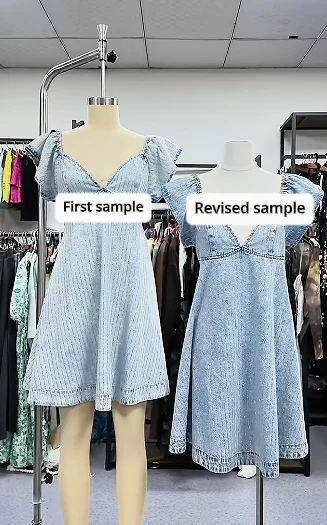
Give Every Sample an Unambiguous Status
Prototype clothing can answer early construction questions without being ready for clothing production. A rejected version may remain a reference for correction, but it must not be mistaken for the approved bulk-production sample.
Keep one current tech pack and a revision log. Link the physical sample to the relevant document version. Labels such as “first sample”, “revised sample”, “fit reference” and “approved for production” should describe the actual approval scope; a revised sample is not automatically approved.
Sample management becomes easier when the team can answer four questions: what is this sample, what did the review find, who decides the next step and where is the current reference?
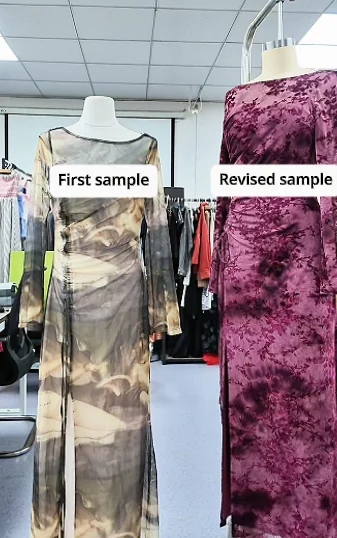
Agree Where the Sample Goes Next
| Project status | Possible action | Record to keep |
|---|---|---|
| Another development round | Retain as a correction reference or alter as agreed. | Version, comments, alteration permission and next review. |
| Style on hold | Store with a named custodian and review date. | Location, access, retention period and contact. |
| Buyer requests return | Agree return timing and shipping responsibility. | Sample ID, recipient and dispatch details. |
| No further use | Obtain instructions for permitted reuse, recycling or disposal. | Authorisation, handling route and available completion evidence. |
There is no universal destination for rejected clothing samples. Ownership, payment terms and the project agreement should determine the next action. A sampling fee does not by itself settle every question about patterns, photographs and development files.
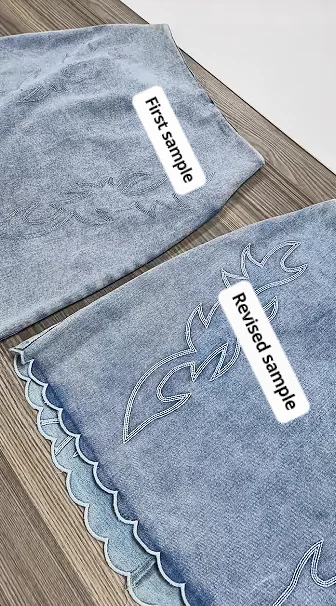
Protect the Design During Storage and Handling
Agree who may access the sample, patterns, photographs and digital files. A cancelled style should not become showroom content, another buyer’s reference or social-media material without appropriate permission. Removing a label does not settle those permissions.
WIPO identifies confidentiality agreements and reasonable protective measures as relevant to trade-secret protection. This does not establish that every garment design qualifies for that protection. The practical action is to document permitted use and access for the particular project.
Confirm the handling arrangements with clothing manufacturers before development starts. Do not infer a factory’s retention, donation or destruction policy from a photograph of its sample room.
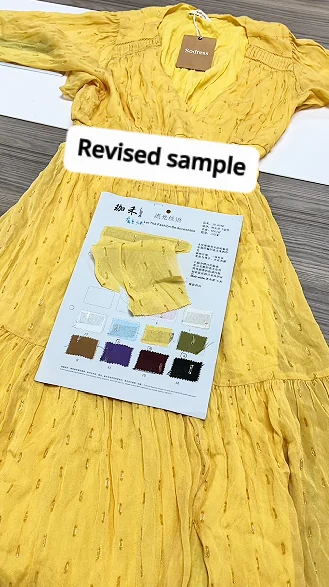
Choose a Documented Route for Unneeded Materials
Reworking a sample into a useful development reference can avoid another unnecessary prototype. Where further use is authorised, consider whether removable components or clean fabric can be retained for permitted tests.
Textile recycling needs an actual receiving route. Confirm material composition, coatings, trims, contamination and the processor’s acceptance rules. The Ellen MacArthur Foundation’s textiles report connects textile design, collection and reprocessing within a circular system. It does not mean that every mixed-material sample is recyclable locally.
Sustainable fashion claims should describe the outcome supported by records. Do not call destruction recycling or assume a collection service recycles every item it receives. If confidentiality requires controlled handling, confirm that the proposed route can meet it before dispatch.
Set the Sampling Responsibilities with Shengfu
Send Shengfu your design priorities, existing sample comments and proposed next step. Ask for a revision plan explaining which garment construction issues will be addressed, the sampling charges and what you will review on the next version.
Before garment manufacturing begins, agree sample ownership, access, retention and return or disposal instructions. These are project-specific arrangements to confirm with the team, not universal policies promised by this article.
Frequently Asked Questions
What is a clothing sample after it has been rejected?
It remains a development garment and may still be useful as a correction reference. Mark its rejected status and the exact document version; it must not become a production approval reference accidentally.
How to make clothing samples more useful after a failed review?
Provide marked photographs, measurements and clear actions. Identify whether the issue is execution or a changed brief, assign the decisions and state the acceptance criteria for the next version.
Should the clothing sample maker provide a free remake?
Check the sampling agreement and the reason for rejection. A deviation from agreed specifications and a buyer’s new design request may be treated differently. Resolve the scope and charge before work resumes.
How to recycle fabric from an unwanted sample?
Obtain permission, identify the materials and ask an actual processor what it accepts. Separate trims only where appropriate and agreed. Keep records of the receiving route rather than assuming every collected textile is recycled.
How to dispose of textiles containing a confidential design?
Agree written instructions and a suitable authorised route. Confirm who handles the garment and what completion record is available. Address patterns, photos and files separately from the physical sample.
Sources and Further Reading
- Techpacker — Fit-template guidance
- Ellen MacArthur Foundation — A new textiles economy
- WIPO — Trade-secret FAQs
Related Shengfu guides:





