
Article summary: Review the complete cost basis before changing fabric. Construction, development, handling, rework and delivery can affect the order’s total cost. Ask for a defined alternative and evaluate its effect on fit, appearance and care rather than assuming cheaper cloth produces a better deal.
Jump to:
- Define Which Cost You Are Comparing
- A Small Detail Can Add Several Operations
- Consumption Matters as Well as Price per Metre
- Distinguish Necessary Trials from Avoidable Repetition
- Review Rework and Delivery Exposure
- Ask for a Costed Alternative
- FAQ
- References and Further Reading
Define Which Cost You Are Comparing
Garment costing needs an identified product and quotation scope. Fabric cost can be significant, but there is no universal rule that it must be the biggest item. The answer depends on the material, design, quantity and production route.
Keep the factory unit price, development charges and the cost of receiving sale-ready stock separate. List what is included, excluded or still estimated. A price for an unlined version cannot be compared directly with a fully lined and decorated sample.
Start with the current bill of materials and construction requirements. Record units per style, colour and size, then ask which assumptions drive the quotation. Avoid treating a price shown in an unrelated photograph or marketing example as your project price.
A Small Detail Can Add Several Operations
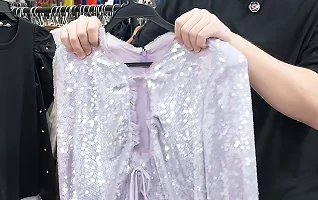
Decoration, lining, internal support, motif matching and complex seam finishes can add cutting, preparation, sewing, pressing and handling. Compare the actual operation route, rather than ranking complexity only by what appears in a front-view image.
A plain dress and a version with full dress lining and hand-applied detail may use the same outer material but require different work. Ask whether a proposed alternative preserves the customer benefit and which construction steps it changes.
Coats’ thread-consumption guide connects sewing thread use to stitch and seam construction. It supports examining the actual specification; its example quantities do not establish a quoted cost for your garment. Request project-specific calculations or a trial where necessary.
Consumption Matters as Well as Price per Metre
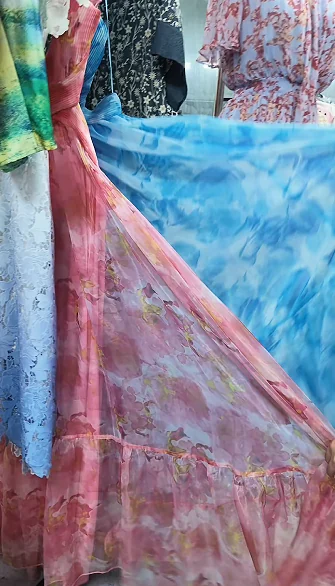
Fabric sourcing should identify usable width, pattern layout, size mix, print direction, matching requirements and relevant allowances. A lower price per metre may not lower the material cost per garment if the usable layout or required consumption changes.
Ask what the consumption estimate includes and whether it has been checked against the approved pattern. Record lining, interfacing and trims separately. Label estimates while the pattern or material remains unresolved.
A minimum order quantity may come from fabric, colour or trim purchasing as well as garment assembly. Low MOQ clothing manufacturers still need to explain those constraints. Compare stock materials or fewer colourways by their effect on the approved product, rather than only by their headline price.
Distinguish Necessary Trials from Avoidable Repetition
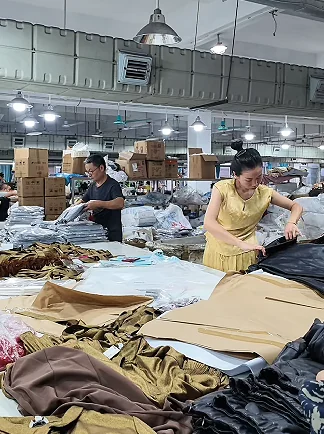
Fit rounds and material trials are legitimate development work. Unclear comments or late decisions can create repetition beyond that work. Agree sample charges, revision scope and the approval sequence at the outset.
A neckline change can affect facing, lining and support. A new fabric can require another fitting. Ask for the impact and cost before authorising the revision; a small visual change does not necessarily mean a small development task.
Keep one current brief, consolidate feedback and record approved versions. Small batch clothing manufacturers should explain sampling and setup charges separately from clothing production costs so a first order and a reorder can be compared honestly.
Review Rework and Delivery Exposure
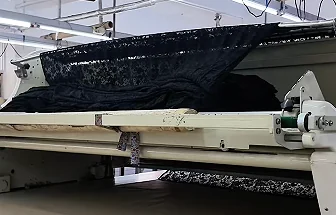
Unpicking, resewing, replacement materials and another inspection can add cost when an issue is discovered after many pieces have followed the same route. Agree early checks around critical features and define how deviations will be investigated and resolved.
Intertek’s apparel inspection services cover multiple production stages. Checks provide opportunities to detect deviations; they do not guarantee a flawless order or justify an invented saving percentage.
For landed cost, separately record packing, freight and other relevant destination charges that the quote excludes. Avoid counting an included item twice. The quoted trade term and named place determine parts of the delivery scope; refer to ICC’s Incoterms resources and confirm project details. If changes force faster transport, compare the actual revised proposal before committing.

Ask for a Costed Alternative
| Area | Question | Compare on the same basis |
|---|---|---|
| Materials | What consumption and sourcing assumptions are used? | Identified material, usable width and size mix. |
| Construction | Which operations drive the cost? | Same comfort, appearance and performance requirements. |
| Development | What do sample and revision charges include? | Defined round, services and approved-version scope. |
| Quality | Which checks and deviation handling are included? | Agreed criteria and inspection responsibilities. |
| Delivery | What remains outside the quote? | Packing, trade term, destination and transport scope. |
Send Shengfu the tech pack or current references, material requirements, order breakdown and target budget. Ask for the baseline quote and a specific alternative, with a sample review where the change affects the product.
Production planning and commercial planning should use the same approved specification. Keep confirmed costs separate from possible contingencies; the classification of costs in your cost of goods sold records should follow your own accounting policy. Do not interpret a generic costing worksheet as a guaranteed margin or order quotation.
FAQ
How much does it cost to manufacture clothing?
There is no useful universal price. Request a quote for the identified garment, materials, construction, order breakdown and delivery scope. Record sample charges and excluded costs separately, then compare suppliers or alternatives on the same basis.
How to calculate fabric consumption for garment costing?
Use the approved pattern, usable fabric width, size mix and layout, accounting for direction, matching and agreed allowances. Check whether the estimate covers the relevant material preparation and losses. A trial layout can improve an estimate; a generic ratio cannot price every style.
How to choose fabric for clothing when reducing cost?
Retain the product’s required drape, comfort, coverage and care performance. Compare material price and consumption together, then review a physical sample. A cheaper fabric that creates extra support, rework or unacceptable fit may be a poor alternative.
Do low MOQ clothing manufacturers remove setup costs?
No. Confirm development, setup and material minimums individually. Ask which charges are included in the unit price and which are separate, and how the quote changes with a different quantity or colour breakdown.
How should small batch clothing manufacturers quote a first order?
Use a clear specification and units per style and colour. Identify the production unit price, sampling and revision scope, packing, delivery responsibilities and exclusions. Ask which costs or availability must be reconfirmed for a reorder.
References and Further Reading
Technical sources supporting the general guidance:
- Coats — Thread consumption guide
- Intertek — Textiles and apparel testing and inspection
- ICC — Incoterms resources
- Techpacker — Pre-production processes
Related Shengfu guides:
- Same Design, Different Prices: What Are the Factories Actually Quoting?
- Same Garment, Different Colour: Why Can the Cost Change?
- French Seams, Bound Seams or Overlock? Spend Where It Matters
- What Should You Prepare Before Contacting an OEM Clothing Factory?
- From One Sample to 1,000 Garments: Consistency Is the Real Test
- Payment Security: How to Pay Clothing Manufacturers Safely
- From Sketch to First Sample: A Reference Photo Is Only the Start
- A 100-Piece First Order: How Detailed Should Your Tech Pack Be?





