
Article summary: Choose a sample against the customer brief, essential fit requirements, a comparable quotation and production evidence. The most striking option—or the middle-priced option—is not automatically the right one. If no version meets essential requirements, continue development.
Jump to:
- Compare Three Options Against One Brief
- Review Fit Under Comparable Conditions
- Approve the Intended Material Route
- Compare Cost and Repeatability Together
- Use a Decision Log, Not a Popularity Vote
- Create a Clear Production Release
- FAQ
- References and Further Reading
Compare Three Options Against One Brief
A clothing sample can win attention while leaving important production questions unresolved. Before comparing A, B and C, define the customer, occasion, intended silhouette, budget and delivery requirements. Keep essential requirements separate from preferences so a dramatic photograph does not conceal an unacceptable fit.
The following is an illustrative comparison, not a verified customer story or a record of sales performance. A sample approval decision needs evidence from your own garments.
| Option | Possible strength | Question to resolve |
|---|---|---|
| A: simpler construction | Close to the initial idea; fewer decorative operations. | Does the wearer find it useful and distinctive enough? |
| B: revised fit and proportions | May improve comfort or the intended silhouette. | Does the improvement justify the confirmed extra cost? |
| C: more detail | May support an occasion or statement collection. | Can the factory reproduce it within the agreed cost and quality standard? |
Do not assume A is cheapest without a quotation or that B must be best because it sits between two alternatives. A detailed C can be appropriate when its benefits matter to the customer and the risks are resolved.
Review Fit Under Comparable Conditions
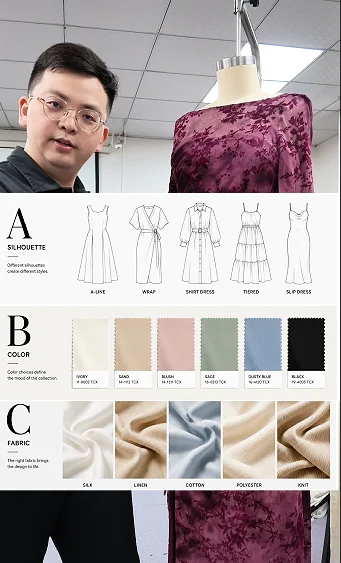
Use the same intended fit model, sample size, camera height and relevant movement sequence. Label each sample version and material. Compare front, side and back views, then ask the wearer to sit, walk, reach and operate the fastening. Record restriction, pressure, shifting and unwanted exposure.
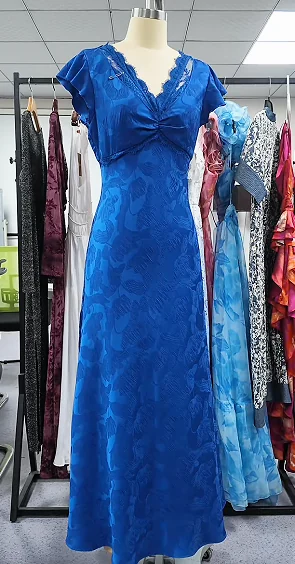
Follow agreed dress measurements and points of measurement. Body dimensions help define the wearer; garment dimensions show the size and shape of the sample. They are different records. A number can meet the specification while the garment still needs a dress fitting to investigate balance or comfort.
Keep measurements and comments together using a format such as the Techpacker fit template. Describe an observation before proposing a correction. “The neckline lifts when reaching” is more useful than an unsupported diagnosis that the pattern is wrong.
Approve the Intended Material Route
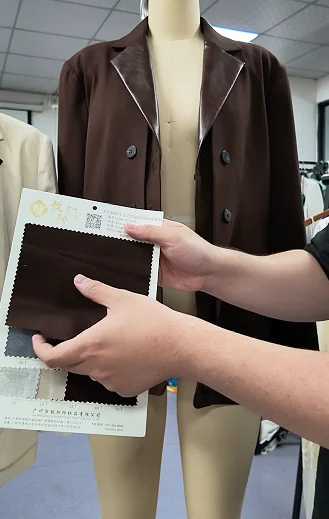
Fabric drape, stretch, recovery, coverage and surface finish affect the comparison. A sample in substitute fabric is interim evidence. Ask your clothing sample maker what remains to be checked in the intended production fabric, lining and trims.
Fabric sourcing should identify the material reference and availability for the actual order. Compare samples after the relevant finishing process when it changes the result. A new shade or replacement lining may require another review even when the main drawing stays unchanged.
Assess garment construction and reverse-side comfort alongside appearance. A beautiful detail that scratches the wearer or prevents the garment from hanging as intended needs a revision, rather than a favourable score elsewhere compensating for it.
Compare Cost and Repeatability Together
Request quotations for the same units per style and colour, delivery scope, materials and packaging. List development charges separately from the production unit price. Ask which operations explain each difference; there is no universal premium for adding a particular detail.
For difficult details, request a construction trial or an early-production review. Define the inspection criteria before interpreting the result. Intertek’s apparel services include checks at multiple production stages; choose checkpoints that reflect the product risks.
Pattern grading is a separate review from selecting the base sample. Confirm representative sizes and unresolved fit risks before committing the whole size range. One excellent piece does not demonstrate every size or all bulk-production conditions.
Use a Decision Log, Not a Popularity Vote
| Requirement | Evidence to attach | Decision |
|---|---|---|
| Customer value | Brief and relevant wearer feedback. | Retain the features that serve the intended use. |
| Fit and movement | Versioned photos, measurements and comments. | Resolve essential comfort and coverage issues. |
| Materials and care | Approved references and agreed checks. | Identify any remaining trial in final materials. |
| Cost and production | Comparable quotes, construction trials and inspection plan. | Approve a feasible route or request another option. |
Record why an option is selected, what is still conditional and who will close each question. Choosing a development direction is different from releasing clothing production. An attractive sample with an unresolved fastening or material issue should remain conditional.
Create a Clear Production Release
Identify the approved sample, current tech pack, materials, colour references, measurements, tolerances, construction and packing requirements. Include the final order breakdown and authorised deviations. A pre production checklist should refer to those actual records, rather than only saying “same as sample.”
Techpacker’s pre-production overview distinguishes development, costing, materials and process planning. Use the stage names agreed with your supplier; a first prototype should not silently become the final production reference.
Send Shengfu the options, your customer brief and the three decisions still open. Ask for a documented review, project-specific sampling charges and a quotation for the preferred route. Confirm the team’s actual scope before committing.
FAQ
What is a pre production sample, and is it the first prototype?
It is a sample used to confirm the product before manufacturing starts. A first prototype may still use substitute materials or unresolved construction. Agree what the factory means by the term and which final materials, sizes and processes the sample represents.
How to make clothing samples that can be compared fairly?
Provide one current brief, label each version and record the material, size and construction changes. Review them under comparable fitting and viewing conditions, then document the differences that affect the decision.
How to measure a dress before sample approval?
Use the specified points, units and handling method, such as laying a garment flat without stretching unless instructed otherwise. Record actual values against the agreed specification and assess fit on the intended wearer as a separate check.
How to take body measurements for a sample review?
Use a consistent body-measurement method, relevant landmarks and the intended fit model. Record the method and avoid mixing body circumference with flat garment widths. Ask the technical team to confirm the ease relationship for the design.
How to choose fabric for clothing when two samples fit differently?
Compare drape, stretch, recovery, weight and coverage in relation to the design. Test the intended production materials; changing only the pattern may not correct behaviour caused by a different fabric.
References and Further Reading
Technical sources supporting the general guidance:
- Techpacker — Fit template
- Techpacker — Pre-production processes
- Intertek — Textiles and apparel testing and inspection
- Techpacker — What Is a Tech Pack?
Related Shengfu guides:
- “Make It Better” Is Not a Clothing Sample Revision Brief
- What Happens to a Rejected Clothing Sample?
- A 100-Piece First Order: How Detailed Should Your Tech Pack Be?
- A Million Views Does Not Make a Dress Ready for Production
- From One Sample to 1,000 Garments: Consistency Is the Real Test
- Same Design, Different Prices: What Are the Factories Actually Quoting?
- From Sketch to First Sample: A Reference Photo Is Only the Start
- Payment Security: How to Pay Clothing Manufacturers Safely





