Summary
Pleats, gathers and stitched textures create volume in different ways. Choose the construction together with the fabric, then approve a physical trial for appearance, dimensions, movement and care. A photograph alone cannot establish stretch or durability.
Jump to:
- Four Ways to Turn Flat Fabric into Texture
- Choose the Fabric and the Method Together
- Develop a Trial Before Approving the Dress
- Calculate Fabric Take-Up from a Real Trial
- What to Put in the Approval Record
- Discuss the Textured Design with Shengfu
- FAQ
Four Ways to Turn Flat Fabric into Texture
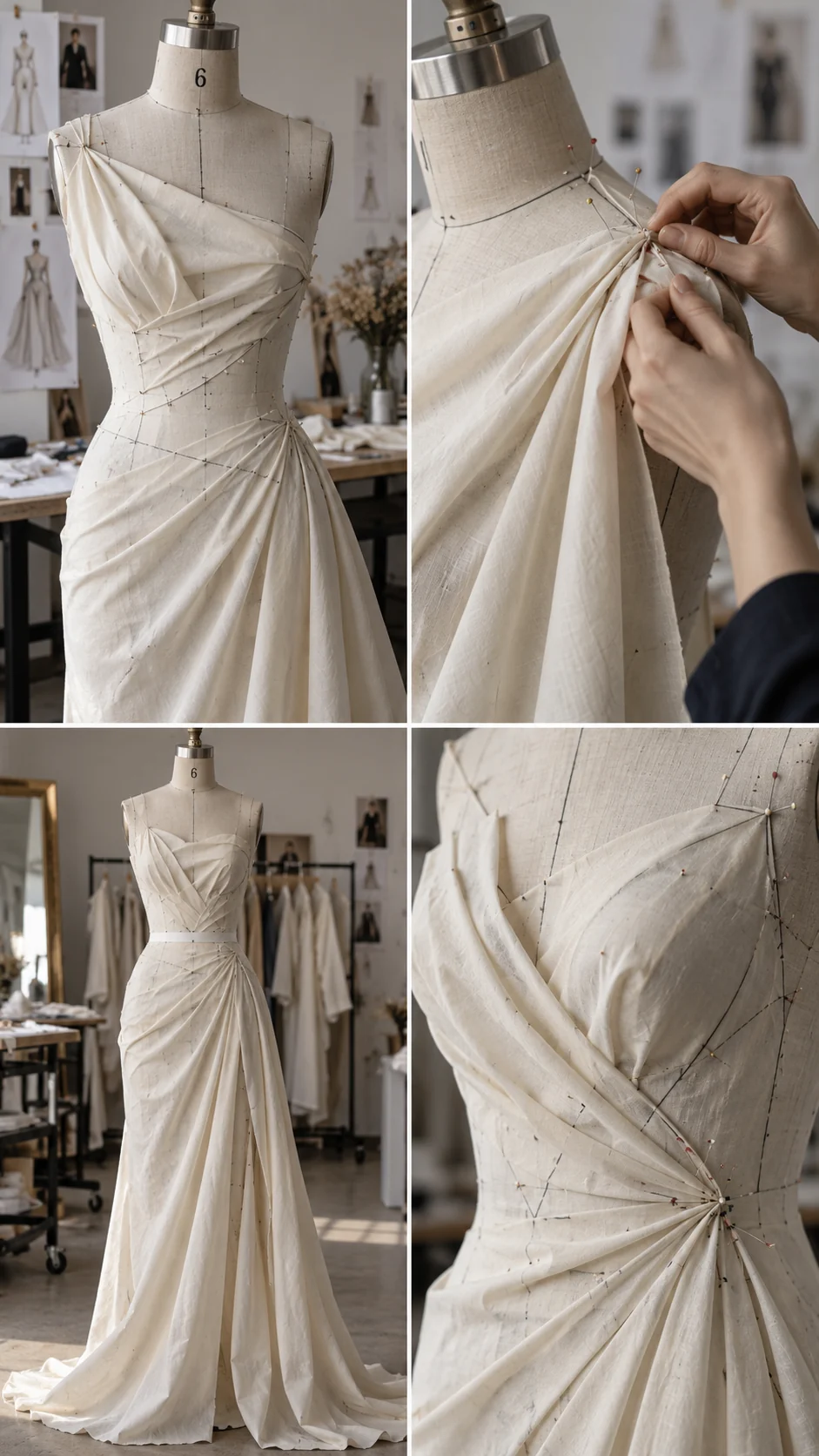
A pleated skirt, a shirred dress and a smocked dress can all look three-dimensional, yet their construction and fit are different. Start by defining the effect: regular folds, soft fullness, an expanding bodice or decorative raised shapes. Then ask the manufacturer to identify the method rather than interpreting the photograph differently.
| Method | What creates the shape | What a buyer should confirm |
|---|---|---|
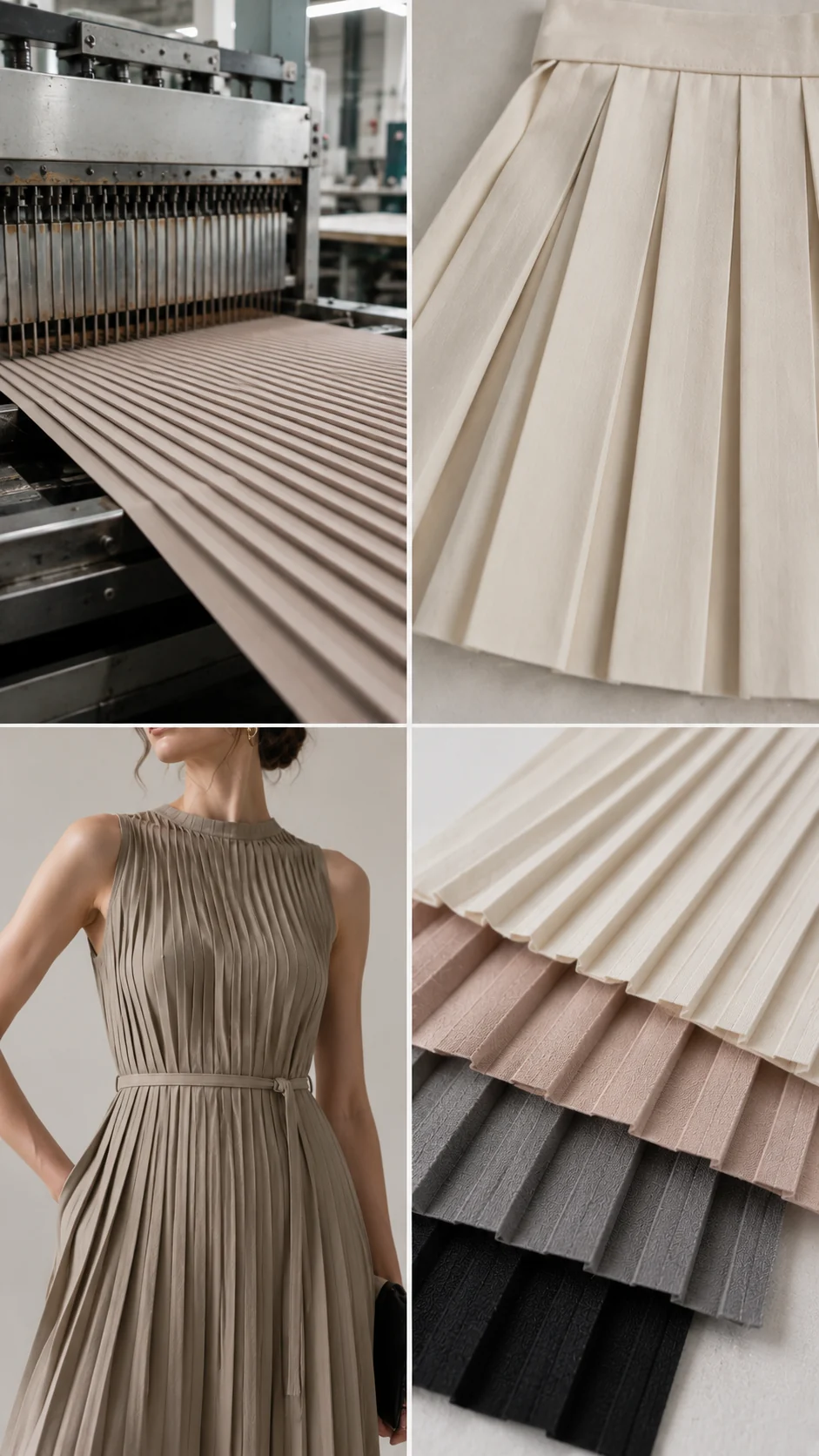
| Pleating | Planned folds: knife pleats face one direction; box pleats form paired folds; accordion pleats repeat narrow zigzags. | Fold depth, spacing, direction, method of securing and care performance. |
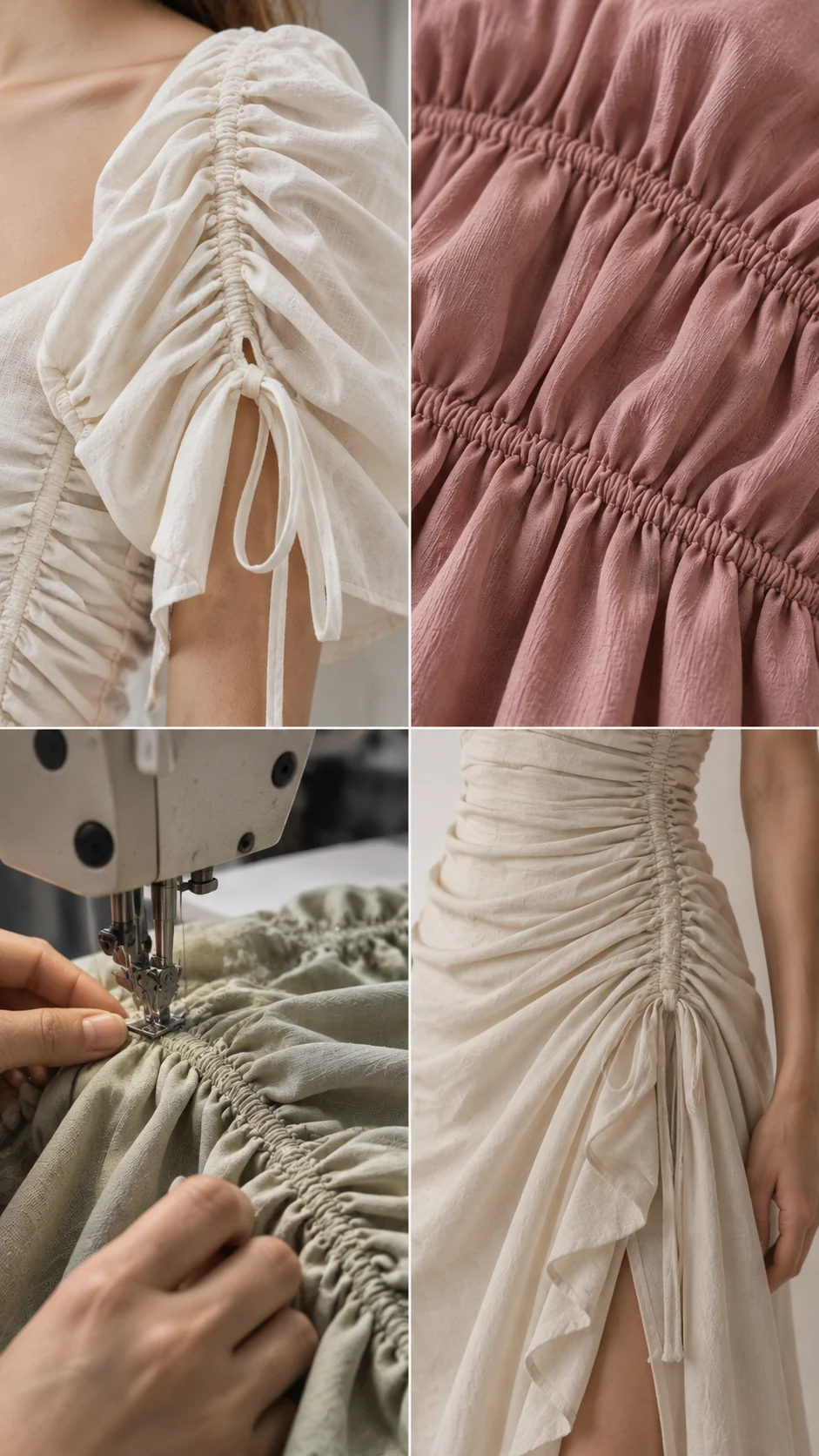
| Gathering fabric | A longer fabric edge is drawn into a shorter seam or attachment. | Fullness distribution, seam strength, bulk and finished length. Gathering does not automatically create stretch. |
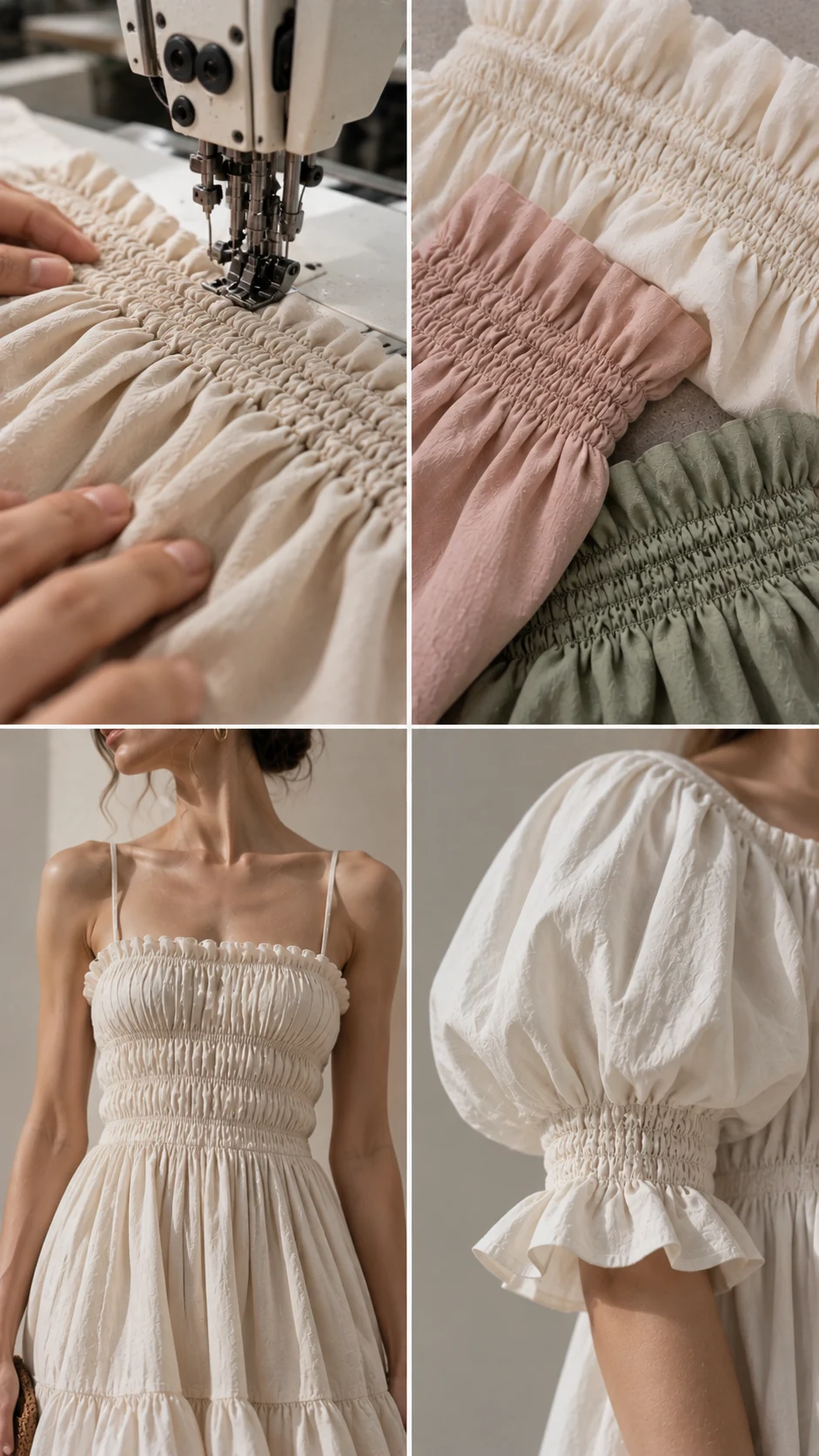
| Elastic shirring | Repeated stitching with elastic thread contracts the fabric into rows. | Relaxed width, comfortable extended width, recovery and row spacing. |
| Smocking | Decorative stitches control folds or selected points in the fabric. | The actual stitch structure and resulting movement; do not assume that every smocked effect behaves like elastic shirring. |
The Smocking Arts Guild of America explains traditional hand smocking. Commercial descriptions may use the term more broadly, so include an agreed sample and a close-up of the reverse side in the brief.
Choose the Fabric and the Method Together
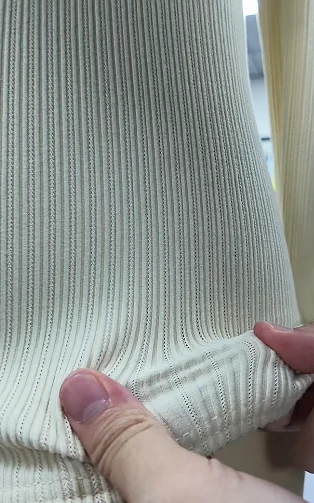
Weight, thickness, drape, surface finish and fibre content affect the result. A crisp material may support defined pleats; a fluid material can give softer folds. Dense folds can create uncomfortable bulk at waist seams, while light fabrics may need coverage or lining. A ribbed knit already has a knitted texture: its ridges are not evidence that the fabric has been pleated.
Polyester may respond to heat setting, but fibre content alone does not guarantee lasting pleats. Ask for a trial using the proposed fabric article, finish and care route. Check whether pressing, washing or packing changes the surface. Review sheen and opacity both relaxed and opened out.
For a style with an elastic back panel, test recovery after repeated gentle extension. A textured front and an elastic back can serve different purposes; specify them separately instead of describing the whole dress as stretchy.
Develop a Trial Before Approving the Dress
- Define the intended silhouette and mark the textured areas on the drawing.
- Make a small trial in the proposed material and record its starting dimensions.
- Measure the finished trial in both directions. For elastic areas, add the agreed comfortable extended measurement.
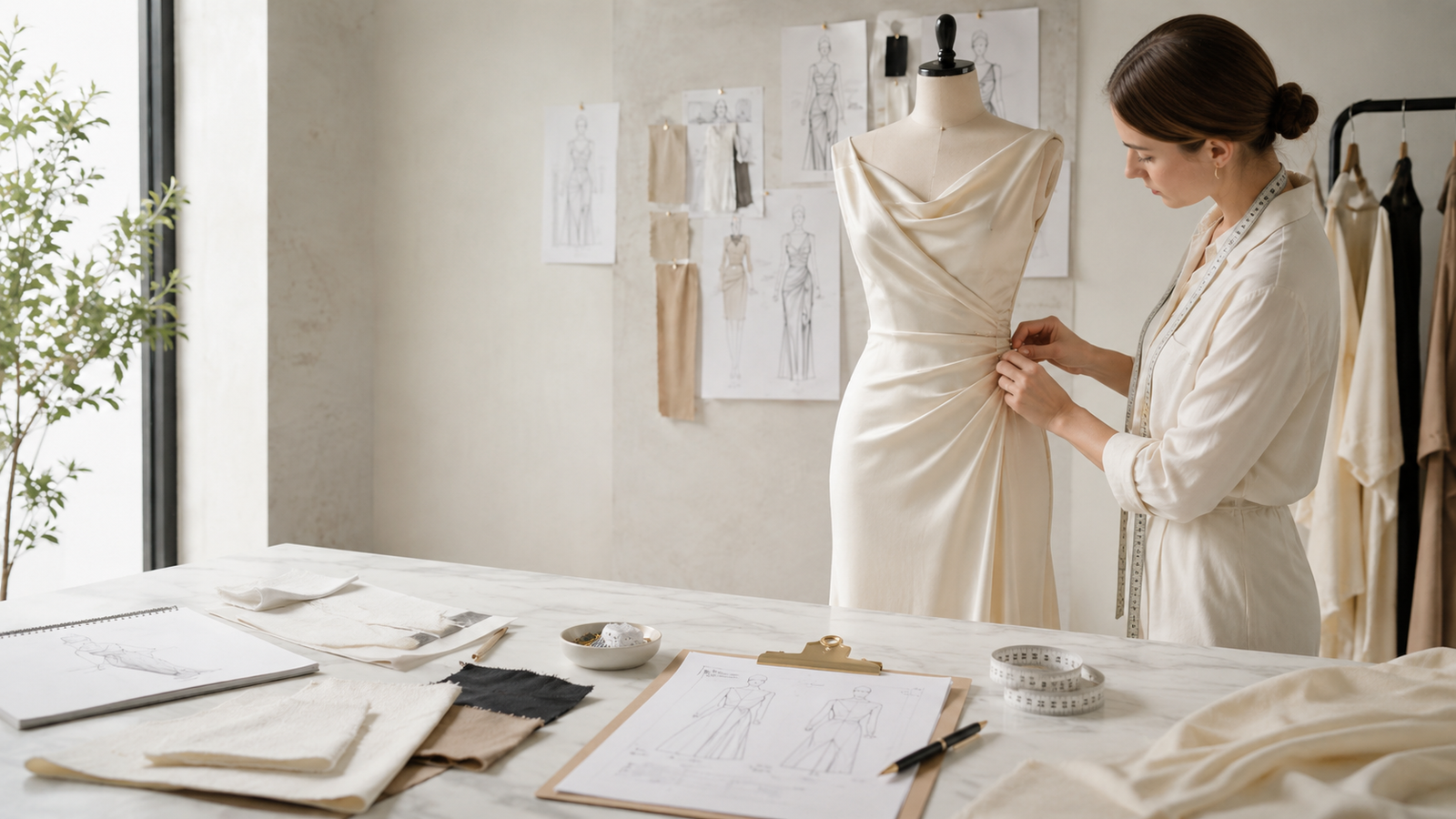
- Build the garment sample to check placement, movement, seam intersections and lining.
- Evaluate the approved care process, then agree how the texture will be protected during packing.
BERNINA’s shirring tutorial illustrates the elastic-thread route. Its settings are a demonstration, not a production specification for every fabric or machine. Let a trial establish the settings for your project.
Calculate Fabric Take-Up from a Real Trial
Illustrative calculation: if a 100 cm strip becomes 40 cm wide after the selected treatment, its observed take-up ratio is 2.5. A 60 cm finished area would therefore suggest 150 cm before treatment, before seam allowances, pattern shaping and further adjustments. This is arithmetic for that trial, not a universal gathering or pleating ratio.
For elastic shirring, specify relaxed and extended dimensions separately. Do not replace a wearer’s fit requirement with the fabric’s maximum possible extension. Check that seams and lining permit the intended movement without becoming the limiting point.
Sampling can reveal different shrinkage along the length and width. Record direction, test conditions and the reference sample ID so the pattern maker can use the findings consistently.
What to Put in the Approval Record
- Exact fabric and approved colour references.
- Texture method, row or fold spacing, depth, direction and placement.
- Relaxed dimensions, applicable extended dimensions and agreed tolerances.
- Fit range, lining, seam joins and attachment details.
- Care-test result and packing instructions for the approved sample.
A short video showing movement can complement the physical sample. It cannot replace measurements or a care check. Keep the signed-off sample and current drawing together so the production team knows which details are approved.
Discuss the Textured Design with Shengfu
Send Shengfu your reference images, target fit, proposed fabric, quantity and delivery target. Ask the team to review the available construction routes and quote a suitable trial before committing to bulk production. Confirm project-specific capabilities, materials and testing arrangements during the enquiry.
If a simpler texture achieves the same customer benefit, compare both samples on comfort, appearance, care and price. The most elaborate surface is useful only when it improves the garment the customer will wear.
Frequently Asked Questions
How to pleat fabric for a production sample?
Mark the required folds and direction, make a trial in the intended material, secure or set the folds using the proposed process, then check finished dimensions and care performance. The exact method depends on the fabric and design.
How to make pleated fabric that keeps its shape?
Agree the fold structure and setting or stitching method with the supplier. Test the actual material after the intended care cycle; visual similarity before washing is not enough to establish retention.
How to sew pleated fabric without losing the fold arrangement?
Identify which folds must remain free and which are caught into seams. Control the spacing with marks or suitable temporary holding, and approve a sewn trial for bulk and alignment before finalising the construction.
How to sew shirring consistently?
Use the intended fabric, thread and machine setup for a trial. Agree row spacing, relaxed and extended dimensions, and recovery. Check the results after the intended care route instead of prescribing one setting for every material.
Smocking vs shirring: what should the buyer specify?
Shirring commonly uses elastic thread to create contraction and expansion. Traditional smocking uses decorative stitches over controlled folds. State the actual construction, measurements and required movement, because supplier terminology can vary.
Sources and Further Reading
Related Shengfu guides: